
What Is Romanian Currency
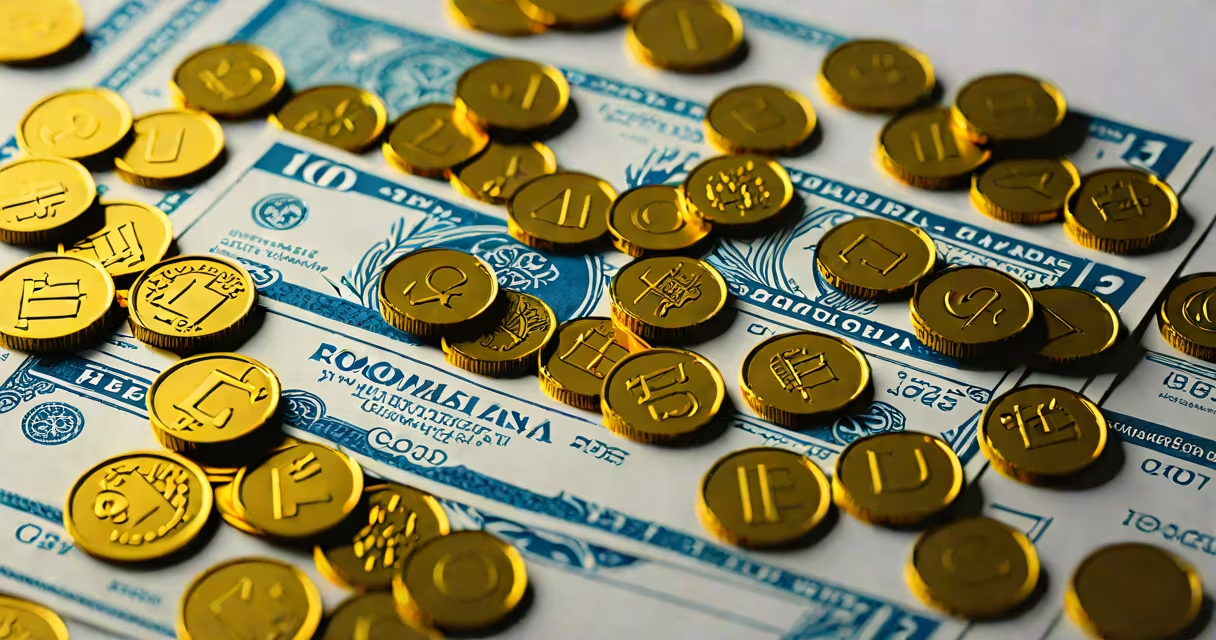
The Romanian currency is the leu (RON), the official money of Romania since 1867. It is subdivided into 100 bani and issued by the National Bank of Romania. The leu replaced the Romanian ban and has undergone multiple redenominations due to inflation.
Since 2005, the leu has been managed under a currency board arrangement, meaning every new leu in circulation is backed by foreign reserves, primarily euros. This system stabilizes the currency's value and limits government spending power. The National Bank of Romania reports that the currency board has maintained exchange rate stability since its adoption.
Leu banknotes come in denominations of 1, 5, 10, 20, 50, 100, 200, and 500 RON. Coins exist in 1, 5, 10, 25, 50 bani, and 1, 5, 10, 20, 50 lei. The 500 RON note features the portrait of poet Mihai Eminescu, while the 100 RON note shows architect Ion Mincu. These designs reflect Romania's cultural heritage and historical figures.
How the Leu Functions in Daily Life
In practice, the leu operates as legal tender throughout Romania. ATMs dispense cash in leu, and most prices in stores, markets, and online platforms are listed in RON. Foreign visitors often exchange dollars or euros into leu at banks or exchange offices, though credit cards using EUR or USD are accepted in urban centers.
For example, a meal at a mid-range restaurant in Bucharest typically costs between 150 and 300 RON. A monthly rent for a one-bedroom apartment in the city center averages around 4,000-6,000 RON. Public transport fares, such as a single metro ride, cost 10 RON, showing how small denomination notes are used daily.
Despite being pegged to the euro, the leu is not part of the Eurozone. Romania has not yet met the convergence criteria required for euro adoption, including inflation and public debt thresholds. The European Commission's 2023 report confirmed Romania remains outside the euro area, though it plans to join in the medium term.
Types and Forms of Romanian Currency
There are two primary forms of Romanian currency: physical banknotes and coins, and digital balances in bank accounts. Physical currency is standardized across the country and regulated by the National Bank of Romania.
| Denomination | Common Use | Design Feature |
|---|---|---|
| 1 RON note | Small purchases, vending machines | Portrait of poet Mihai Eminescu |
| 500 RON note | Large transactions, savings | Historical monument: Palace of the Parliament |
| 10 lei coin | Public transport, parking fees | Symbolic representation of the Romanian flag |
Counterfeit detection is critical. The leu includes security features such as watermarks, microprinting, and holograms. For instance, the 200 RON note contains a changing security thread that shifts color from gold to green when tilted. The National Bank of Romania publishes annual counterfeit statistics; in 2022, less than 0.01% of circulating notes were identified as forged.
Common Misconceptions and Clarifications
Many assume the leu is unstable due to past hyperinflation. While Romania experienced high inflation in the 1990s-peaking at over 300% annually-the currency board system introduced in 2005 has kept inflation below 3% annually since 2010, according to Eurostat data.
Another confusion arises between the leu and the Romanian "dollar." There is no official "dollar" in Romania. Some older references to "dollar" stem from informal usage during the 1990s, when Western currencies circulated due to economic uncertainty. Today, the leu is the sole legal tender.
A common error is equating the leu with the euro. Though the leu is pegged to the euro via the currency board, they are distinct currencies. One euro equals approximately 4.95 RON (as of June 2024). Exchange rates fluctuate slightly daily, but the peg ensures minimal volatility.
Personal Observation: Using Leu in Practice
I once visited a village market in Transylvania where vendors refused credit cards and only accepted cash. I exchanged $50 at a local bureau de change and received 248 RON. Over the course of two days, I spent 180 RON on food, souvenirs, and train tickets-all in leu. The transaction felt natural, even though I was unfamiliar with the coin denominations. The clarity of the design and consistent pricing made it easy to track spending.
This experience reinforced that the leu functions reliably in both rural and urban settings. Its widespread acceptance and stable value make it suitable for everyday use, even for tourists unfamiliar with the currency.
What It's Not: Common Confusions
The leu is not interchangeable with other regional currencies. It is not used in neighboring countries like Moldova or Ukraine, despite shared history. Moldova uses the leu (MDL), which is unrelated and has a different exchange rate. Similarly, the Ukrainian hryvnia (UAH) is not linked to the Romanian leu.
Also, the leu is not a cryptocurrency. It is a fiat currency backed by state authority and central bank reserves. Unlike digital assets such as Bitcoin, it cannot be mined or traded on decentralized exchanges. Transactions involving leu require traditional banking infrastructure.
Finally, the leu is not tied to the U.S. dollar. While some remittance services allow transfers from the U.S. to Romania in USD, the recipient receives leu at the prevailing exchange rate. The U.S. dollar is not legal tender in Romania.