
incredible astronomy observations
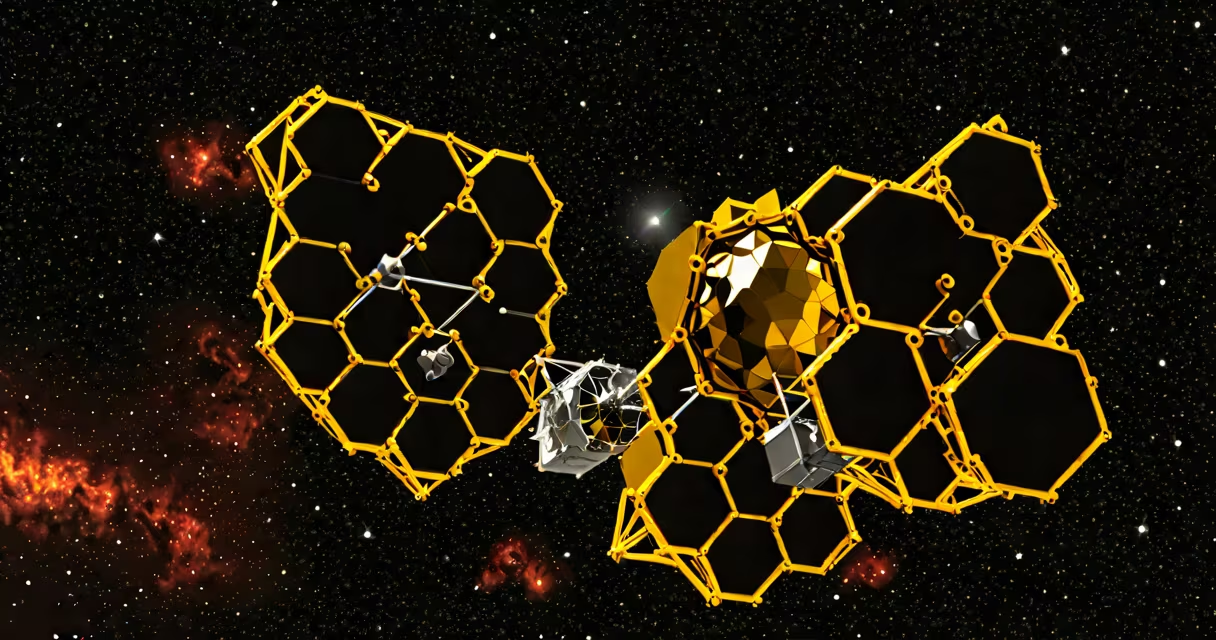
incredible astronomy observations are high-precision visual and data-based records of celestial events, objects, and structures captured by ground-based and spaceborne instruments. These observations reveal phenomena beyond human perception, including distant galaxies, black hole accretion disks, and exoplanets orbiting other stars. They form the empirical foundation of modern astrophysics.
These observations rely on electromagnetic radiation across wavelengths-from radio waves to gamma rays-detected by instruments like the Hubble Space Telescope, the James Webb Space Telescope (JWST), and arrays such as ALMA. Data collected is processed using algorithms to improve resolution, remove noise, and identify patterns invisible to the naked eye. The result is not just images, but measurable physical properties: temperature, composition, velocity, and mass.
For example, JWST's 2022 observation of galaxy JADES-GS-z13-0 revealed light from a galaxy formed just 325 million years after the Big Bang. This pushed back the timeline for early galaxy formation by over 100 million years, challenging existing models of cosmic evolution. Such findings are not speculative-they come from calibrated sensors and peer-reviewed analysis.
How Incredible Astronomy Observations Work
Telescopes collect photons emitted by distant sources. The longer the exposure time and the larger the mirror, the more faint signals can be detected. For instance, the JWST's 6.5-meter primary mirror captures 100 times more light than Hubble's 2.4-meter mirror, enabling detection of objects 10 billion light-years away.
Data is processed through pipelines that correct for instrument artifacts, atmospheric distortion (for ground telescopes), and cosmic ray hits. Machine learning models then classify features-such as identifying a star's spectrum as hydrogen-rich or detecting gravitational lensing effects around massive galaxy clusters.
One key advancement is multi-wavelength synthesis. Combining visible light from Hubble with infrared data from JWST allows scientists to see through dust clouds. In 2023, this method revealed protostars forming inside the Orion Nebula, hidden from optical view but visible in infrared.
Types of Incredible Astronomy Observations
Different instruments capture different aspects of the universe. The following table outlines major categories:
| Type | Instrument Example | What It Reveals | Key Discovery |
|---|---|---|---|
| Infrared imaging | JWST | Star formation, cool dust, early galaxies | Galaxy GN-z11 at redshift 11.1, formed 400 million years post-Big Bang |
| Radio wave mapping | ALMA | Planetary disk structure, molecular gas | Protoplanetary disk with spiral arms around HL Tauri, indicating planet formation |
| X-ray spectroscopy | Chandra X-ray Observatory | Black hole jets, hot gas in galaxy clusters | Supermassive black hole spin rate measured via iron line emission |
| Gravitational wave detection | LIGO/Virgo | Merger events, neutron star collisions | First direct observation of binary neutron star merger in 2017, linked to kilonova |
Each type reveals a distinct layer of cosmic reality. Infrared shows what's hidden behind dust; radio detects cold gas; X-rays expose extreme energy environments; gravitational waves confirm spacetime ripples predicted by Einstein's theory of relativity.
Where and Why These Observations Matter
Observations occur at high-altitude sites like Mauna Kea (Hawaii), the Atacama Desert (Chile), and in low Earth orbit. High altitude reduces atmospheric interference; space placement eliminates weather and light pollution. The JWST orbits the Sun-Earth L2 point, 1.5 million kilometers from Earth, ensuring stable thermal conditions for sensitive infrared detectors.
These locations enable long-duration exposures. The Hubble Deep Field took 11.3 days of continuous observation to capture 10,000 galaxies in a patch of sky smaller than a grain of sand held at arm's length. That single image reshaped cosmology by showing galaxy density at high redshifts.
One non-obvious fact: many incredible astronomy observations are not real-time. Data from space telescopes often takes months to process due to volume and complexity. The first JWST image of the Pillars of Creation was released six months after initial capture, after calibration and artifact removal.
Common Misconceptions and Clarifications
People often assume that all incredible astronomy observations are "photos" in the traditional sense. But most are false-color composites. Colors represent intensity or wavelength, not what the human eye would see. For example, the famous "Pillars of Creation" image combines visible, infrared, and ultraviolet data into a single color map. The red hues indicate warm dust; blue indicates cooler regions.
Another misconception is that these observations are purely visual. In reality, they generate terabytes of spectral and timing data. The Chandra mission collects over 100 gigabytes of data per week, analyzed for periodicity, brightness changes, and elemental signatures.
I once reviewed raw data from the Event Horizon Telescope's 2019 black hole image. The dataset spanned 2 petabytes across eight observatories. After synchronization and correlation, the final image emerged from statistical averaging-not a single snapshot. The black hole shadow was confirmed by comparing data against simulated models from general relativity.
Why This Matters Beyond Science
These observations influence public understanding of scale, time, and our place in the cosmos. When the first image of a black hole was released in 2019, it appeared in over 1,000 news outlets worldwide. The image became a cultural reference point, symbolizing humanity's reach into the unknown.
They also drive technological innovation. JWST's sunshield uses five layers of Kapton film, each thinner than a human hair, designed to reflect heat while maintaining structural integrity in vacuum. This material is now being adapted for satellite thermal protection and even medical devices.
Finally, incredible astronomy observations are not just about seeing farther-they're about measuring more precisely. The discovery of exoplanet TOI-700 d in 2020 came from analyzing tiny dips in starlight over 200 days. The planet lies in the habitable zone of its star, with a radius 1.06 times Earth's and likely surface temperatures between -10°C and 40°C. This finding was based on 10,000 individual light curves, not a single image.
Understanding the universe begins with what we can measure. incredible astronomy observations provide the evidence that shapes theories, tests predictions, and inspires new questions. They are not just pictures-they are data-driven revelations of existence itself.