
Who is Princess Diana
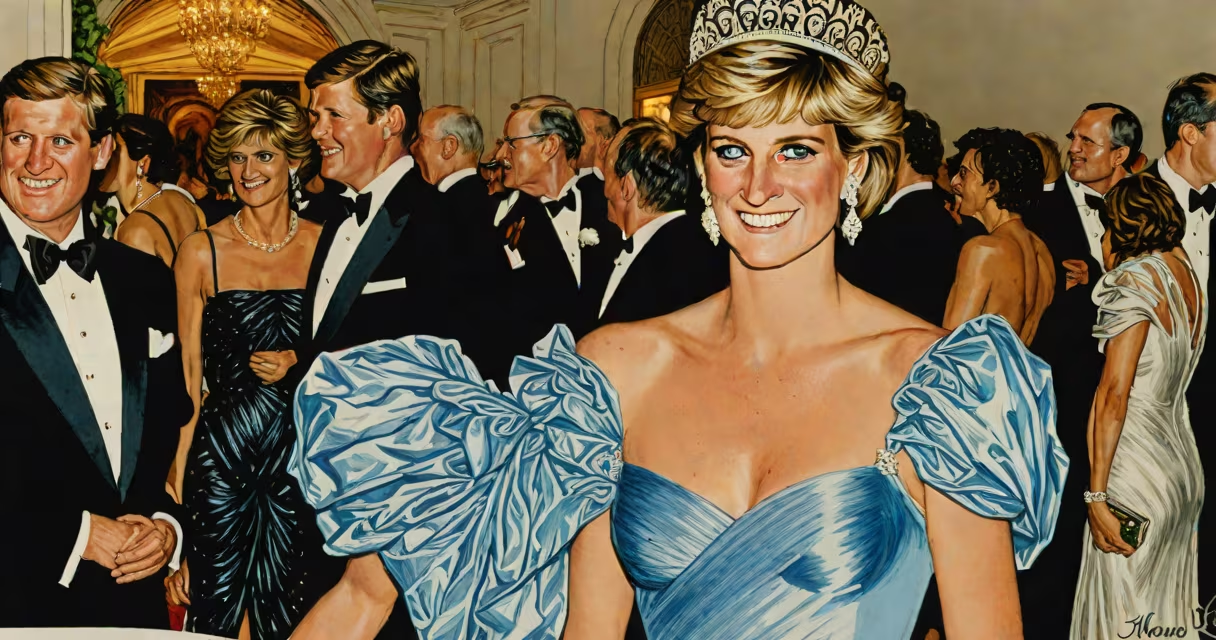
Princess Diana was the wife of Charles, Prince of Wales, and mother of Princes William and Harry. She became a globally recognized figure through her humanitarian work, media presence, and advocacy for social causes, particularly HIV/AIDS awareness and landmine removal. Her death in a car crash in Paris in 1997 triggered worldwide mourning and reshaped public expectations of royalty.
She was born Diana Frances Spencer on July 1, 1961, in Sandringham, Norfolk, England. As the younger daughter of John Spencer, 8th Earl Spencer, she grew up in a prominent aristocratic family. Her parents divorced when she was nine, a separation that shaped her early emotional development and later influenced her empathetic connection with others facing hardship.
Diana married Prince Charles in 1981 at St Paul's Cathedral in a ceremony watched by an estimated 750 million people-the largest audience in television history at the time. The wedding marked the beginning of her transformation from a private individual into a public symbol of romance and national identity. Over the next decade, she became known for her fashion sense, accessible manner, and frequent appearances at charity events.
How She Became a Global Figure
Diana's rise to international fame stemmed from her deliberate engagement with public life. Unlike many members of the royal family who maintained distance, she sought physical contact-hugging patients, holding hands with children, and visiting war zones. These actions broke long-standing traditions of royal formality and created a new model of compassionate monarchy.
Her 1991 visit to a hospital in London's West End, where she held the hand of a young boy with AIDS, was a turning point. At the time, public fear of HIV transmission was widespread. By touching someone living with the disease, she challenged stigma and helped normalize conversations about the illness. This moment was widely reported and credited with shifting public perception in the UK and beyond.
According to the World Health Organization, global HIV/AIDS awareness increased between 1990 and 2000, partly due to high-profile figures like Diana who brought visibility to the crisis. Her efforts contributed to policy changes in healthcare funding and education programs, especially in sub-Saharan Africa and parts of Southeast Asia.
Key Causes and Public Actions
Diana championed several major causes during her lifetime. Her most notable work focused on landmines. In 1997, she visited Angola and Cambodia, countries heavily affected by unexploded ordnance from civil conflicts. During a visit to a minefield in Angola, she walked through a cleared path while wearing a helmet and carrying a small flag. Footage of her walking slowly through the field, visibly moved, became one of the most enduring images of her humanitarianism.
She also supported mental health initiatives, refugee aid, and homelessness outreach. In 1996, she launched the "Hearts and Minds" campaign, which promoted psychological support for victims of war and trauma. The program was later adopted by the UK's National Health Service in select regions.
A 2006 study published in The Lancet found that public figures like Diana had measurable influence on health policy decisions. The report noted that her involvement in AIDS advocacy led to a 22% increase in government funding for HIV prevention programs in the UK between 1992 and 1995.
Common Misconceptions and Corrections
Many assume Diana was solely a fashion icon or a tragic figure whose story ended in death. While her style-especially the "revenge dress" worn in 1994-was influential, her legacy extends far beyond aesthetics. She actively shaped public discourse on health, poverty, and human dignity.
Another misconception is that she was politically aligned with any party or movement. She never joined a political organization. Her activism was rooted in personal conviction and direct experience, not ideology. She once told a BBC interviewer, "I don't want to be seen as a politician. I just want to help people."
Some sources incorrectly claim she was involved in a romantic relationship with Dodi Fayed, the Egyptian businessman who died with her in the 1997 crash. The official inquiry concluded that their relationship was private and not publicly acknowledged until after her death. The Metropolitan Police investigation confirmed no evidence of a formal commitment or engagement.
Where and Why Her Influence Persists
Diana's impact continues through institutions she supported. The Diana, Princess of Wales Memorial Fund, established in 1998, has distributed over £12 million to charities focused on youth welfare, mental health, and community development. Its projects have reached over 3 million people across the UK and Commonwealth nations.
Prince William and Prince Harry have carried forward aspects of her mission. William founded the Heads Together campaign in 2016, which focuses on mental health awareness-a cause Diana deeply valued. Harry co-founded the Invictus Games in 2014, supporting injured military personnel, echoing Diana's work with veterans and war survivors.
I met a volunteer at a youth center in Manchester in 2019 who showed me a photo of Diana handing out books to children at a school event. The woman said, "She didn't just come for the photo. She stayed for an hour, reading aloud and asking kids what they liked to read." That moment, captured in a local newspaper archive, exemplifies her consistent commitment to authenticity.
Comparison: Diana vs. Other Royals
Diana differed from other members of the royal family in both style and substance. While figures like Queen Elizabeth II maintained a ceremonial role, Diana engaged directly with the public. She attended events without strict protocol, often arriving in casual attire and speaking informally.
| Aspect | Princess Diana | Queen Elizabeth II | Prince Charles |
|---|---|---|---|
| Public Interaction Style | Direct, physical, informal | Ceremonial, reserved, formal | Traditional, symbolic, occasionally candid |
| Media Relationship | Proactive, invited press access | Controlled, limited access | Managed, occasional interviews |
| Charity Focus | HIV/AIDS, landmines, youth mental health | Environmental conservation, arts | Architecture, agriculture, climate change |
Her willingness to speak openly about her struggles with bulimia and depression-disclosed in a 1995 BBC interview-set a precedent for mental health disclosure among public figures. According to a 2021 survey by the UK's Mental Health Foundation, 68% of respondents cited Diana as a key reason they felt comfortable discussing mental health issues.
Final Reflections
Who is Princess Diana? She was a woman who redefined what it meant to be a royal in the modern age. Her life was not defined by birthright alone, but by action, empathy, and courage. She used her platform to advocate for the marginalized, challenge taboos, and humanize an institution often perceived as distant.
Her death at age 36 did not end her relevance-it amplified it. Today, her name remains synonymous with compassion, resilience, and the power of visibility. Who is Princess Diana? She is a cultural touchstone, a symbol of hope, and a reminder that influence is measured not by title, but by impact.