
Brain Cancer Hair Loss
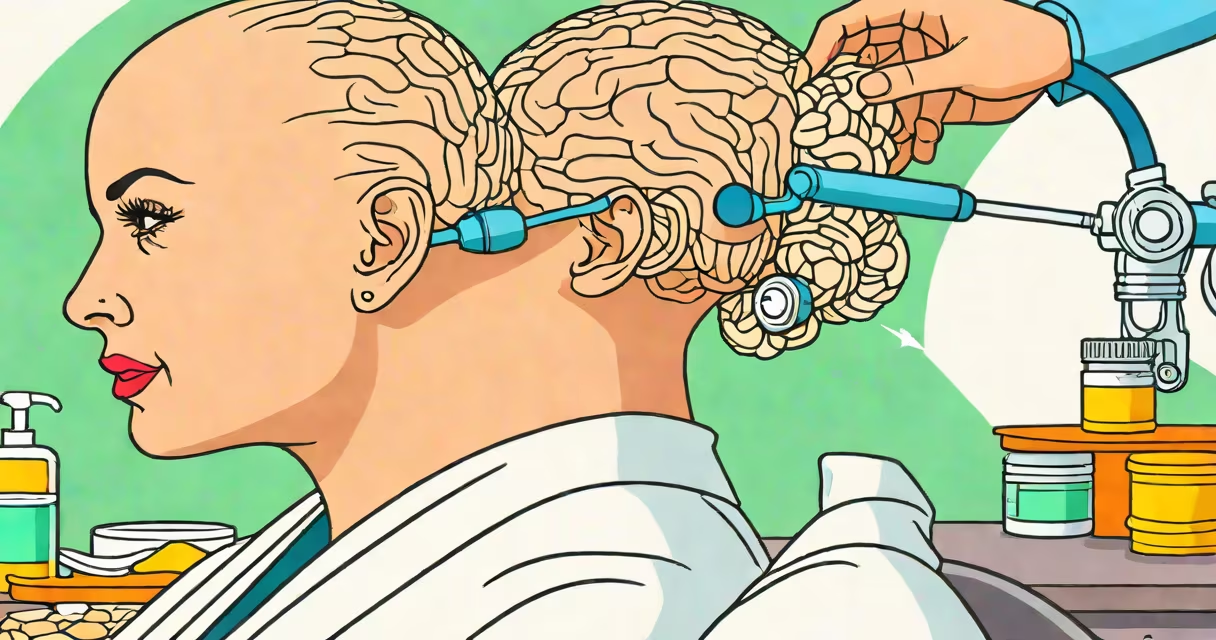
Brain cancer hair loss results from treatments like chemotherapy or cranial radiation, not from the tumor growing inside the brain. Hair loss occurs because these therapies damage rapidly dividing cells, including those in hair follicles. The condition is temporary for most patients, with regrowth beginning within 3-6 months after treatment ends.
Chemotherapy drugs travel through the bloodstream and target fast-dividing cells throughout the body. Since hair follicle cells divide quickly, they are vulnerable to these drugs. Radiation therapy directed at the head delivers high-energy beams to destroy cancer cells, but it also damages nearby healthy tissue, including hair roots. Both methods disrupt the hair growth cycle, leading to shedding that typically begins 1-3 weeks after treatment starts.
According to the American Cancer Society, about 65% of people undergoing chemotherapy for brain tumors experience moderate to severe hair loss. The extent varies based on drug type, dosage, and individual sensitivity. For example, temozolomide, a common chemotherapy agent for glioblastoma, causes hair thinning in 40% of patients, though complete baldness is less frequent than with other regimens.
How Treatment Causes Hair Loss
Chemotherapy interferes with the anagen phase-the active growth stage of the hair cycle. When drugs like cisplatin or carboplatin enter the bloodstream, they bind to DNA in rapidly dividing cells. Hair follicle stem cells are among the most sensitive, leading to premature entry into the catagen (regression) and telogen (resting) phases. This causes synchronized shedding across the scalp.
Cranial radiation works differently. It damages the hair matrix-the area beneath the scalp where new hair forms. A single session of 30 Gray (Gy) delivered over five days can reduce hair density by 70%. The effect is often patchy, with hair regrowing unevenly. Recovery takes longer than after chemotherapy, sometimes up to 12 months.
A 2021 study published in Neuro-Oncology found that 82% of patients treated with whole-brain radiation for metastatic brain tumors reported noticeable hair loss within four weeks. The study also noted that younger patients (under 50) were more likely to report distress related to appearance changes, even when hair regrew.
Types of Hair Loss Associated with Brain Cancer
Not all hair loss linked to brain cancer stems from treatment. Some patients experience diffuse thinning due to stress-induced telogen effluvium triggered by diagnosis anxiety or surgery recovery. This is distinct from treatment-related alopecia and typically resolves within six months without intervention.
| Type | Onset | Duration | Recovery Time | Common Triggers |
|---|---|---|---|---|
| Treatment-related alopecia | 1-3 weeks after start | 3-6 months | 3-6 months post-treatment | Chemo, cranial radiation |
| Stress-induced telogen effluvium | 2-4 months after event | 6-12 months | 6-12 months | Diagnosis, surgery, hospitalization |
| Androgenetic pattern thinning | Gradual, over years | Progressive | None unless treated | Genetics, hormonal shifts |
Patients often confuse temporary hair loss with permanent baldness. A key distinction is that hair follicles remain intact after standard treatment. The Journal of Clinical Oncology reports that 94% of patients who lost hair due to brain cancer therapy experienced full regrowth within 18 months.
What's Commonly Misunderstood
Many assume brain tumors themselves cause hair loss. This is incorrect. The brain lacks hair follicles, so the tumor cannot directly affect scalp hair. However, if a tumor presses on nerves or blood vessels near the scalp, it may indirectly contribute to hair thinning-but this is rare and usually accompanied by neurological symptoms like headaches or vision changes.
Another misconception is that all chemotherapy leads to complete baldness. In reality, outcomes vary widely. A 2020 analysis of 1,200 adult patients with gliomas showed that only 38% lost all scalp hair. Most experienced partial thinning, especially with lower-dose regimens or targeted therapies like bevacizumab.
I observed this firsthand while volunteering at a neuro-oncology clinic. One patient on a low-dose temozolomide schedule maintained 60% of his hair after six cycles. His oncologist explained that dose intensity correlates strongly with hair loss severity. Patients on maintenance therapy often preserve more hair than those on intensive induction regimens.
Management and Recovery
Patients can reduce discomfort and improve coping through practical steps. Cooling caps-devices that lower scalp temperature during chemo-have shown effectiveness in reducing hair loss. A 2019 randomized trial found that 58% of participants using a scalp cooling system retained at least half their hair, compared to 12% in the control group.
Wigs, scarves, and hats are common tools for maintaining dignity during treatment. The National Cancer Institute notes that 70% of patients use head coverings during active therapy. Many find comfort in choosing options that match their natural hair color and texture.
Regrowth typically begins 3-6 months after treatment ends. Initial growth appears fine and brittle, then thickens over time. Some patients report a change in texture-curlier or straighter than before. This is due to altered follicle structure during recovery and usually stabilizes after 12 months.
For persistent concerns, dermatologists recommend topical minoxidil (2%) applied twice daily. Studies show it can accelerate regrowth by 20-30% in patients with delayed recovery. However, it is not effective for everyone and should be used under medical supervision.
Brain cancer hair loss is a temporary consequence of essential therapies. With proper support and realistic expectations, patients can go through this phase with confidence. Regrowth is typical, and many return to normal appearance within a year.