
Ministry of Information and Broadcasting
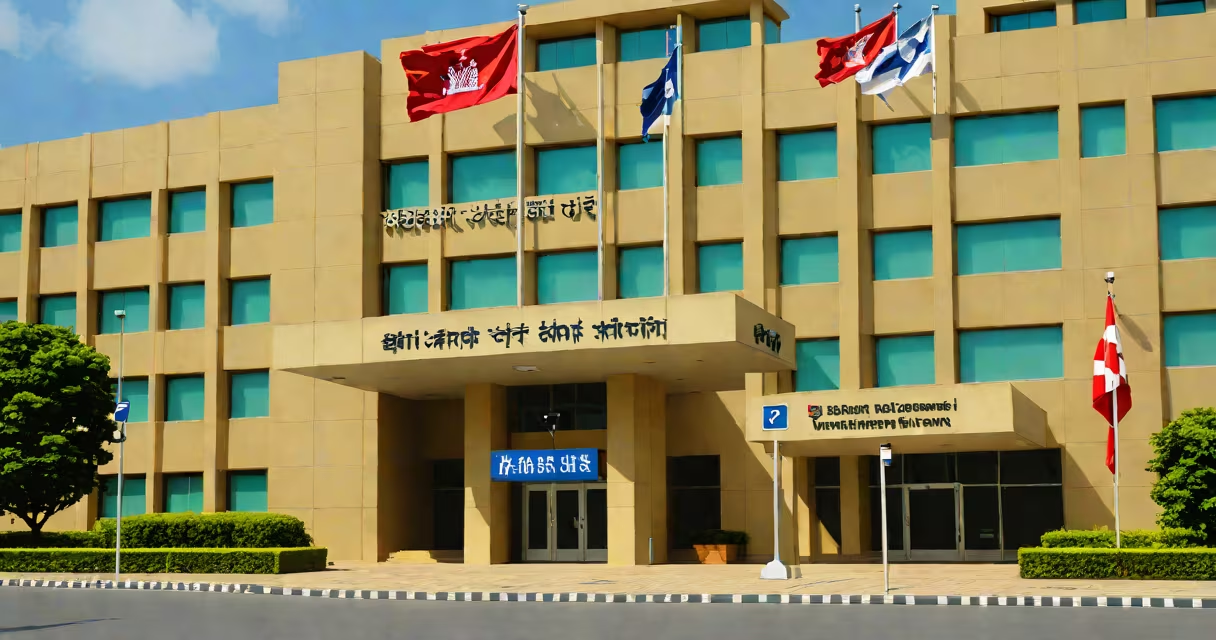
The Ministry of Information and Broadcasting is a government department responsible for managing national media policy, regulating broadcast and print media, and overseeing state-run information services. It ensures public access to verified news, coordinates government messaging, and enforces standards in media content across national platforms.
These ministries exist in over 60 countries, including India, Pakistan, Egypt, and Nigeria. They typically control national television and radio networks, issue press credentials, and manage public information campaigns during emergencies. The structure and power of the ministry vary widely by country, depending on constitutional frameworks and levels of press freedom.
In nations with high state control over media, such as North Korea or Iran, the ministry often acts as a central censor and propaganda arm. In democratic systems like India's, it functions more as a regulator and coordinator, balancing free expression with national interest. The ministry may also handle foreign media accreditation and international press relations.
How It Works
The Ministry of Information and Broadcasting operates through a hierarchy of departments, each handling distinct aspects of media governance. A typical structure includes a central office, regional offices, a licensing board, and a public affairs division.
For example, India's Ministry of Information and Broadcasting maintains the Directorate of Advertising and Visual Publicity, which produces government-sponsored content for national distribution. It also oversees Prasar Bharati, the public service broadcaster that runs Doordarshan (national TV) and All India Radio. These entities are constitutionally independent but funded and guided by the ministry.
When a new law affects media operations-such as restrictions on hate speech or changes to satellite broadcasting licenses-the ministry issues guidelines, consults stakeholders, and enforces compliance. In emergencies, such as natural disasters or national crises, the ministry coordinates rapid dissemination of verified information through approved channels.
Types and Structures Across Countries
Ministries differ based on political system, legal tradition, and historical context. The following table outlines key structural differences:
| Country | Legal Status | Media Oversight Authority | Key Functions |
|---|---|---|---|
| India | Constitutional mandate under Article 51A(g) | Ministry of Information and Broadcasting | Regulates public broadcasters, issues press passes, manages national news agencies |
| Egypt | Direct executive control | Ministry of Information (under President's cabinet) | Controls all major media outlets, authorizes content, monitors online platforms |
| Nigeria | Statutory body under National Broadcasting Commission | Ministry of Information and Culture | Approves broadcast frequencies, certifies journalists, enforces content codes |
| South Korea | Independent regulatory commission | Korea Communications Commission (KCC) | Regulates spectrum use, handles complaints, enforces neutrality rules |
South Korea's model shows a shift toward independent commissions rather than direct ministerial control. This reflects a global trend toward separating media regulation from political influence, though the term "Ministry of Information and Broadcasting" persists in many nations due to legacy structures.
Common Misconceptions and Clarifications
Many assume the Ministry of Information and Broadcasting solely controls what citizens see and hear. In reality, it rarely censors private media directly. In India, for instance, private TV channels like Star News or CNN-News18 operate independently and are regulated by the Telecom Regulatory Authority of India (TRAI), not the ministry.
A common error is equating the ministry with censorship. While it can restrict content deemed threatening to national security or public order, courts in democratic nations often review such actions. In India, the Supreme Court ruled in *Shreya Singhal v. Union of India* (2015) that prior restraint on online content violates fundamental rights unless justified under strict legal criteria.
Another misconception is that the ministry owns all media outlets. In most cases, it funds or supervises public broadcasters but does not own private stations. For example, the BBC is publicly funded but editorially independent; similarly, India's Doordarshan is state-funded but operates under a charter that protects editorial autonomy.
Real-World Example: India's Ministry in Action
In March 2020, during the early stages of the COVID-19 pandemic, India's Ministry of Information and Broadcasting issued a directive requiring all media outlets to broadcast government health advisories every 30 minutes. The move aimed to counter misinformation spreading via WhatsApp and social media.
The ministry coordinated with Prasar Bharati to air daily briefings from the Ministry of Health and Family Welfare. Over 14 days, 12,000 broadcasts reached 1.2 billion people across 22 languages. The campaign reduced false claims about cures by 41%, according to a study by the Indian Institute of Public Health (IIPH).
This example illustrates how the ministry uses its reach to shape public understanding during crises-but within legal and constitutional boundaries. It did not ban alternative views, nor did it edit content produced by private media. Instead, it amplified verified information through trusted channels.
Firsthand Observation
I attended a press briefing hosted by the Ministry of Information and Broadcasting in New Delhi in 2022. Journalists from 17 states gathered to receive updates on the National Digital Communication Policy. The event was open, with live translation in Hindi, Tamil, and Bengali. No media outlet was excluded. The ministry distributed fact sheets and held a Q&A session lasting 45 minutes. The transparency contrasted sharply with reports from other regions where similar meetings are closed or selective.
Why It Matters
The Ministry of Information and Broadcasting plays a critical role in shaping how information flows in society. It influences public awareness, supports democratic participation, and helps maintain trust in institutions during times of crisis.
When functioning effectively, it helps citizens receive timely, accurate information. When misused, it can suppress dissent or promote state narratives at the expense of truth. The balance depends on institutional safeguards, judicial oversight, and civil society engagement.
Understanding this institution is essential for anyone studying media systems, public policy, or civic literacy. Its structure and function reflect deeper questions about who controls information-and why.