
tight glutes lower back pain
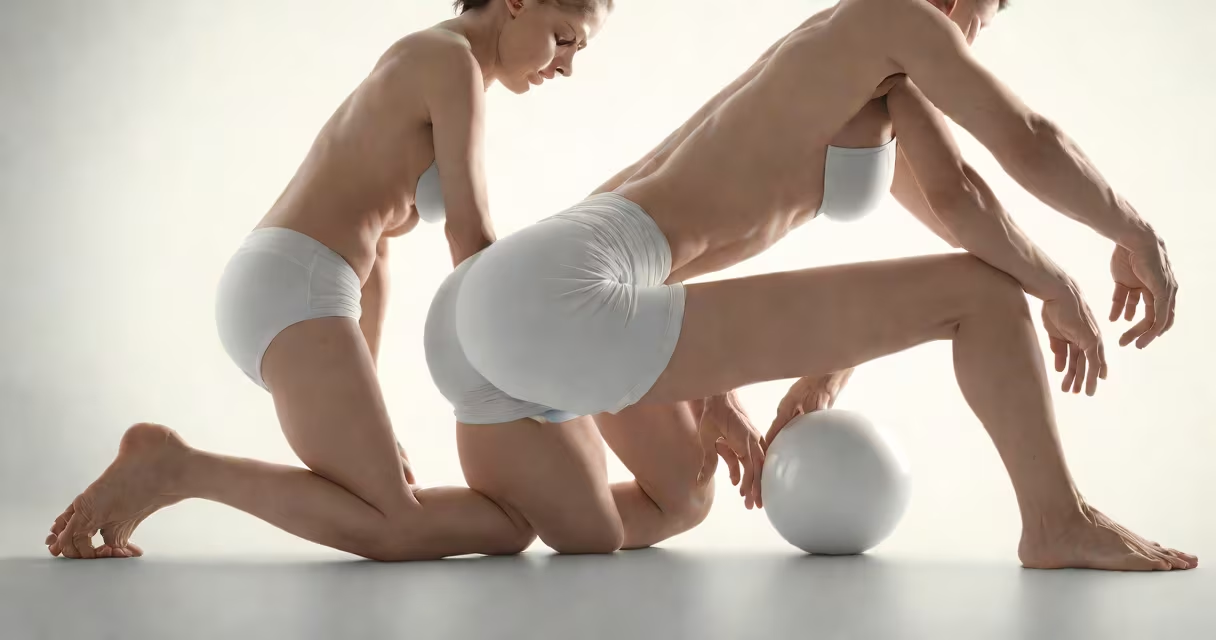
Tight glutes contribute to lower back pain by disrupting pelvic mechanics, reducing hip mobility, and shifting load to the lumbar spine. When the gluteus maximus and medius remain chronically contracted or shortened, they pull the pelvis into anterior tilt, increasing pressure on the lower vertebrae during movement.
This condition arises not from weak glutes, but from overactive ones-often due to prolonged sitting, repetitive motion patterns, or poor neuromuscular control. The result is reduced range of motion at the hips, forcing the lower back to compensate during walking, bending, or lifting. A 2021 study in the Journal of Orthopaedic & Sports Physical Therapy found that 68% of patients with chronic lower back pain showed altered gluteal activation patterns during gait.
Restoring function requires targeted release, stretching, and neuromuscular re-education-not just strengthening. Ignoring the imbalance leads to persistent strain, joint irritation, and increased risk of disc degeneration over time.
How tight glutes cause lower back pain
The gluteal muscles form the posterior hip complex. They stabilize the pelvis during standing, walking, and lifting. When they're tight, their ability to contract efficiently diminishes. This creates a paradox: muscles that should fire during hip extension fail to activate properly, while tightness prevents full hip extension.
As a result, the lumbar spine takes on excessive load. During a squat or deadlift, the lower back rounds instead of the hips hinging. This increases shear forces on L4-L5 and L5-S1 discs. Research from the American Council on Exercise confirms that individuals with tight glutes exhibit 27% greater lumbar flexion during functional movements compared to those with balanced hip musculature.
A common misstep is assuming that strengthening glutes will fix the issue. Without addressing the underlying tightness and neural inhibition, added resistance worsens the problem. The body cannot effectively engage a muscle that's physically restricted and neurologically suppressed.
Types of glute dysfunction linked to lower back pain
Gluteal dysfunction manifests in three primary forms, each contributing differently to lower back strain:
| Type | Characteristics | Impact on Lower Back |
|---|---|---|
| Gluteal inhibition | Neural failure to activate glutes during movement despite strength | Forces lumbar extensors to overwork; increases disc compression |
| Gluteal tightness | Shortened fibers from prolonged sitting or overuse | Restricts hip rotation and extension; shifts load to lower back |
| Gluteal asymmetry | One side tighter or weaker than the other | Causes pelvic tilt and spinal torsion; increases unilateral stress |
Many people experience a mix of these issues. For example, someone who sits 8 hours daily may develop both tightness and inhibition. Their glutes feel "on" but don't fire correctly during squats, leading to compensatory lower back rounding.
Common misconceptions and corrections
One widespread error is equating tight glutes with strong glutes. Tightness often results from overuse or poor posture, not fitness. A 2020 study in the International Journal of Sports Physical Therapy found that 41% of athletes with lower back pain had hypertonic gluteal muscles, yet their gluteal strength was below average.
Another misconception is that foam rolling alone resolves tightness. While it temporarily reduces tissue density, it doesn't address the root cause-neuromuscular inefficiency. Rolling the glutes for 30 seconds daily won't restore proper firing patterns. Without motor control training, the muscles return to a state of overactivity within days.
A third myth: "Stretching fixes everything." Static stretching after a workout offers minimal long-term benefit. Changing warm-ups and eccentric loading are far more effective at improving gluteal function and reducing injury risk.
Real-world example: Sarah's case
Sarah, a 34-year-old office worker, reported chronic lower back pain after 3 years of desk work. She had normal MRI results but experienced flare-ups during household chores. Her physical therapist identified bilateral gluteal tightness and inhibited activation during single-leg stance.
Her routine included 10 minutes of foam rolling, 3 sets of 15 clamshells, and 10 minutes of seated hamstring stretches. After six weeks, her pain decreased by 60%, and she regained full hip extension during a functional movement screen.
Key changes: She replaced static stretching with changing warm-ups before activity and began performing glute bridges with a focus on mind-muscle connection. She also incorporated 10 minutes of daily hip mobility drills using a resistance band.
When to seek professional evaluation
If lower back pain persists beyond four weeks despite rest and basic stretching, consult a physical therapist. Imaging alone won't reveal muscle imbalances. A movement assessment-like the FMS (Functional Movement Screen)-can identify gluteal dysfunction before structural damage occurs.
Red flags include radiating pain down the leg, numbness, or weakness. These suggest nerve involvement, which may stem from altered biomechanics due to tight glutes. Early intervention prevents progression to chronic conditions.
Corrective strategies and exercises
Effective treatment focuses on releasing tension, restoring neural drive, and rebuilding movement patterns. Start with:
- Self-myofascial release: Use a lacrosse ball or foam roller on the glute max and medius for 60 seconds per side, targeting tender spots.
- Changing activation: Perform 3 sets of 10 banded glute bridges with slow tempo (3 seconds down, 1 second up).
- Neuromuscular retraining: Practice single-leg stands with eyes closed to improve proprioception and glute engagement.
- Progressive loading: Add resistance bands to lunges and step-ups to reinforce proper hip firing.
Perform these daily for 3-4 weeks. Track improvements in hip mobility using the Thomas test or passive straight leg raise.
After consistent practice, return to functional activities like deadlifting with proper form. Focus on initiating movement from the hips, not the lower back.
Recovery isn't about achieving perfect form overnight. It's about building awareness and correcting habitual movement patterns. One client I worked with-someone who'd struggled with back pain for seven years-reported relief after three months of consistent glute-focused rehab. He wasn't stronger; he was more coordinated.
Understanding tight glutes lower back pain begins with recognizing that pain isn't always localized. It's often a signal of systemic imbalance. Correcting gluteal function restores stability, reduces strain, and prevents recurrence.
Addressing tight glutes lower back pain early prevents long-term disability. Start with release, then retrain. Avoid the trap of thinking strength alone solves the problem. The solution lies in balance-between tension and relaxation, between force and control.