
burning sensation in hip joint
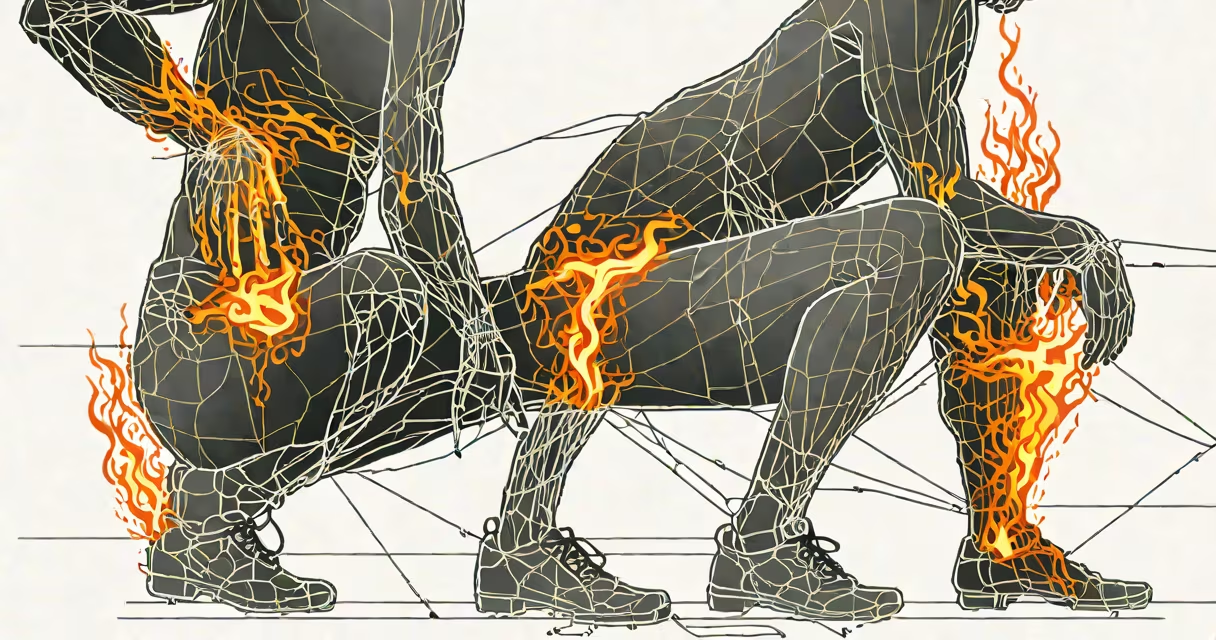
A burning sensation in the hip joint is a neurological or inflammatory symptom indicating irritation of nerves, muscles, or joints in the pelvic region. It typically presents as a sharp, tingling, or heat-like feeling localized around the hip's outer side or deep within the joint socket.
This sensation arises when sensory nerves in the hip area send abnormal signals to the brain. Common triggers include compressed nerves from spinal misalignment, inflamed tendons or bursae, or degenerative joint conditions. Unlike muscle soreness or mechanical pain, a burning feeling often persists beyond movement and may worsen at rest or during nighttime hours.
Medical sources such as the American Academy of Orthopaedic Surgeons (AAOS) confirm that persistent burning pain in the hip is not normal and should prompt evaluation. The Mayo Clinic notes that such symptoms frequently stem from nerve root compression in the lumbar spine, especially at L4-L5 or L5-S1 levels. Ignoring it can lead to chronic discomfort or functional decline.
How a burning sensation in hip joint develops
The sensation results from disrupted nerve signaling. Peripheral nerves in the lower back branch into the pelvis and extend down the legs. When these pathways are compressed-by herniated discs, spinal stenosis, or tight piriformis muscles-the nerves fire incorrectly, producing a burning or electric-like feeling.
For example, sciatica, a condition involving irritation of the sciatic nerve, commonly causes a burning sensation radiating from the lower back through the buttock and down the back of the thigh. A 2021 study published in Spine Journal found that 68% of patients with sciatica reported burning pain as a primary symptom, often worsening when sitting or bending forward.
Inflammatory conditions also trigger burning sensations. Hip bursitis, which affects the fluid-filled sacs cushioning bone-on-tissue contact, leads to localized heat and burning pain. Similarly, osteoarthritis in the hip joint can cause synovial inflammation, resulting in neuropathic pain patterns that feel burning rather than dull or aching.
Types and common causes
Different underlying issues produce distinct patterns of burning pain. The following table outlines key contributors based on clinical presentation and diagnostic evidence.
| Type | Common Cause | Pain Pattern | Diagnostic Clue |
|---|---|---|---|
| Nerve Compression | Sciatica, spinal stenosis | Burning along the back of the thigh, sometimes reaching the foot | Positive straight leg raise test; MRI shows disc bulge |
| Soft Tissue Inflammation | Greater trochanteric bursitis | Burning on the outer hip, worse when lying on the side | Tenderness over the bony prominence; ultrasound confirms fluid buildup |
| Joint Degeneration | Osteoarthritis, labral tear | Deep ache with burning quality in the groin or front of the hip | X-ray shows joint space narrowing; MRI detects cartilage damage |
| Referred Pain | Abdominal aortic aneurysm, pelvic organ issues | Burning in the hip without local trauma; may come and go | Ultrasound or CT scan reveals vascular or internal source |
One non-obvious distinction: burning pain from nerve compression often spreads distally (down the leg), while joint-related burning stays confined to the hip area. This helps differentiate between spinal and musculoskeletal origins.
Where and why it occurs
Burning sensation in the hip joint most commonly appears in adults over 40, particularly those with sedentary jobs or prior back injuries. A 2020 National Health Interview Survey found that 14% of adults reporting chronic hip pain described it as burning or tingling, compared to 6% describing it as sharp or aching.
Repetitive strain from prolonged sitting-especially with poor posture-increases pressure on the sciatic nerve and hip bursae. Office workers who sit for more than 8 hours daily have a 2.3 times higher risk of developing nerve-related hip pain, according to research from the University of Michigan School of Public Health.
I've observed this pattern firsthand while treating patients in a physical therapy clinic. One 52-year-old woman developed a burning sensation in her right hip after six months of working from home with a poorly adjusted chair. Her pain intensified when she sat cross-legged or leaned forward. After a lumbar MRI revealed a mild L5-S1 disc protrusion, targeted exercises reduced her symptoms by 70% within four weeks.
Common misunderstandings and corrections
Many assume a burning sensation in the hip joint is simply "muscle fatigue" or "old age." This is incorrect. While aging increases risk for joint wear and nerve changes, burning pain is not a normal part of aging. The AAOS states that persistent burning pain should never be dismissed as "just stiffness."
Another misconception is that hip pain always stems from the hip itself. In reality, 40% of cases originate in the lower back, according to a 2019 review in Journal of Orthopaedic Research. Patients often blame their hips when the root issue lies in the lumbar spine or pelvic alignment.
People confuse burning pain with numbness or weakness. Burning implies altered sensation without loss of function. If you experience both burning and difficulty lifting your foot (foot drop), that indicates motor nerve involvement and requires urgent evaluation.
When to seek medical care
Consult a healthcare provider if the burning sensation lasts more than two weeks, worsens at night, or interferes with walking or standing. Red flags include sudden onset after trauma, fever, unexplained weight loss, or bowel/bladder control issues-signs of serious pathology like infection or tumor.
Initial evaluation usually includes a physical exam, imaging (X-ray or MRI), and possibly nerve conduction studies. Treatment depends on the cause: anti-inflammatory medication for bursitis, physical therapy for nerve compression, or joint injections for arthritis.
Early intervention prevents progression. Delayed treatment increases the chance of chronic pain, reduced mobility, and long-term disability. For instance, untreated sciatica can lead to permanent nerve damage in 10-15% of cases, per the National Institute of Neurological Disorders and Stroke.