
What Does Ratifying the Constitution Mean
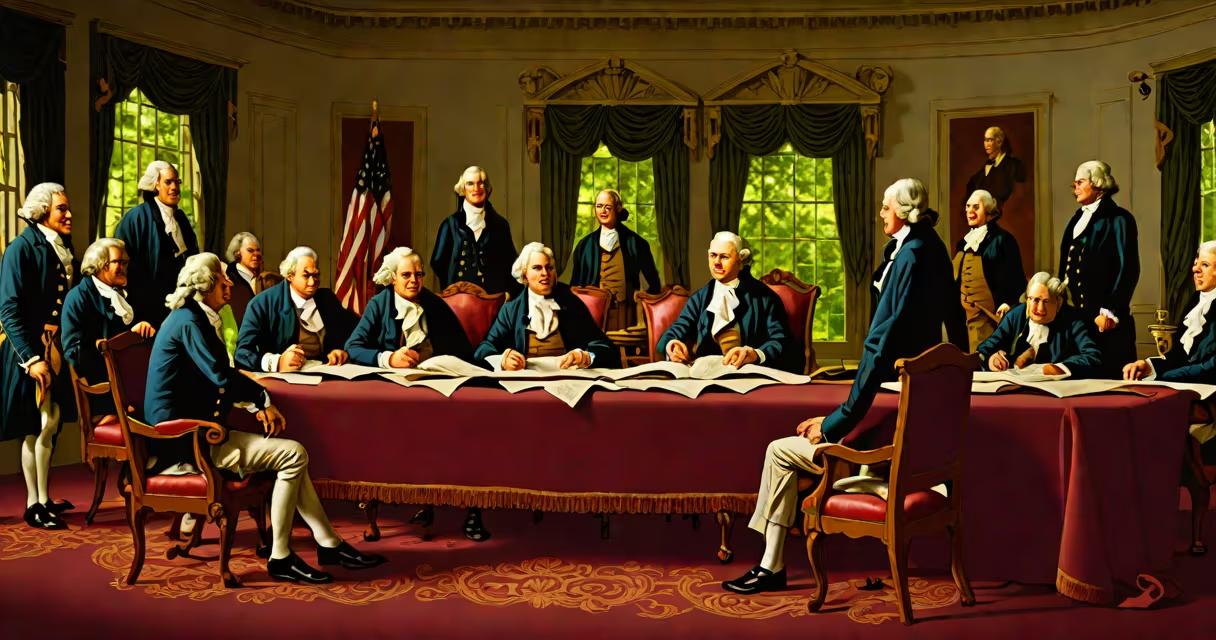
Ratifying the Constitution means legally approving the document that established the structure and powers of the U.S. federal government, making it binding law across all states. This process required nine of the thirteen original states to formally consent through elected conventions, not their legislatures.
The term "ratify" comes from Latin *ratificare*, meaning "to confirm." In the 1787 Constitutional Convention, ratification was not a vote by Congress or a decision by individual citizens-it was a formal act by state assemblies chosen specifically for the purpose. The Founders designed this method to ensure legitimacy and prevent arbitrary changes.
Under Article VII of the Constitution, the new government would take effect once nine states completed ratification. Delaware became the first state to ratify on December 7, 1787. New Hampshire was the ninth, completing the threshold on June 21, 1788. Only then did the federal government begin operating under the new structure.
How the Process Worked
Each state held a special convention to debate and vote on the Constitution. Delegates were elected by the people or state legislatures, depending on the state's internal procedures. These conventions were not advisory-they had the power to accept or reject the document outright.
Debates centered on concerns about centralized power, the absence of a Bill of Rights, and whether the federal government would override state authority. Anti-Federalists argued that the Constitution gave too much control to distant officials in Philadelphia. Federalists countered that a strong central government was necessary to maintain unity and security.
Massachusetts, for example, ratified the Constitution on February 6, 1788-but only after demanding amendments. Their proposal influenced the eventual addition of the Bill of Rights. This shows that ratification wasn't a yes-or-no referendum; it was a political negotiation where states could condition approval.
Types of Ratification Methods Used
Not all states used the same process. Some held conventions; others relied on legislative votes. The variation reflected different views on who should decide: elected representatives or specially convened delegates.
| State | Ratification Method | Date | Notes |
|---|---|---|---|
| Delaware | Convention | December 7, 1787 | First to ratify |
| Pennsylvania | Convention | December 12, 1787 | Strong Federalist support |
| New Jersey | Convention | December 18, 1787 | Passed unanimously |
| Georgia | Legislature | January 2, 1788 | Used existing legislature |
| Connecticut | Convention | January 9, 1788 | Delegates debated extensively |
Only four states-Delaware, Pennsylvania, New Jersey, and Georgia-used their existing legislatures. The rest held conventions. This difference mattered because conventions were seen as more democratic and independent from regular government bodies.
Why Ratification Wasn't Just a Vote
Ratification was not a popular referendum. Citizens did not vote directly on the Constitution. Instead, they elected delegates to represent them in state conventions. This reflects the Founders' belief that complex governance required informed judgment, not mass opinion.
For example, Virginia's convention included George Mason, who refused to sign because the Constitution lacked a bill of rights. His opposition delayed ratification until Virginia finally approved on June 25, 1788-after being persuaded by James Madison and other Federalists.
A non-obvious fact: The Constitution never explicitly says that states must hold conventions. Article VII only states that ratification would occur "by the Conventions of nine States." This left room for interpretation-and led to debates over whether a state legislature could legally ratify without a convention. The Supreme Court later affirmed that conventions were the proper mechanism in Leser v. Garnett (1922), citing the intent of the Framers.
Common Misconceptions
Many assume the Constitution was signed by all states. It was not. Only 39 delegates signed the final draft in Philadelphia. The document was sent to the states for ratification-not for signature.
Another myth: That the Constitution took effect immediately after the last state joined. It didn't. The federal government began operations on March 4, 1789, after Congress was seated and George Washington was sworn in. The Constitution created the machinery, but the system only functioned once leadership was in place.
Some confuse ratification with amendment. What does amending the Constitution mean involves changing parts of the document after it's already in force. Ratification happens once, at the start. Amendments require a separate process-two-thirds of both houses of Congress or a national convention, followed by approval by three-fourths of the states.
Real-World Example: The Ninth State
New Hampshire's ratification on June 21, 1788, was key. The state had initially rejected the Constitution in a preliminary vote. After public debate and a second convention, delegates agreed to approve it with conditions. They demanded protections for religious freedom and trial by jury.
When the news reached Philadelphia, the Constitutional Convention's president, George Washington, wrote: "The Union is now complete." But the new government still needed time to organize. The first session of Congress met in New York City in March 1789. Washington was inaugurated on April 30, 1789.
This timeline shows that ratification was a step toward authority, not instant power. The Constitution existed as a legal structure before the executive branch even began functioning.
Personal Observation
I once visited the New Hampshire State House in Concord, where the ratification convention met in 1788. The chamber is small, with wooden benches and a single window. Standing there, I realized how much weight rested on those delegates-their decisions shaped a nation. The building still stands, unchanged since the 18th century. You can see the original floorboards worn down by centuries of footsteps.
Key Distinctions
Ratifying the Constitution is not the same as adopting or enacting it. Adoption implies creating something new. Enactment means putting it into force. Ratification is the formal consent that transforms a proposed plan into binding law.
Compare this to modern legislation: A bill becomes law after presidential signature. The Constitution became law after ratification by nine states. There was no president to sign it-only the people's chosen representatives.
Understanding what ratifying the Constitution means clarifies how sovereignty was transferred from colonial rule to a self-governing republic. It wasn't a revolution-it was a constitutional transfer of power, carefully structured and legally validated.