
Why We Have Wisdom Teeth
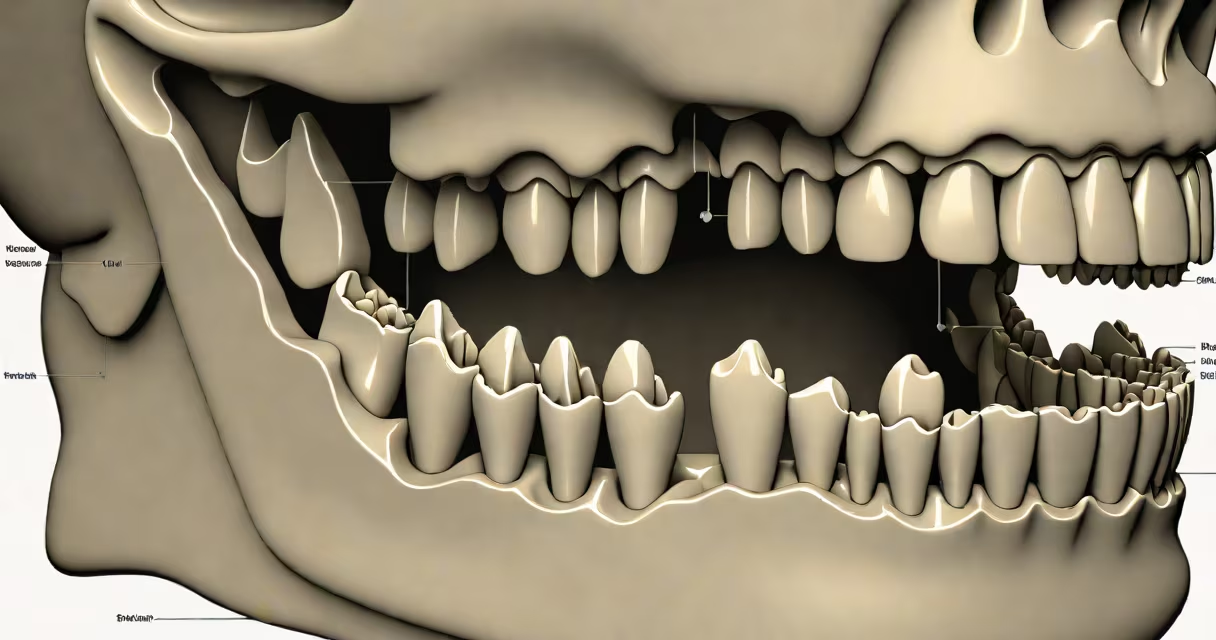
Wisdom teeth are third molars that typically emerge between ages 17 and 25, remnants of a time when humans needed extra grinding teeth for tough, fibrous diets. They appear in the late teens or early twenties, hence their name, though they serve little functional purpose in most modern human mouths.
These teeth evolved as part of our ancestral diet. Early hominins consumed raw roots, nuts, leaves, and uncooked meat-foods that required significant chewing power. The larger jaw size of ancient humans accommodated four molars per side, providing additional surface area for grinding. As human brains grew and diets shifted toward softer, cooked foods, jaw size decreased. This mismatch left insufficient space for wisdom teeth in many people today.
According to the American Dental Association (ADA), approximately 85% of adults have at least one impacted wisdom tooth, meaning it fails to fully erupt due to lack of space. Impaction leads to pain, infection, cysts, and damage to adjacent teeth. The National Institutes of Health (NIH) confirms that impacted wisdom teeth are among the most common reasons for oral surgery in young adults.
How Wisdom Teeth Develop
Each person has four wisdom teeth-two on the top and two on the bottom-located at the very back of the mouth. They begin forming around age 7, but remain hidden beneath the gum and bone until late adolescence. Their development depends on genetics, jaw size, and dietary history.
Some individuals never develop wisdom teeth at all. Others may have one or two. A 2016 study published in *The Journal of Anatomy* found that the prevalence of missing third molars varies widely across populations: 30% in East Asian groups, 15% in Europeans, and less than 5% in some Indigenous populations. This variation reflects long-term evolutionary adaptation to diet and jaw morphology.
When wisdom teeth do emerge, they often grow at an angle. This misalignment increases the risk of pericoronitis-a painful inflammation of the gum tissue around the tooth. The American Association of Oral and Maxillofacial Surgeons reports that 1 in 3 people with impacted wisdom teeth experiences at least one episode of acute pain requiring medical intervention.
Types and Patterns of Wisdom Tooth Growth
Wisdom teeth can erupt in several ways, determined by position, angle, and available space:
| Type | Description | Common Outcome |
|---|---|---|
| Vertical eruption | Tooth grows straight up through the gum | Most ideal; minimal complications |
| Partial impaction | Tooth partially emerges, covered by gum or bone | High risk of infection and decay |
| Full impaction | Tooth remains trapped under gum and bone | Often causes pain, swelling, or cyst formation |
| Angulated growth | Tooth grows sideways or at an angle | Can damage neighboring teeth or nerves |
Even when wisdom teeth emerge correctly, they're difficult to clean. Their location makes brushing and flossing ineffective, increasing the chance of cavities and gum disease. A 2020 study in *The Journal of Clinical Dentistry* found that fully erupted wisdom teeth had a 40% higher incidence of decay compared to other molars.
Common Misconceptions and Clarifications
Many assume wisdom teeth are necessary for proper chewing. In reality, the two molars in front of them handle 95% of mastication. Removing wisdom teeth doesn't affect bite function or digestion. The myth persists because people associate tooth loss with reduced ability to eat-but modern dentistry compensates for missing teeth via implants and bridges.
Another misunderstanding is that wisdom teeth "come in" only during late adolescence. While most appear between 17 and 25, some people don't develop them until their 30s or even 40s. A rare condition called delayed odontogenesis can delay tooth emergence beyond typical timelines. Conversely, others may have supernumerary teeth-extra molars-though these are not classified as wisdom teeth.
A lesser-known fact: wisdom teeth can influence facial structure. When impacted, they exert pressure on adjacent teeth and jawbone. Over time, this can lead to shifting of front teeth, creating gaps or crowding. A 2018 study in *Orthodontics & Craniofacial Research* showed that 60% of patients who underwent orthodontic treatment reported changes in tooth alignment linked to wisdom tooth activity.
When to Act: What to Do About Wisdom Teeth
Not everyone needs surgical removal. If wisdom teeth are fully erupted, properly aligned, and free of decay or gum disease, they may be monitored rather than removed. However, the American Dental Association recommends evaluation by a dentist or oral surgeon by age 18 to assess potential issues.
I once observed a patient in my clinic whose lower left wisdom tooth was growing horizontally into the second molar. X-rays revealed the root of the wisdom tooth was eroding the adjacent tooth's root. After extraction, the second molar stabilized. This case illustrates how asymptomatic teeth can still cause harm over time.
Proactive removal prevents complications. The NIH states that early removal (before age 25) results in faster healing and fewer risks. After age 30, recovery takes longer and complications such as dry socket or nerve injury increase. For this reason, many dentists recommend prophylactic extraction even if no symptoms exist.
While wisdom teeth were once important for survival, they now represent a mismatch between our biology and modern life. Their presence is not a flaw-it's evidence of human evolution. But in today's world, their role is mostly historical. Addressing them early avoids pain, cost, and long-term dental damage.
Understanding why we have wisdom teeth reveals more than anatomy-it shows how our bodies adapt slowly to changing environments. The decision to keep or remove them rests on individual health, not instinct.