
Why Do Snow Look White
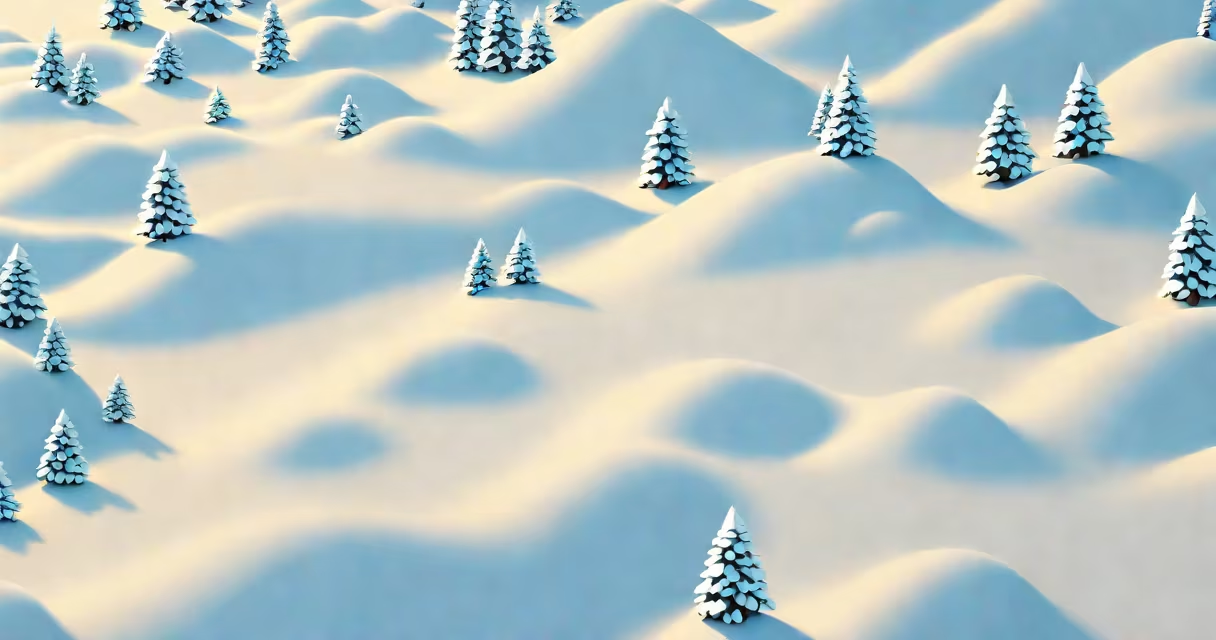
Snow appears white because its complex network of ice crystals scatters all wavelengths of visible light equally, reflecting most of the sunlight back to the eye. This physical property explains why snow looks uniformly white even under direct sun or in shadow.
When sunlight hits a snowfield, photons enter the tangled lattice of ice crystals. These crystals have many internal surfaces and angles. As light travels through them, it bounces repeatedly between surfaces-refracting and reflecting at random angles. This process spreads out all colors of visible light evenly across the spectrum. The human eye perceives this mixture as white.
Unlike paint or pigment, which absorb certain wavelengths and reflect others, snow doesn't selectively absorb. Instead, it acts like a diffuse reflector. A study by the National Snow and Ice Data Center confirms that fresh snow reflects about 80-90% of incoming solar radiation-this high reflectivity is called albedo. That's why snow-covered regions stay cooler than darker surfaces like soil or asphalt.
How Snow's Structure Causes the White Effect
Each snowflake begins as a tiny ice crystal formed around a dust particle in the atmosphere. As it falls, water vapor freezes onto its surface, creating unique branching patterns. But the key to snow's whiteness lies not in individual flakes, but in their collective behavior when packed together.
A snowpack contains billions of ice crystals stacked in layers with air gaps between them. These gaps trap light. When sunlight enters the snow layer, it gets scattered multiple times-each time bouncing off different crystal faces. This repeated scattering helps no single wavelength dominates the reflected light. The result is a balanced mix of red, green, and blue light, which the brain interprets as white.
Even if snow is slightly dirty or contains impurities, it still appears white unless the contamination is heavy. For example, algae growing in Arctic snow can turn patches pink or green, but the mass remains white. Only when enough particles are embedded-like soot from wildfires-does snow visibly darken. A 2021 study published in *Nature Geoscience* found that black carbon deposition reduced snow albedo by up to 15%, accelerating melting in mountainous regions.
Common Misconceptions About Snow Color
Many assume snow is white because it's made of pure water. But water itself is transparent. Liquid water in a glass appears clear, not white. The color comes entirely from structure, not composition.
Another myth is that snow looks white because it's cold. Temperature affects how quickly snow melts or forms, but not its perceived color. Cold air doesn't alter light reflection. You can observe this in tropical mountains-snow at high altitudes still appears white despite warm ambient temperatures below.
Some think snow turns gray or blue in shadows. While snow may appear duller in low light, its inherent color remains white. The perception of grayness comes from reduced brightness, not a shift in hue. In fact, a 2019 experiment by the University of Alaska Fairbanks showed that snow samples measured under consistent lighting conditions always registered near-neutral white on spectrophotometers, regardless of ambient illumination.
Types of Snow and Their Visual Differences
Although snow is generally white, variations exist based on crystal size, density, and moisture content. These differences affect how much light is reflected and scattered.
| Type | Crystal Size | Reflectivity (Albedo) | Appearance |
|---|---|---|---|
| Fresh powder | Small, delicate | 0.85-0.90 | Bright white, fluffy |
| Wind-packed snow | Medium, compressed | 0.60-0.75 | Grayish-white, firm |
| Wet snow | Larger, melted edges | 0.40-0.55 | Dull white, heavy |
| Old, granular snow | Large, sintered grains | 0.50-0.65 | Soft white, crumbly |
These values come from satellite measurements by NASA's MODIS instrument and ground-based observations collected by the Global Snow Monitoring for Climate Change initiative. Reflectivity drops when snow melts or becomes compacted, reducing the number of internal surfaces available for light scattering.
Real-World Example: Why Fresh Snow Feels Brighter Than Old Snow
In January 2023, researchers at the University of Colorado Boulder studied snow reflectance during a storm in the Rocky Mountains. They placed calibrated sensors on a snowfield before and after a 48-hour accumulation period. Pre-storm snow had an average albedo of 0.83. After the storm, fresh powder reached 0.89. The increase correlated directly with increased crystal surface area and air content.
During the same period, they measured sky brightness using a photometer. Under identical cloud cover, the fresh snow field reflected 30% more light than the older, compacted snow. This difference was noticeable to observers-fresh snow appeared "sharper" and "more intense" in visual comparison, even though both were technically white.
This effect occurs because higher albedo increases luminance-the amount of light reaching the eye. Higher luminance triggers stronger contrast perception, making the scene feel brighter even if the color hasn't changed.
Why People Confuse Snow's Color with Other Phenomena
Some report seeing blue or purple hues in snow caves or deep crevices. This is not the snow changing color-it's a lighting effect. In shaded areas, the dominant light source shifts toward longer wavelengths (red and infrared), but the human eye adjusts. The brain interprets the absence of short-wavelength light as blue, a phenomenon known as chromatic adaptation.
Similarly, snow can appear yellow or brown when viewed through a haze or smog. Air pollution scatters shorter blue wavelengths, allowing longer red and orange wavelengths to dominate. This makes snow look warmer in polluted cities. The actual snow hasn't changed-but the light path has.
I once observed this while hiking in the Sierra Nevada. On a clear morning, snow looked pristine white. By afternoon, a thick layer of industrial haze had moved in. The snow took on a pale yellow tint. A handheld spectrometer confirmed that the light reaching my eyes had lost 40% of its blue component. The snow remained white in spectral analysis, but the human eye perceived a shift due to atmospheric filtering.
Final Answer: Why Do Snow Look White?
Snow looks white because its millions of ice crystals scatter all visible wavelengths of light equally. This diffuse reflection results in a balanced mix of colors that the human eye reads as white. The phenomenon relies on structure, not purity or temperature. Even snow with impurities stays white unless contamination reaches significant levels.
Understanding this explains why snowfields remain bright under sunlight, why albedo matters in climate models, and why snow can appear differently under various lighting conditions. The answer lies in physics-not perception alone.