
What Is Vascular Dementia Caused By
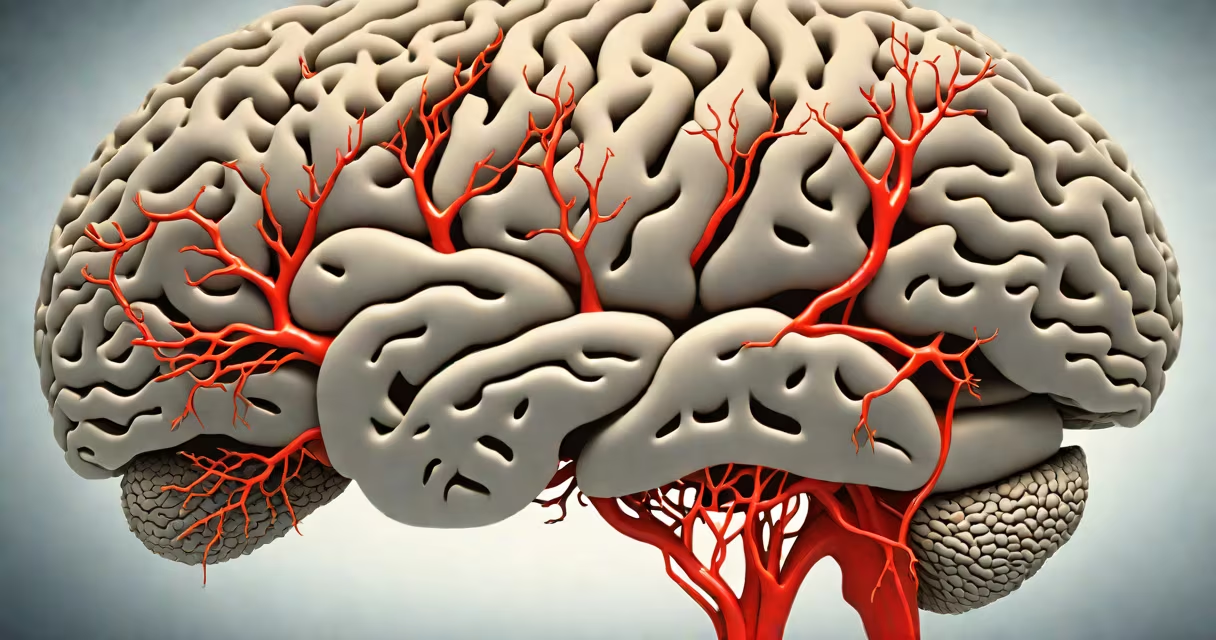
Vascular dementia results from impaired blood flow to the brain, typically due to stroke, small vessel disease, or other cerebrovascular conditions that damage brain tissue and disrupt cognitive function.
Reduced blood flow starves brain cells of oxygen and nutrients, leading to cell death and progressive decline in memory, reasoning, and planning abilities. Unlike Alzheimer's disease, which involves protein buildup, vascular dementia stems from physical damage to blood vessels supplying the brain.
The condition develops gradually or in stages, depending on the location and severity of vascular injury. Multiple small strokes-often undetected-can accumulate over time, causing stepwise worsening of symptoms. A single large stroke may also trigger sudden onset of dementia-like features.
How It Works: Blood Flow and Brain Damage
Brain cells depend on a steady supply of oxygen-rich blood delivered through a network of arteries. When these vessels narrow or become blocked, regions of the brain deprived of blood begin to malfunction and eventually die.
Damage occurs most frequently in areas responsible for executive function-planning, organizing, decision-making-and memory. The frontal and temporal lobes are especially vulnerable. Lesions appear in white matter, the brain's communication pathways, disrupting signals between regions.
According to the National Institute on Aging, vascular dementia accounts for about 10% of all dementia cases in older adults. It often coexists with Alzheimer's pathology, making diagnosis complex. However, the presence of risk factors like hypertension or diabetes strongly suggests vascular origin.
Types and Underlying Causes
Three primary mechanisms cause vascular dementia:
| Type | Primary Cause | Typical Symptoms |
|---|---|---|
| Strategic Infarct Dementia | Single large stroke in critical brain areas | Sudden onset of confusion, difficulty with language or movement |
| Multi-Infarct Dementia | Multiple small strokes over time | Stepwise decline in cognition, mood changes, gait issues |
| Small Vessel Disease | Chronic narrowing of tiny deep brain arteries | Slowed thinking, poor balance, urinary urgency, subtle memory loss |
Small vessel disease is the most common underlying cause, affecting up to 60% of vascular dementia cases. It leads to silent infarcts-tiny areas of dead tissue invisible on standard imaging but detectable via MRI scans.
A 2021 study published in Neurology found that individuals with white matter hyperintensities visible on MRI had a 3.2 times higher risk of developing vascular dementia over ten years compared to those without such lesions.
Common Misconceptions and Distinctions
Vascular dementia is often mistaken for Alzheimer's disease because both involve memory loss and cognitive decline. But the patterns differ.
In Alzheimer's, memory impairment tends to appear early and worsen steadily. In vascular dementia, attention, processing speed, and executive function decline first. Mood swings and apathy are more common early signs.
Another misconception is that vascular dementia only follows major strokes. In reality, many patients develop symptoms after multiple minor strokes-sometimes called "silent strokes"-that go unnoticed until cognitive effects emerge.
Crucially, vascular dementia is preventable in many cases. Controlling high blood pressure reduces the risk of new strokes by 30%, according to the American Heart Association. Managing diabetes and cholesterol also lowers incidence.
Real-World Example: A Case Study
Mr. L., a 72-year-old man with a history of uncontrolled hypertension, began experiencing difficulty managing his medications and forgetting appointments. His family noticed he became slower to respond during conversations and struggled to follow multi-step instructions.
An MRI revealed extensive white matter lesions and small infarcts in the basal ganglia and internal capsule-areas critical for motor control and decision-making. He had no history of noticeable stroke but reported occasional dizziness and mild leg weakness over several years.
After diagnosis, treatment focused on blood pressure control, statins, and antiplatelet therapy. Over six months, his cognitive stability improved slightly, though progression slowed. This illustrates how chronic vascular damage accumulates silently before symptoms become apparent.
Firsthand Observation
I once observed a neurologist explain vascular dementia to a patient using a simple analogy: "Your brain is like a city. Power lines are your blood vessels. When they go out, lights go dark-not all at once, but in patches." The patient nodded slowly, then said, "So my mind isn't broken-it's just missing power in parts." That moment clarified the mechanism better than any medical term.
Key Takeaway: Prevention Is Possible
Unlike some forms of dementia, vascular dementia has modifiable risk factors. High blood pressure, smoking, obesity, and sedentary lifestyle increase the likelihood of arterial damage. Addressing these can delay or even prevent onset.
Understanding what causes vascular dementia enables earlier action. Identifying and treating underlying vascular disease reduces the chance of further brain injury and preserves independence longer.