
What Is a Liberal Person
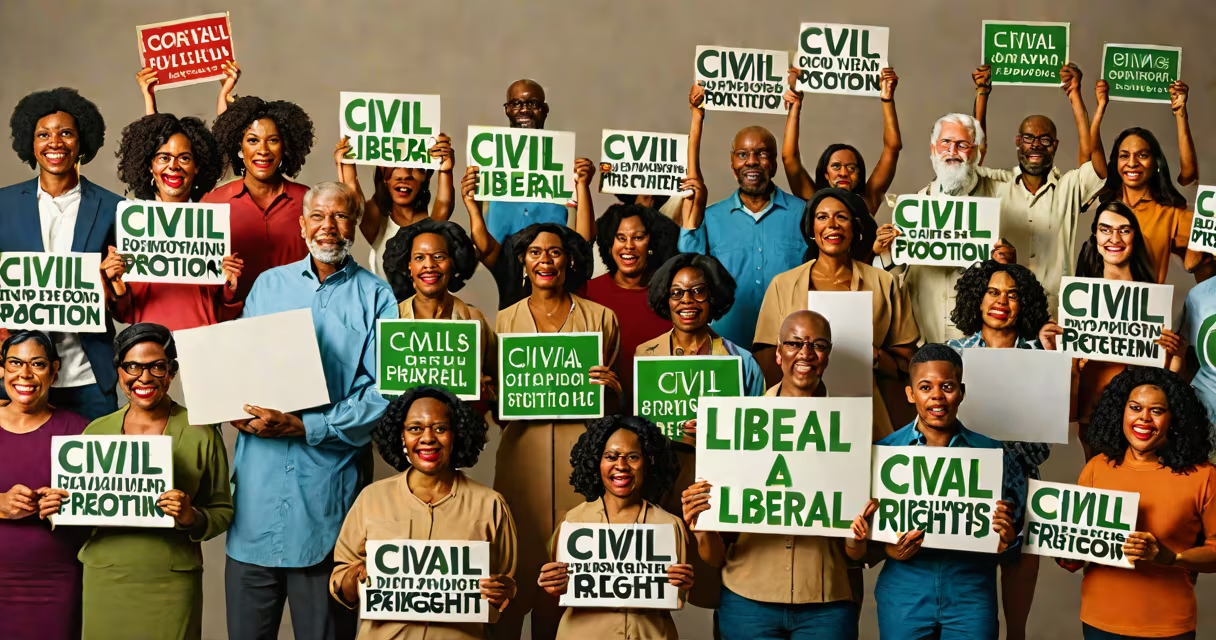
A liberal person prioritizes individual freedoms, social equality, and government policies that reduce economic and social disparities. This stance often includes support for civil rights, environmental regulation, and public services like healthcare and education.
Liberalism emerged in the 18th century as a response to absolutist rule and religious dominance. Thinkers like John Locke argued that individuals possess natural rights to life, liberty, and property-ideas that underpin modern liberal democracies. Today, a liberal person typically advocates for policies that protect minority rights, uphold democratic institutions, and address systemic inequities through legislation and social programs.
The term "liberal" differs between the U.S. and Europe. In American politics, "liberal" describes someone who supports progressive reforms, such as expanded welfare, gun control, and climate action. In contrast, European usage often aligns with classical liberalism-emphasizing free markets, limited government, and personal responsibility. The distinction matters: a U.S. liberal may favor higher taxes to fund public housing, while a European liberal might oppose state intervention in labor markets.
How Liberalism Works in Practice
Liberal principles manifest in policy decisions, legal interpretations, and everyday choices. A liberal person believes that laws should protect individuals from harm caused by others-not just physical violence, but discrimination, poverty, and misinformation. They support regulations that prevent corporations from exploiting workers or polluting communities.
For example, the U.S. Affordable Care Act (2010) was enacted based on liberal ideals. It expanded health insurance access to millions of low-income Americans, funded through progressive taxation. The law reduced uninsured rates from 16% in 2010 to 8% by 2016, according to the Centers for Disease Control and Prevention (CDC). This outcome reflects a core liberal belief: government can improve well-being when designed to serve the public good.
Liberalism also influences judicial reasoning. In *Obergefell v. Hodges* (2015), the U.S. Supreme Court ruled that same-sex marriage is protected under the Equal Protection Clause. The majority opinion, written by Justice Kennedy, cited dignity, autonomy, and equal treatment-all central tenets of liberal jurisprudence. The decision extended constitutional rights to LGBTQ+ individuals, reflecting a commitment to expanding freedom beyond traditional boundaries.
Types of Liberal Thought
Liberalism isn't monolithic. Major branches include:
| Type | Core Focus | Policy Example |
|---|---|---|
| Classical Liberalism | Individual liberty, free markets, minimal state | Opposition to income tax; support for deregulation |
| Social Liberalism | Equality of opportunity, social justice, public goods | Universal healthcare; affirmative action |
| Progressive Liberalism | Systemic reform, anti-racism, climate action | Green New Deal proposals; criminal justice overhaul |
Most contemporary liberals in the U.S. identify with social or progressive liberalism. They accept that inequality persists even in free markets and argue that targeted interventions-like subsidized childcare or student debt relief-are necessary to level the playing field.
Non-obvious fact: Not all liberals support the same economic model. Some advocate for wealth redistribution via taxation, while others prefer market-based solutions like universal basic income. Both approaches stem from liberal values but differ on implementation. The shared goal remains: reducing suffering and increasing agency.
Common Misconceptions
Many confuse liberalism with radicalism or socialism. A liberal person does not necessarily want to abolish private property or eliminate capitalism. Instead, they seek to regulate systems to prevent abuse and ensure fairness. For instance, a liberal may support taxing carbon emissions not to destroy industry, but to incentivize cleaner energy and protect public health.
Another myth: Liberals don't value hard work or personal responsibility. On the contrary, many liberal policies aim to remove barriers so people can succeed. When a liberal supports paid family leave, they're not promoting idleness-they're ensuring parents aren't forced to choose between income and caregiving. The goal is enabling effort, not replacing it.
I once observed a town hall meeting in Portland where a liberal candidate discussed infrastructure funding. An attendee interrupted: "You're just trying to spend money." The candidate responded, "I'm trying to fix roads so teachers can reach schools on time, and so kids don't walk miles through rain to catch buses. That's not spending-it's investing in dignity." The room fell silent. That moment captured the difference: liberalism isn't about ideology alone-it's about outcomes.
Where and Why It's Used
Liberal ideas shape national constitutions, court rulings, and international agreements. The Universal Declaration of Human Rights (1948), drafted by a UN committee including representatives from liberal democracies, states that everyone has the right to freedom of expression, religion, and fair trial. These principles are foundational to liberal governance.
In education, liberal curricula emphasize critical thinking, historical context, and civic engagement. Students learn about the Civil Rights Movement not as a distant event, but as a living struggle for equity. This approach fosters informed citizens who understand their role in sustaining democratic norms.
Liberalism also informs global cooperation. The Paris Agreement (2015) reflects liberal assumptions: nations agree to limit emissions because collective action prevents irreversible damage. No single country can solve climate change alone-but together, they can act within a structure of shared responsibility.
What It's Often Confused With
Liberalism is frequently mistaken for libertarianism, especially in media narratives. Libertarians prioritize freedom from government interference above all else. They oppose taxes, regulations, and mandates-even those that protect vulnerable populations. A liberal might support a minimum wage law to prevent exploitation; a libertarian would see it as state overreach.
Similarly, some equate liberalism with moral relativism. But liberalism doesn't reject objective standards. It simply argues that rights and protections should be applied universally, regardless of race, gender, or belief. A liberal person opposes hate speech not because they believe all opinions are equally valid, but because unchecked hate threatens public safety and democratic discourse.
Finally, labeling someone "liberal" doesn't imply they hold consistent views across all issues. A person can support abortion rights while opposing military intervention abroad. That inconsistency isn't weakness-it's evidence of complex, lived experience shaping judgment.
Understanding what is a liberal person requires looking beyond slogans. It means recognizing a worldview rooted in empathy, evidence, and institutional trust. When a liberal supports voting rights, they're not just defending a procedure-they're protecting the ability of marginalized voices to shape society. That's the enduring power of the idea.
Liberalism continues to evolve. As new challenges emerge-from artificial intelligence to pandemics-the principles remain relevant. The focus stays on human flourishing, fairness, and collective responsibility. A liberal person isn't defined by a single vote or slogan. They're defined by a commitment to building a world where everyone has space to live freely and fully.