
What Is Unconscious
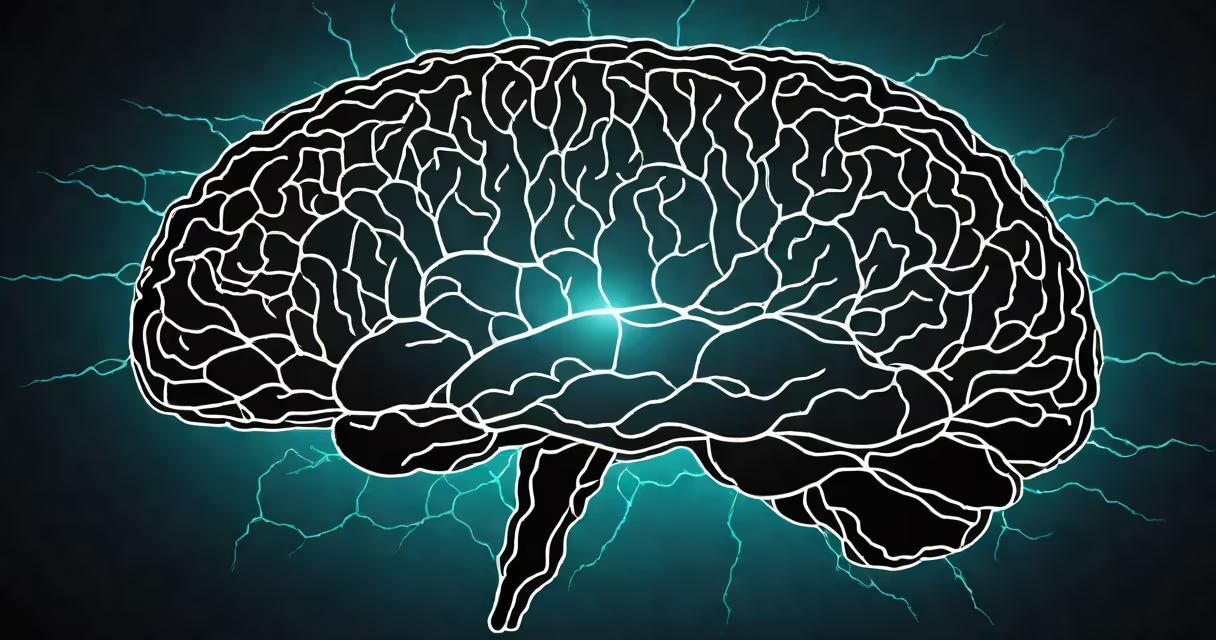
The unconscious refers to mental processes that operate outside conscious awareness, including automatic thoughts, repressed memories, and instinctual drives. These processes influence behavior, emotions, and perception without the individual being aware of their role.
Unconscious activity is not random. It follows patterns rooted in early life experiences, evolutionary biology, and neurological wiring. The concept emerged in the late 19th century as psychiatry began separating observable behavior from internal mental states. Sigmund Freud formalized the idea, arguing that unconscious forces drive much of human action, especially those tied to desire, fear, and trauma.
Modern cognitive science confirms that the brain performs vast amounts of processing below the threshold of awareness. For example, the visual cortex interprets complex scenes in milliseconds-before you consciously register what you're seeing. This automatic filtering allows survival and efficient decision-making, even when you're not actively thinking about it.
How the Unconscious Works
Neuroscience shows that the brain's default mode network activates during rest, daydreaming, or mind-wandering-states where conscious attention is low. During these times, the unconscious processes emotional associations, retrieves memories, and generates intuitive judgments. Functional MRI scans reveal that regions like the amygdala and insula light up during unconscious threat detection, even when participants report no fear.
Freud distinguished between the conscious, preconscious, and unconscious. The preconscious holds memories accessible with effort-like recalling your childhood home address. The unconscious contains material too threatening or conflicting to enter awareness. Repressed memories of abuse, for instance, may resurface only under therapy or in dreams.
Recent research supports the existence of implicit memory-learning that occurs without conscious recall. A 2016 study published in Nature Neuroscience demonstrated that people could learn complex motor sequences while asleep, showing that the brain consolidates skill even without awareness. This proves that learning and adaptation happen unconsciously.
Types and Components of the Unconscious
While "unconscious" is often treated as a single entity, psychologists identify distinct layers:
| Type | Description | Example |
|---|---|---|
| Repressed unconscious | Thoughts and feelings pushed out of awareness due to distress | A child who forgets a traumatic event but later exhibits anxiety around similar situations |
| Preconscious | Information not currently in focus but retrievable with effort | Remembering your mother's birthday after a prompt |
| Automatic processing | Neural routines that run without attention | Driving a familiar route while mentally rehearsing a conversation |
| Collective unconscious | Jung's theory of shared archetypes across cultures | Universal symbols like the hero, the shadow, or the wise old man appearing in myths worldwide |
Carl Gustav Jung expanded the concept beyond personal repression. He proposed a collective unconscious-a layer of inherited psychological patterns common to all humans. These archetypes manifest in dreams, art, religion, and cultural narratives. For example, the "hero" archetype appears in stories from Gilgamesh to Luke Skywalker, suggesting a shared narrative template shaped by evolution and group survival.
One non-obvious distinction: the unconscious is not synonymous with the subconscious. While both lie beneath awareness, "subconscious" implies a middle state-accessible with effort. The unconscious, by contrast, operates independently of will. You cannot will yourself to remember a repressed trauma. The term "subconscious" is often misused in pop psychology to describe anything not conscious, but that's inaccurate.
Common Misconceptions and Real-World Applications
People often confuse the unconscious with "intuition" or "gut feeling." While intuition involves rapid unconscious evaluation, it's not the same as unconscious content. Intuition is a form of pattern recognition based on past experience. The unconscious includes deeper, less accessible material-such as repressed shame or unacknowledged desires.
Another error is assuming the unconscious is purely negative. Freud associated it with danger-repressed aggression, sexual urges, and guilt. But modern psychology views it as neutral. It stores everything: fears, skills, preferences, habits, and creative impulses. A musician may improvise a melody without knowing how it was formed-this creativity arises from unconscious processing.
I once observed this firsthand during a workshop on dream analysis. A participant described recurring dreams of falling into water. After exploring childhood memories, she recalled being startled by a sudden splash during a family beach trip at age five. She had no conscious memory of the event-but her dreams repeated the sensation. Only through guided reflection did the unconscious content surface. This illustrates how dreams serve as a window into unresolved inner material.
Unconscious processes also affect social behavior. Studies show that people form opinions about others within 100 milliseconds of meeting them-based on facial symmetry, posture, and tone. These snap judgments occur unconsciously and influence hiring, dating, and political choices. A 2021 Journal of Experimental Psychology study found that job applicants with calm expressions were rated higher-even when the interviewers couldn't explain why.
Why It Matters in Daily Life
Understanding the unconscious helps explain why people act against their own interests. A person who values honesty may lie repeatedly-driven by unconscious fear of rejection. Therapy, particularly psychodynamic and cognitive-behavioral approaches, targets these hidden drivers. By bringing unconscious patterns into awareness, individuals gain control over destructive cycles.
Businesses use unconscious insight in marketing. Advertisements often embed subtle cues-music, color, pacing-that trigger emotional responses without logical reasoning. A 2019 study in Marketing Science showed that ads using warm colors and slow tempo increased purchase intent by 18% compared to neutral versions-without viewers noticing the difference.
The unconscious is not a mysterious void. It's a structured system of mental operations that shape identity, relationships, and choices. Recognizing its presence allows greater self-awareness and intentional living. When you feel drawn to someone without knowing why, or decide that feels "right" but lacks logic-those are signs of unconscious influence at work.