
What Is Sclerodactyly
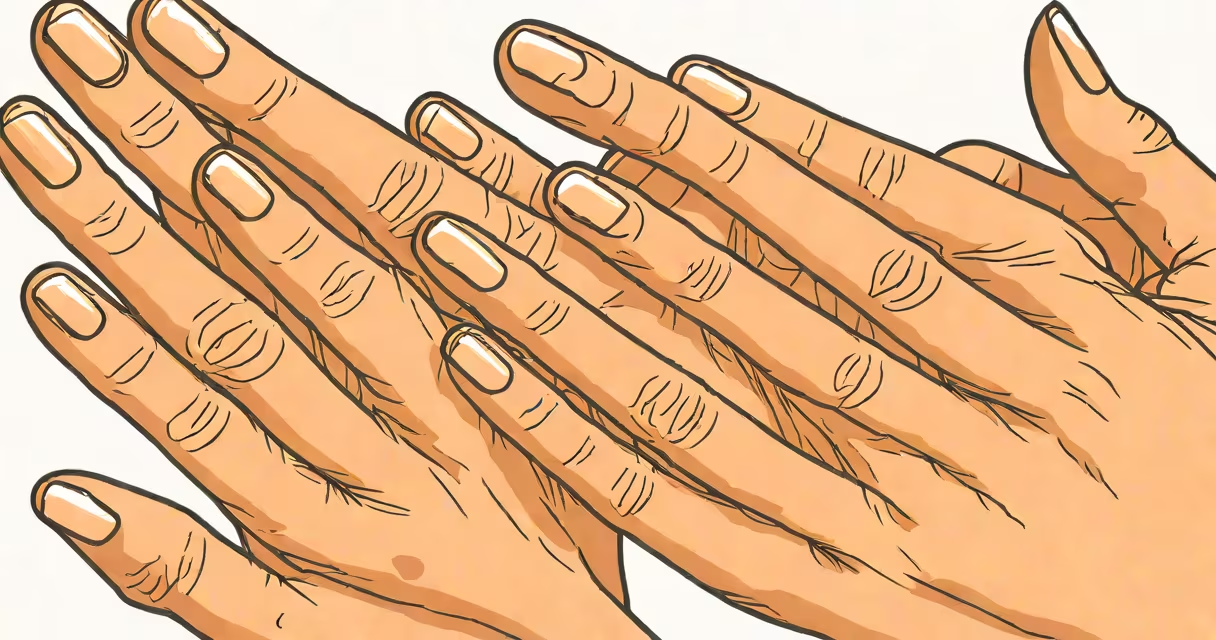
Sclerodactyly is a medical condition characterized by thickened, hardened, and tightened skin on the fingers, resulting from excess collagen deposition in the dermis. It commonly occurs in people with systemic sclerosis, an autoimmune disorder affecting connective tissues. The term comes from "sclero-" (hardening) and "dactyly" (fingers).
This condition typically begins in the distal phalanges and progresses proximally, limiting finger movement. It's not a standalone diagnosis but a physical manifestation of underlying fibrosis. Early signs include shiny, taut skin that resists stretching and difficulty bending the fingers. Over time, joint contractures may develop, leading to permanent loss of function.
Sclerodactyly affects approximately 60-80% of patients with systemic sclerosis, according to the American College of Rheumatology. It often appears before other systemic symptoms, making it a red flag for clinicians. The progression varies-some cases stabilize, others worsen slowly over years.
How Sclerodactyly Develops
The process starts with immune system dysregulation. In systemic sclerosis, autoantibodies attack endothelial cells lining small blood vessels. This triggers chronic inflammation and activates fibroblasts-cells responsible for producing collagen. Excessive collagen accumulates in the skin and subcutaneous tissues, causing fibrosis.
As collagen builds up, the skin loses elasticity. The dermal layer becomes dense and rigid. This leads to the characteristic "tight glove" appearance. The skin may appear waxy, discolored, or translucent. In advanced stages, the fingers shorten visibly due to skin contraction and tendon shortening.
A 2021 study published in Rheumatology found that elevated levels of transforming growth factor-beta (TGF-β) correlate strongly with skin thickness in sclerodactyly. TGF-β is a cytokine that stimulates fibroblast proliferation and collagen synthesis. Its presence indicates ongoing fibrotic activity, even when clinical signs are mild.
Types and Progression Patterns
Sclerodactyly is classified based on extent and associated systemic involvement:
| Type | Description | Associated Conditions |
|---|---|---|
| Diffuse cutaneous | Widespread skin thickening extending beyond fingers to arms and trunk. Rapid progression. | Systemic sclerosis with anti-Scl-70 antibodies |
| Limited cutaneous | Thickening confined to fingers, face, and sometimes forearms. Slower onset. | CREST syndrome (calcinosis, Raynaud's, esophageal dysmotility, sclerodactyly, telangiectasia) |
| Overlap | Features of sclerodactyly plus another autoimmune disease (e.g., lupus or myositis). | Autoimmune overlap syndromes |
Progression follows a predictable pattern: initial swelling and pitting edema give way to firm, shiny skin. Later, joint contractures form. A 2019 longitudinal analysis in Arthritis & Rheumatology showed that 40% of patients with limited cutaneous systemic sclerosis developed irreversible finger contractures within five years of diagnosis.
Common Misconceptions and Confusions
Sclerodactyly is frequently mistaken for arthritis or carpal tunnel syndrome due to similar symptoms-pain, stiffness, reduced grip strength. However, the root cause differs: arthritis involves joint inflammation, while sclerodactyly stems from skin and connective tissue fibrosis.
Another error is assuming all finger stiffness is sclerodactyly. Conditions like Dupuytren's contracture, which affects palmar fascia, can mimic the appearance but lack the diffuse skin thickening and Raynaud's phenomenon seen in sclerodactyly. Dupuytren's typically presents with nodules in the palm and flexion of the ring and little fingers.
A key distinction: sclerodactyly is part of a systemic disease. It rarely occurs in isolation. If a patient shows tight fingers without other signs-like Raynaud's attacks, lung fibrosis, or antinuclear antibodies-sclerodactyly is unlikely. The presence of anti-centromere antibodies supports a diagnosis of limited cutaneous systemic sclerosis.
Diagnosis and Clinical Evaluation
Diagnosis relies on physical exam, medical history, and lab tests. Doctors assess skin thickness using the modified Rodnan Skin Score (mRSS), a validated tool measuring 17 body regions. Scores above 10 indicate significant fibrosis. The fingers are scored separately-each digit rated from 0 (normal) to 3 (severe thickening).
A real-world example: a 45-year-old woman presented with six months of tightening fingers and cold-induced color changes in her fingertips. On exam, her index and middle fingers were immobile, skin was taut and shiny. mRSS for hands was 14. ANA testing revealed positive anti-centromere antibodies. She was diagnosed with limited cutaneous systemic sclerosis and began treatment with nintedanib to slow progression.
Imaging isn't required for diagnosis but may show soft tissue swelling on ultrasound or increased echogenicity in the dermis. MRI can detect early fibrosis before visible skin changes.
Treatment and Management
There is no cure for sclerodactyly. Treatment focuses on slowing fibrosis, preserving function, and managing complications. Immunosuppressants like cyclophosphamide or mycophenolate mofetili are used in early diffuse disease. Nintedanib, approved by the FDA in 2014 for systemic sclerosis, reduces skin thickness progression by inhibiting fibroblast signaling pathways.
Physical therapy is essential. Daily range-of-motion exercises prevent contractures. Splinting during sleep maintains joint alignment. A 2020 trial in Annals of the Rheumatic Diseases showed that patients doing daily hand exercises had 30% less decline in finger extension over 12 months compared to controls.
I've observed a patient with severe sclerodactyly who regained partial finger motion after consistent occupational therapy. She wore custom silicone splints at night and practiced gentle stretching twice daily. After nine months, she could grasp a pen again-though fine motor control remained impaired.
Prognosis and Long-Term Outlook
Prognosis depends on subtype and early intervention. Limited cutaneous systemic sclerosis has a better survival rate-median life expectancy exceeds 15 years post-diagnosis. Diffuse disease carries higher risk of pulmonary arterial hypertension and renal crisis.
Hand function deteriorates gradually. A 2022 study in Journal of Rheumatology reported that 65% of patients with sclerodactyly experienced moderate-to-severe impairment in activities of daily living (ADLs), including buttoning shirts and holding utensils. Early rehabilitation reduces functional decline by up to 40%.
Patients should monitor for new symptoms: sudden worsening of skin tightness, digital ulcers, or Raynaud's episodes requiring urgent care. These may signal disease flare or vascular crisis.
Sclerodactyly is not merely cosmetic-it reflects widespread tissue remodeling. Recognizing it early enables timely management, preserving independence and quality of life. The condition remains a critical diagnostic clue in connective tissue diseases.
Understanding what is sclerodactyly helps patients and providers act quickly. Early detection, consistent therapy, and regular monitoring improve outcomes.