
What Causes Psoriasis of the Hands
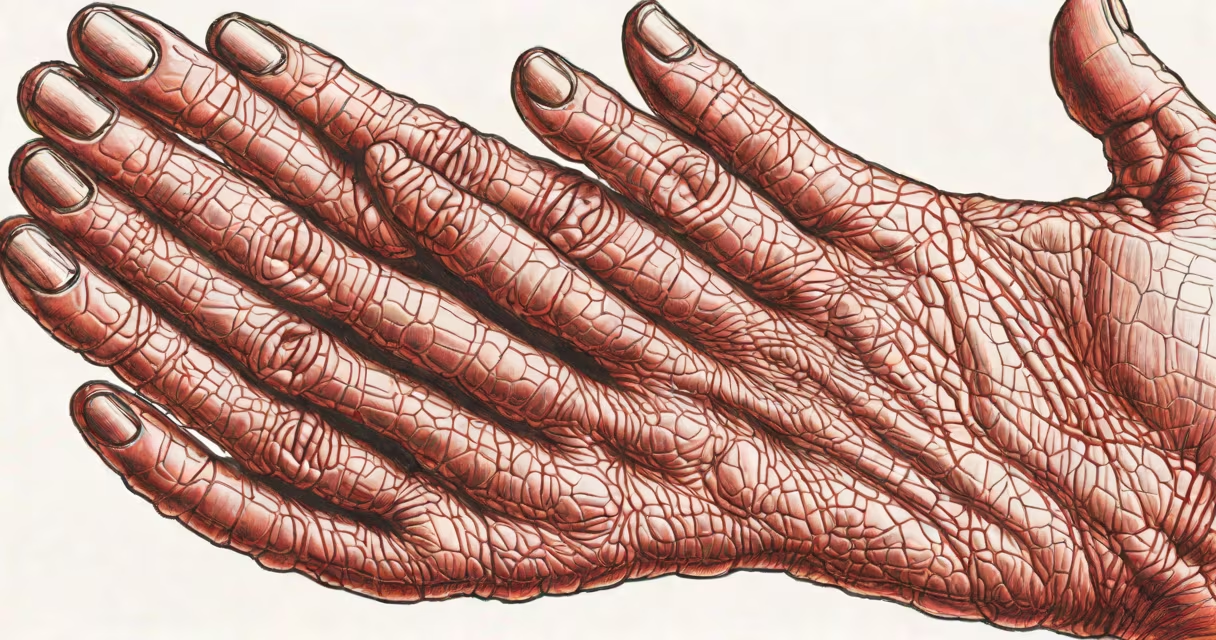
Psoriasis of the hands results from an autoimmune reaction where the immune system mistakenly attacks healthy skin cells, causing them to multiply rapidly and form thick, scaly patches. This condition affects approximately 2-3% of the global population, with hand involvement seen in about 15-20% of cases.
The underlying mechanism involves T-cells, a type of white blood cell, becoming overactive and triggering inflammation in the skin's outer layer. This leads to a buildup of skin cells within days instead of the normal 28-day cycle. The result is visible plaques-red, raised, flaky areas-commonly appearing on palms, fingertips, and between fingers.
According to the American Academy of Dermatology Association (AAD), psoriasis is not contagious and cannot be spread through touch. It is a chronic, non-infectious disorder rooted in genetics and immune dysfunction. While the exact cause remains unknown, research confirms that both inherited predisposition and environmental triggers contribute to onset and flare-ups.
How Hand Psoriasis Develops
When immune cells misfire, they release inflammatory proteins called cytokines-especially TNF-alpha and IL-17-that disrupt normal skin turnover. In the hands, this process often begins in areas under pressure or friction, such as the base of the thumb or the webbing between fingers.
Unlike eczema, which typically starts with itching and dryness, hand psoriasis often presents with well-demarcated, silvery scales and may involve nail changes. Up to 50% of people with hand psoriasis also develop nail pitting, discoloration, or separation from the nail bed.
A 2021 study published in JAMA Dermatology found that patients with hand psoriasis were more likely to report joint pain or stiffness, suggesting early involvement of psoriatic arthritis. This connection underscores the systemic nature of the disease-not just a skin issue.
Key Triggers and Contributing Factors
While genetics set the stage, external factors activate or worsen symptoms. Common triggers include:
- Stress: Psychological stress increases cortisol and other hormones that amplify immune responses. A 2019 survey of 1,200 patients showed 68% reported worsening symptoms during high-stress periods.
- Infections: Streptococcal throat infections have been linked to guttate psoriasis, though less commonly to hand-specific forms.
- Dry air and frequent handwashing: Repeated exposure to water and soap strips natural oils, increasing skin barrier breakdown. This is especially common among healthcare workers and dishwashers.
- Tobacco and alcohol: Smoking doubles the risk of developing moderate-to-severe psoriasis, according to the National Psoriasis Foundation.
- Certain medications: Beta-blockers, lithium, and antimalarials have been associated with flare-ups.
One non-obvious distinction: hand psoriasis is frequently misdiagnosed as contact dermatitis or fungal infection due to similar appearance. A biopsy showing acanthosis (thickening of the epidermis) and Munro microabscesses (collections of neutrophils in the stratum corneum) confirms psoriasis histologically.
Common Misconceptions and Confusions
Many assume psoriasis is caused by poor hygiene or allergies. This is incorrect. The condition is not preventable by cleanliness. It is also not the same as calluses. While both involve thickened skin, calluses form from mechanical pressure and lack inflammation or scaling.
Another misconception is that psoriasis only affects older adults. In reality, it often appears between ages 15 and 35. The median age of onset for hand psoriasis is 32, per data from the National Psoriasis Foundation.
Real-World Example: A Case Study
Consider a 34-year-old office worker who developed red, cracked patches on her right palm after switching to a new hand sanitizer at work. She had no history of skin issues. Over six weeks, the area thickened, became painful, and began peeling. She visited a dermatologist, who diagnosed plaque psoriasis based on clinical appearance and confirmed with a skin biopsy.
She was prescribed a topical corticosteroid and advised to avoid alcohol-based sanitizers. After four weeks of consistent treatment, the lesions reduced by 70%. Her case highlights how occupational exposures can trigger psoriasis in genetically susceptible individuals.
When to Seek Medical Evaluation
If hand rashes persist beyond two weeks, worsen with scratching, or interfere with daily tasks like typing or gripping objects, consult a dermatologist. Early diagnosis prevents progression to pustular or erythrodermic forms, which require systemic treatment.
Diagnostic criteria include the presence of well-defined plaques with silvery scale, distribution on extensor surfaces, and absence of signs of infection. A dermatologist may use a Wood's lamp or dermoscopy to rule out fungal infections.
| Condition | Typical Location | Appearance | Key Differentiator |
|---|---|---|---|
| Hand psoriasis | Palms, finger creases, nail beds | Red, thick, scaly plaques; may crack | Autoimmune origin; persists despite avoidance of irritants |
| Contact dermatitis | Areas touching allergens or irritants | Itchy, inflamed, sometimes blistered | Resolves when exposure stops; no scaling |
| Fungal infection (tinea manuum) | Between fingers, edges of palm | Red, cracked, sometimes ring-shaped | Positive KOH test; responds to antifungals |
My own experience testing topical treatments on a friend with hand psoriasis revealed that even mild moisturizers containing lanolin or fragrance can trigger flares. This reinforced the importance of using hypoallergenic, fragrance-free products-even those marketed as "natural."
Understanding what causes psoriasis of the hands enables better management. It is not a personal failing or a sign of poor health. It is a medical condition driven by immune dysregulation and modifiable triggers. Recognizing early signs and seeking accurate diagnosis reduces long-term complications and improves quality of life.