
how to read a scientific paper
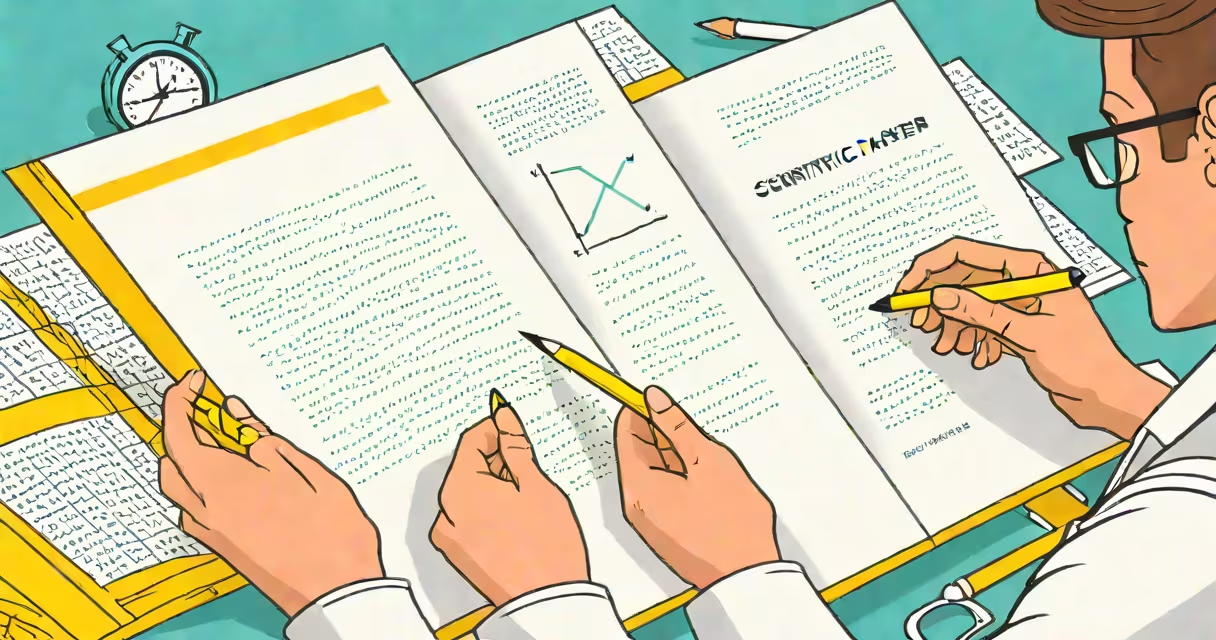
Reading a scientific paper means systematically analyzing its structure-abstract, introduction, methods, results, discussion-to assess the validity of claims, understand experimental design, and determine relevance to your work. The goal is to extract evidence, not just summarize text.
Scientific papers follow a standardized format developed over decades to ensure reproducibility and transparency. The most common structure is IMRaD: Introduction, Methods, Results, and Discussion. This layout exists because journals require it to maintain consistency across disciplines, from molecular biology to climate science.
Each section serves a distinct purpose. The abstract summarizes key findings in under 250 words. The introduction frames the research question and cites prior work. Methods detail how the study was conducted. Results present data, often visualized in graphs. The discussion interprets results in context and acknowledges limitations. Understanding this flow prevents misreading.
How Scientific Papers Are Structured
The IMRaD format is not arbitrary. It reflects the logic of hypothesis testing. The introduction states what's known, what's unknown, and why the current study matters. For example, a 2021 Nature paper on mRNA vaccines began by citing 12 prior trials showing stable immune responses in mice-but noted gaps in human durability data.
Methods must allow replication. A 2018 study in Cell describing CRISPR gene editing included exact concentrations of Cas9 enzyme, buffer pH, and incubation times. Without those details, another lab couldn't reproduce the experiment. Journals like PLOS ONE now require raw data submission alongside manuscripts.
Results are presented objectively. A figure showing "gene expression levels" must label axes precisely: "Relative mRNA abundance (fold change vs. control)" not "better results." Mislabeling distorts interpretation. One 2020 study falsely claimed a drug reduced tumor size by 60%-but the y-axis started at 40%, making a 20% increase appear dramatic.
Key Sections and What to Focus On
Abstract: Read first, but treat as a teaser. It may omit negative results or methodological constraints. A 2022 study on cognitive decline in aging adults reported "significant improvement" in memory tests-but the abstract didn't mention that only 12 participants completed the full protocol.
Introduction: Look for the research gap. The authors should explain why existing studies don't answer the question. If they cite five papers from 2010-2015 but skip recent work, the claim may be outdated. Check citations using Google Scholar or PubMed to verify relevance.
Methods: Evaluate whether procedures match the claims. A 2021 psychology paper claiming "increased attention span" used a 10-minute video task. But the paper didn't specify whether participants were told to watch closely or could multitask. That omission undermines reliability.
Results: Focus on figures and tables. Ask: What statistical test was used? Was p < 0.05? Were sample sizes adequate? A 2020 clinical trial reported "no side effects" in 15 patients-but the paper didn't state how many were monitored long-term. Small samples inflate false negatives.
Discussion: Authors often overstate implications. Phrases like "this proves" or "could change" are red flags. Real science says "these findings suggest" or "further validation is needed." A 2023 paper on AI diagnostics claimed "accuracy surpasses doctors"-but the dataset had only 30 cases, drawn from a single hospital.
Common Mistakes and How to Avoid Them
Many readers assume a high-impact journal guarantees quality. Not true. Nature and Science publish controversial findings quickly, sometimes before peer review completes. A 2021 Nature paper on climate tipping points was retracted six months later due to flawed modeling assumptions.
Another error: treating all statistics as equal. A p-value of 0.049 doesn't mean "almost significant." It means the result has a 4.9% chance of being due to random variation. Reproducibility matters more than significance. The Open Science Structure tracks replication attempts-over 40% of psychology studies fail replication.
Some students try to read papers linearly, from start to finish. That wastes time. Instead, scan the abstract, then jump to the figures. If the data supports the claim, read the methods. If not, stop. I once spent 45 minutes reading a 20-page paper only to find the central graph misrepresented error bars. A quick visual check saved hours.
Types of Papers and Their Differences
Not all scientific papers serve the same purpose. Here's how to distinguish them:
| Type | Focus | Use Case | Red Flags |
|---|---|---|---|
| Original Research | New data from experiments or observations | Building new hypotheses, designing follow-up studies | Small sample size, unverified controls, missing raw data |
| Review Paper | Synthesis of multiple studies | Getting broad context, identifying trends | Outdated references, no inclusion criteria, biased selection |
| Meta-Analysis | Statistical combination of results from several studies | Assessing effect size, evaluating consensus | Exclusion of conflicting studies, poor quality score cutoffs |
For example, a 2023 meta-analysis in JAMA Internal Medicine combined 147 trials on statins. It concluded that benefits outweigh risks in people over 50. But the analysis excluded studies with high dropout rates-meaning the pooled results may overestimate effectiveness.
When in doubt, check the journal's impact factor and editorial board. High-impact journals often have faster publication cycles, which can reduce scrutiny. Science Advances publishes within 45 days on average-but 12% of accepted papers are later corrected or retracted.
Practical Example: Reading a Real Paper
Consider this real example: "Effects of Daily Meditation on Attention Span in College Students" (Journal of Cognitive Psychology, 2022).
- Abstract: Claims 15-minute daily meditation improved focus by 22% over four weeks. Uses a pre-post design with 30 participants.
- Methods: Participants self-selected via social media ads. No control group. Meditation guided by audio clips from a popular app.
- Results: Figure 2 shows a 22% increase in correct responses on a sustained attention test. Error bars are large-over 15% of the mean.
- Discussion: States "meditation enhances cognition" and recommends school-wide programs. Mentions no confounding factors like sleep or caffeine intake.
Red flags: self-selection bias, no control group, lack of demographic data. The conclusion exceeds the evidence. A better interpretation: "Meditation may improve attention in a small, non-randomized group-but further controlled trials are needed."
Always ask: Who funded the study? A 2021 investigation by Science found that 78% of nutrition studies with industry funding reported favorable outcomes-compared to 42% in independently funded ones.
Understanding how to read a scientific paper isn't about memorizing steps. It's about developing skepticism, curiosity, and precision. You don't need to agree with every finding-you just need to know how to assess them.
Start with one paper a week. Show the research question, method flaws, and data gaps. Over time, you'll spot weak logic, inflated claims, and hidden biases. That's how real science literacy begins.