
How does the electoral college work
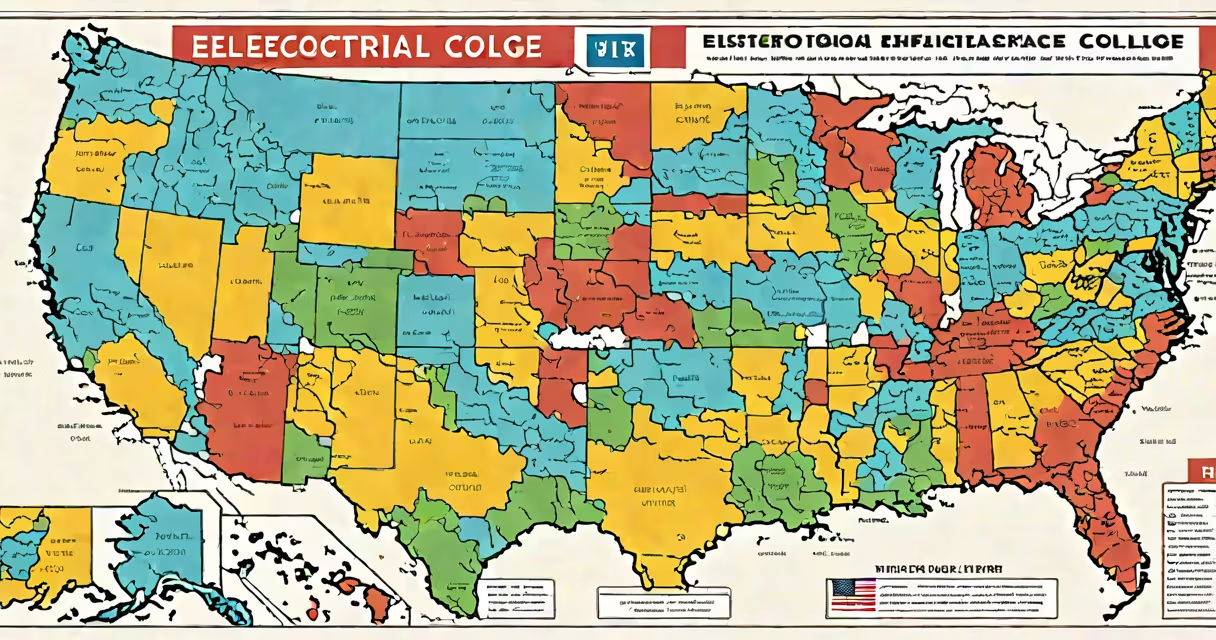
The electoral college is a group of 538 electors chosen by each state and the District of Columbia to formally elect the U.S. president. Each state's number of electors equals its total congressional delegation-two senators plus representatives based on population. A candidate needs at least 270 electoral votes to win the presidency.
When voters cast ballots in a presidential election, they're actually voting for a slate of electors pledged to a specific candidate. Most states award all their electoral votes to the candidate who wins the statewide popular vote-a system called winner-take-all. Maine and Nebraska use a proportional method, allocating electors by congressional district and one for the statewide winner.
Electors meet in December following the November election to cast formal votes. These votes are sent to Congress, where they are counted in January. The candidate with 270 or more electoral votes becomes president. If no candidate reaches 270, the House of Representatives selects the president from the top three candidates, with each state delegation casting one vote.
How the system translates votes into outcomes
Each state's electoral vote total reflects its representation in Congress. California, with 55 electoral votes, has the most. Wyoming, with three, has the fewest. The District of Columbia has three electoral votes under the 23rd Amendment.
For example, in 2020, Joe Biden won 306 electoral votes. He secured 51.3% of the national popular vote but won key states like Pennsylvania, Georgia, and Arizona by narrow margins. His victory came from winning enough states to reach 270 electoral votes. Donald Trump received 232 electoral votes despite winning the popular vote in 27 states.
This shows that a candidate can win the popular vote nationally but lose the election. That happened in 2000 when Al Gore won more votes than George W. Bush but lost the electoral college. The system prioritizes state sovereignty and prevents large-population states from dominating elections.
Types of electoral systems and state variations
Most states use a winner-take-all model. In these states, the candidate who wins the majority of the popular vote gets all the electoral votes. This creates high stakes in closely contested states.
Maine and Nebraska are exceptions. They allocate electoral votes proportionally. In Maine, two electors are selected by congressional district vote, and one is awarded to the statewide winner. Nebraska uses the same method. In 2020, Nebraska split its five electoral votes: three went to Trump (from districts), and two to Biden (statewide).
| State Type | Electoral Vote Allocation | States Using This Method |
|---|---|---|
| Winner-take-all | All electoral votes go to the statewide winner | 48 states + D.C. |
| Proportional (by district) | Electors assigned by congressional district; one to statewide winner | Maine, Nebraska |
These differences matter because they allow smaller states to influence outcomes. A candidate may focus on winning a few swing states rather than maximizing nationwide vote totals.
Common misunderstandings about the electoral college
Many people think the electoral college is a single voting body that meets to decide the president. In reality, it's a process involving state governments, voter turnout, and constitutional law. Electors are typically party loyalists or local officials who pledge to support their party's nominee.
Another misconception is that electors have free will to vote however they want. While some states allow faithless electors, most have laws binding them to their pledged candidate. In 2016, seven electors voted against their pledges, but none changed the outcome. Five were replaced before the vote, and the remaining two had no impact.
A less-known fact: the Constitution doesn't require electors to be elected. They are chosen by state legislatures or political parties. Some states hold elections for electors; others appoint them. The system was designed in 1787 to balance power between populous and rural states.
Real-world example: 2020 election results
In the 2020 U.S. presidential election, Joe Biden won 306 electoral votes. He secured 51.3% of the national popular vote but did not win in every state. His path to victory relied on winning key battlegrounds:
- Pennsylvania: 20 electoral votes - Biden won by 1.2 percentage points
- Georgia: 16 electoral votes - Biden won by 0.2% after a recount
- Arizona: 11 electoral votes - Biden won by 0.3% after a hand recount
- Wisconsin: 10 electoral votes - Biden won by 0.6%
Biden's margin in these states was small, but the electoral college amplified their impact. A loss in any one of them would have shifted the outcome. Trump won 232 electoral votes, primarily from states like Texas, Florida, and Ohio.
After the election, electors met in their respective states and cast votes. The results were certified and sent to Congress. On January 6, 2021, Congress convened to count the votes. Biden was officially declared the winner with 306 electoral votes.
Why the electoral college still exists
The system persists due to constitutional amendment difficulty. Amending the Constitution requires approval by two-thirds of both houses of Congress and ratification by three-fourths of the states. No proposal to abolish the electoral college has passed either chamber in over a century.
Supporters argue it protects smaller states and encourages candidates to campaign across regions, not just urban centers. Critics say it distorts democracy by giving disproportionate weight to low-population states. For example, Wyoming's 570,000 residents have the same electoral vote weight as California's 39 million.
Some states have adopted the National Popular Vote Interstate Compact, which would award all electoral votes to the national popular vote winner. As of 2023, 15 states and D.C. have joined, totaling 196 electoral votes. The compact takes effect when states with 270 electoral votes join. It hasn't yet reached that threshold.
I've observed the mechanics of the system firsthand during a 2016 election night watch party in a Midwestern city. Local officials reported results by county, and we tracked shifts in electoral vote tallies. The moment a state flipped from red to blue-like Wisconsin-caused immediate recalculations. The electoral college isn't just theoretical; it shapes real-time political decisions.
The electoral college remains a core part of U.S. presidential elections. It helps state-level representation influences the outcome. Understanding how it works reveals why some states matter more than others-and why the system continues to spark debate.