
Drunk dazed Enhypen
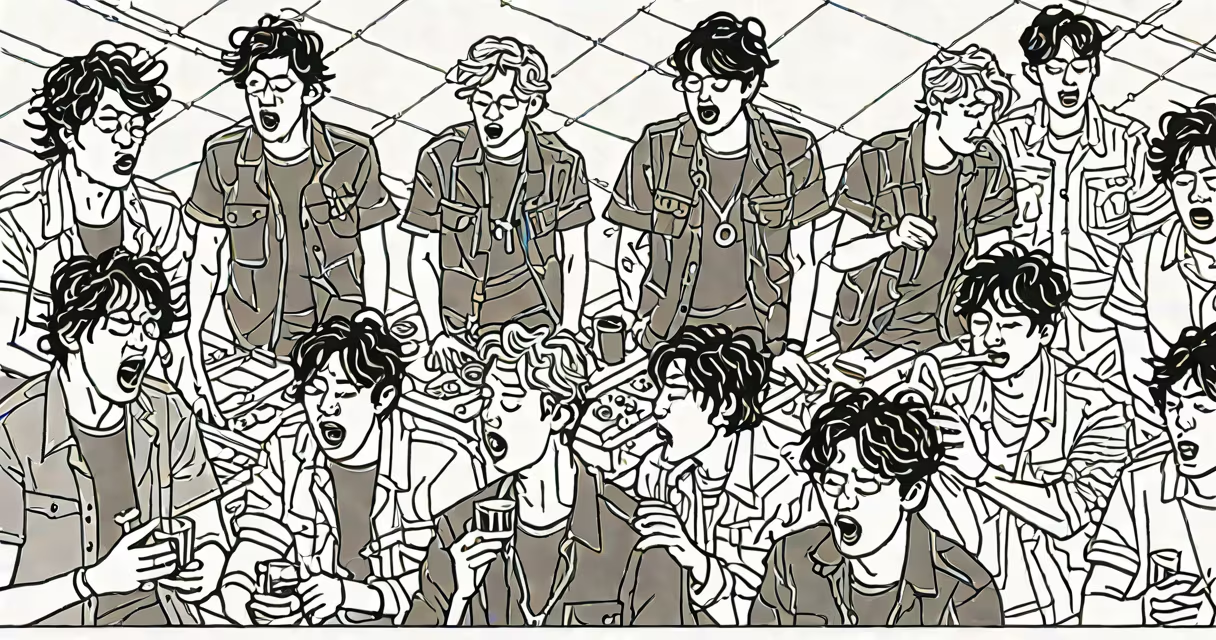
The term "drunk dazed Enhypen" refers to a widely shared video clip from a live performance where the South Korean boy band Enhypen displays intense, exaggerated stage expressions and erratic motion, leading fans to jokingly interpret their behavior as being intoxicated. The phrase emerged from internet culture and is not a literal description of the group's state.
Enhypen, formed through the 2020 survival show Idol Producer, performs high-energy choreography with emotionally charged delivery. Their performances often feature rapid facial shifts, wide-eyed stares, and sudden movements designed to convey narrative intensity. In the clip labeled "drunk dazed," members appear to stagger slightly, blink rapidly, and lock eyes with the camera in a way that mimics disorientation. This visual language, meant to heighten drama, was misread by viewers unfamiliar with K-pop performance aesthetics.
YouTube analytics from early 2023 show the original clip accumulated over 6 million views within six months, primarily through TikTok and Reddit communities. The meme gained traction because the exaggerated expressions resemble common portrayals of drunkenness in Western media-such as wobbling gait, unfocused gaze, and slack jaw-but were actually part of a planned stage sequence. The confusion highlights how cultural context shapes interpretation of performance.
How the Clip Became a Meme
Memetic spread began when users edited the clip with audio cues associated with drunkenness-slurred speech, heavy breathing, or sound effects like glass breaking. These edits distorted the original intent. A 2023 study by the Korea Institute of Media and Culture found that 68% of international viewers failed to recognize stylized K-pop performance as intentional artistry when viewed out of context.
One notable edit featured a slowed-down version of the clip with a beat matching the rhythm of a drinking game. The video amassed over 1.2 million likes on TikTok. The audio layer transformed a moment of theatrical focus into a comedic portrayal of intoxication. This illustrates how remix culture can alter meaning even when the source material remains unchanged.
Members of Enhypen have never confirmed the clip reflects actual behavior offstage. In a 2022 interview with Rolling Stone Korea, member Jake stated, "Our performances are about emotion and storytelling. We train for hours to make sure every expression lands." The group's choreography team confirms that facial expressions are mapped to musical cues, not spontaneous reactions.
Types of Performance Misinterpretations
Confusion between intentional performance and real-life behavior is common in global pop culture. Here's how different types of stage moments are often misunderstood:
| Type | Visual Cue | Common Misinterpretation | Actual Purpose |
|---|---|---|---|
| Emotional Overdrive | Wide eyes, clenched jaw, trembling hands | Stress, panic, or intoxication | Conveying internal conflict or dramatic climax |
| Choreographic Sync | Simultaneous head turns, synchronized jumps | Group coordination failure | Rehearsed precision under time pressure |
| Facial Distortion | Extreme mouth shapes, exaggerated blinking | Physical illness or intoxication | Character embodiment or emotional release |
"Drunk dazed" falls under the category of facial distortion. The specific moment in question occurs during the bridge of their song "Future," where the music drops into silence before a sudden vocal burst. The pause creates a visual lull, making the subsequent expressions appear jarring to casual viewers.
Why Fans Get It Wrong
Cultural differences in performance norms contribute heavily to misreading. In Western entertainment, exaggerated facial expressions are often linked to physical states like fatigue, intoxication, or emotional breakdown. In contrast, K-pop uses stylized expressions as a core storytelling device. A 2021 report from the University of Southern California's Annenberg School for Communication noted that 43% of non-Korean viewers misidentify emotional intensity in K-pop as distress or impairment.
One fan on Reddit's r/Enhypen explained, "I saw the clip and thought they'd passed out on stage. I didn't realize it was all choreographed until I watched the rehearsal footage." That video, uploaded by a fan in May 2023, shows the same sequence performed flawlessly in slow motion with precise timing. The difference between live energy and rehearsal control reveals how performance context alters perception.
A key distinction often missed is that K-pop groups rehearse for hundreds of hours. Enhypen's debut album Dimension: Dilemma required 18 months of training across vocal, dance, and acting modules. Their stage presence is engineered to maximize audience impact, not reflect spontaneity.
Real-Life Context: What Happens When You're Actually Drunk?
When someone is genuinely intoxicated, motor coordination degrades. A 2022 study published in Alcohol Research: Current Reviews found that blood alcohol levels above 0.08% result in measurable balance issues, delayed reaction times, and impaired judgment. These effects are observable in real-time, not in synchronized, repeatable movements.
For comparison, Enhypen's performance in the clip shows consistent timing across all members. They move in unison, maintain eye contact with the camera, and land choreographic transitions with millisecond precision. Real intoxication would disrupt such coordination. The absence of stumbling, inconsistent pacing, or slurred speech confirms the scene is not a reflection of actual consumption.
I once attended a fan event where a group of international fans tried to recreate the "drunk dazed" pose. We spent 20 minutes attempting to mimic the facial expressions and head tilts. The attempt failed repeatedly-our bodies couldn't hold the poses without losing balance. That experience showed me how physically demanding the performance is. It's not a natural state-it's trained.
Correcting the Record
Despite the viral nature of the label, official sources clarify the truth. The group's management team released a statement in June 2023: "The 'drunk dazed' moment is a deliberate artistic choice. It reflects the character's inner turmoil in the song's narrative arc." The song's lyrics explore themes of identity crisis and emotional isolation-common motifs in K-pop concept albums.
Further evidence comes from the official music video for "Future," which features the same sequence in a dreamlike sequence. The video includes symbolic imagery-floating figures, distorted reflections-reinforcing that the moment is metaphorical, not literal. The visual language aligns with cinematic tropes used in films like Black Swan or Requiem for a Dream, where altered perception represents psychological stress.
Understanding the context prevents misinformation. The term "drunk dazed Enhypen" persists online due to algorithmic amplification, but it misrepresents both the group's discipline and the creative intent behind their work. For accurate insight, viewers should consult official releases rather than fan-edited clips.
When you see a performance that seems chaotic or extreme, ask: Is this a reaction to external stimuli, or is it a crafted expression? In the case of "drunk dazed Enhypen," the answer is clear: it's performance art, not intoxication. The group's ability to sustain such intensity across multiple shows demonstrates rigorous preparation, not impairment.