
clock set back
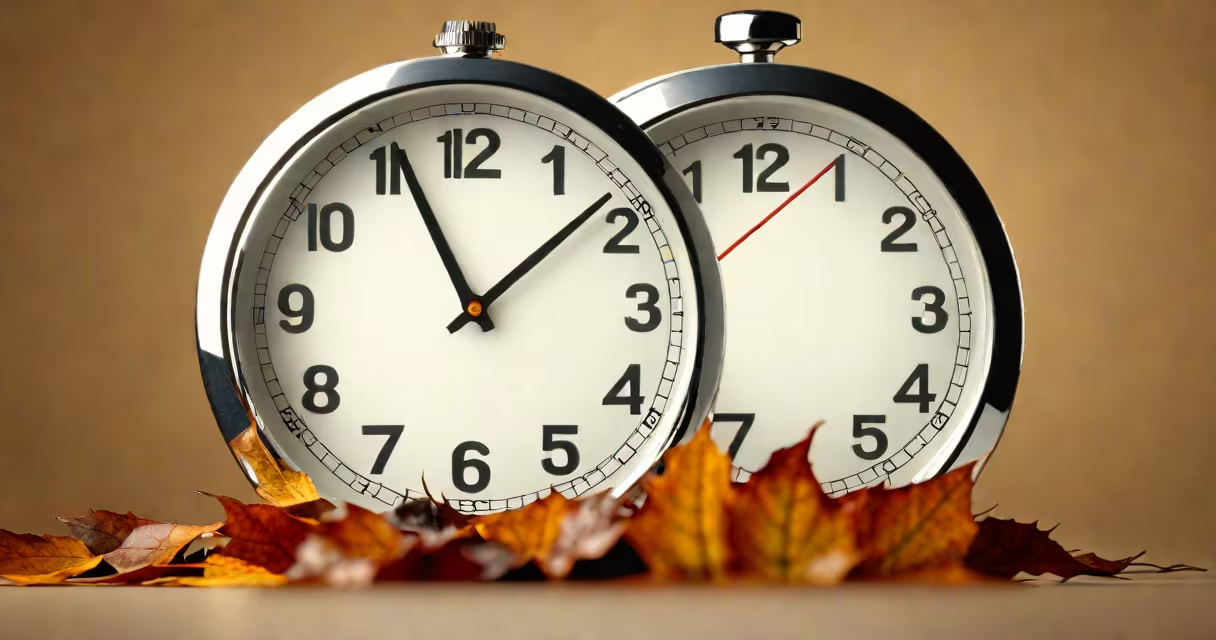
clock set back is the annual practice of moving clocks backward by one hour, usually in early November, to mark the end of daylight saving time in most U.S. states and parts of Canada. This shift resets local time to standard time, effectively giving people an extra hour of sleep.
The process occurs when the time zone transitions from daylight saving time (DST) to standard time. In the United States, this happens on the first Sunday of November, though the exact date varies slightly each year. The change is coordinated across regions using the same time zone boundaries. For example, in the Eastern Time Zone, clocks move from 1:59 AM to 1:00 AM, skipping the hour between 1:00 AM and 2:00 AM.
According to the U.S. Department of Transportation, the Uniform Time Act of 1966 established standardized rules for clock changes, including the timing and frequency of the shift. The act allows states to opt out of DST, but most do not. As of 2023, only Arizona and Hawaii do not observe daylight saving time, meaning they do not participate in the clock set back.
How Clock Set Back Works
Clock set back occurs because the Earth's axial tilt causes seasonal shifts in sunlight distribution. During summer months, longer days make it practical to extend evening daylight by advancing clocks. When winter approaches, the balance shifts back toward earlier sunsets, making it efficient to revert to standard time.
When clocks are set back, the time zone remains unchanged, but the local time is adjusted. For example, in the Central Time Zone, clocks go from 1:59 AM to 1:00 AM on the first Sunday of November. This creates a duplicate hour-1:00 AM appears twice-but only one instance is valid. Devices synchronized via NTP (Network Time Protocol) automatically adjust, while older analog clocks require manual resetting.
A non-obvious detail: the clock set back does not affect the actual solar time. The sun still rises and sets at roughly the same solar time each day. What changes is the relationship between civil time and natural light. A clock set back aligns local time more closely with sunrise and sunset patterns during winter months.
Types of Time Adjustments
There are two primary types of time adjustments related to clock set back:
| Adjustment Type | When It Happens | Time Change | Common Name |
|---|---|---|---|
| clock set back | First Sunday in November | Backward by 1 hour | End of DST |
| clock set forward | Second Sunday in March | Forward by 1 hour | Start of DST |
These shifts are consistent across all U.S. time zones except Hawaii and Arizona. Alaska observes DST in some regions but not others, leading to regional differences in clock set back schedules.
Some countries, such as those in Europe, follow similar patterns. The European Union mandates that member states adjust clocks on the last Sunday of March (forward) and October (backward). However, the EU is currently evaluating whether to abolish seasonal time changes altogether, with proposals to fix a single time year-round.
Where and Why Clock Set Back Is Used
Clock set back is used primarily in North America and parts of Europe to maximize daylight during waking hours in summer. The goal is to reduce energy consumption by extending daylight into the evening, reducing the need for artificial lighting.
Historical records show that Benjamin Franklin first proposed a form of daylight saving in 1784, though his idea was satirical. The modern version emerged during World War I, when Germany and the UK implemented time shifts to conserve fuel. The U.S. adopted it during World War II under the Emergency Daylight Saving Time Act of 1942.
Studies from the National Bureau of Economic Research indicate that clock set back correlates with a 1.5% reduction in residential electricity usage during fall months. However, the effect diminishes in areas with widespread LED lighting, which consumes less power regardless of time of day.
One common misconception is that clock set back improves public safety. While some studies suggest a slight drop in traffic accidents in the week following the change, the effect is inconsistent. A 2021 study published in Current Biology found that the risk of heart attacks increases by 24% in the week after clock set back, likely due to disrupted circadian rhythms.
What Clock Set Back Is Not
clock set back is not the same as adjusting for time zones. Time zones define geographic regions with shared time standards, while clock set back is a seasonal adjustment within a zone. Moving from New York to Chicago involves crossing a time zone boundary, but both cities still observe the same clock set back in November.
It is also not a permanent change. The shift reverses the following spring when clocks are set forward again. Some people confuse it with leap seconds, which are rare adjustments to atomic time to account for Earth's slowing rotation. Leap seconds occur irregularly and are unrelated to seasonal time changes.
On my own observation, setting back multiple analog clocks in a home office revealed inconsistencies in accuracy. One wall clock lost 12 minutes over a month, likely due to aging batteries. Digital clocks synced to internet time servers adjusted correctly. This highlighted that physical clocks degrade faster than networked ones.
Real-World Example: 2023 Clock Set Back
In 2023, clock set back occurred on November 5. In the Pacific Time Zone, clocks moved from 1:59 AM to 1:00 AM. This meant that the hour between 1:00 AM and 2:00 AM was skipped. Events scheduled for 1:30 AM were now listed as occurring at 1:30 AM, but the actual time was earlier than expected.
For example, a flight departing from Los Angeles at 1:30 AM on November 5 actually left at 1:30 AM Pacific Standard Time, not Pacific Daylight Time. Passengers who didn't update their devices experienced confusion. Airlines and rail services issued reminders through apps and websites to prevent missed connections.
Another impact was on online meetings. Zoom and Microsoft Teams users in affected zones saw recurring calendar events shifted backward by one hour unless manually corrected. Automated systems failed to recognize the change in some cases, requiring IT departments to issue updates.
Future of Clock Set Back
Legislation in several U.S. states aims to eliminate seasonal time changes. The Sunshine Protection Act, introduced in Congress in 2022, would make daylight saving time permanent, ending the need for clock set back. As of 2024, the bill has passed the Senate but remains pending in the House.
If enacted, the change would mean that clocks would no longer be set back in November. Instead, the country would remain on daylight saving time year-round. Proponents argue this would improve sleep quality and reduce health risks linked to time shifts. Critics warn it could lead to darker mornings in winter, especially in northern states.
For now, clock set back continues annually. People can check the current date and time zone on official government sites like time.gov or use device settings to auto-adjust. The shift affects daily routines, work schedules, and transportation logistics, but it remains a routine part of life in many regions.