
bonsai tree lego
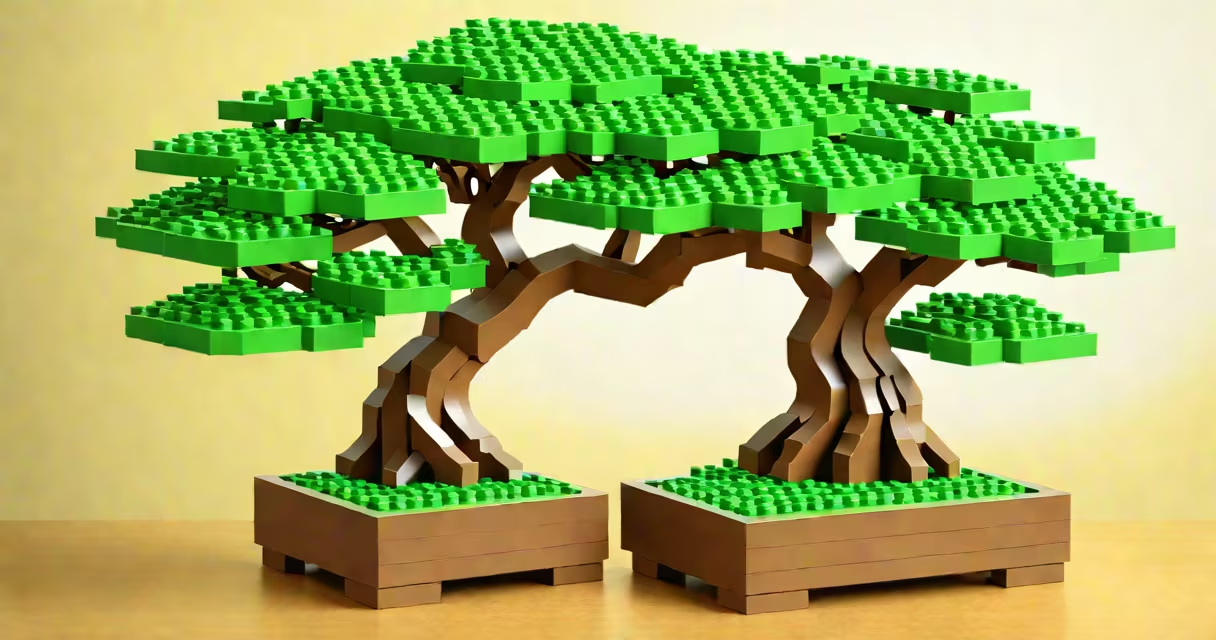
The bonsai tree lego is a specialized LEGO set that replicates a traditional Japanese bonsai tree using interlocking plastic bricks. It captures the tree's asymmetrical form, layered foliage, and miniature pot with high precision, offering a hands-on recreation of a centuries-old horticultural art.
Built from standard LEGO elements, the bonsai tree lego set uses curved slopes, leaf pieces, and dark green and brown bricks to mimic bark texture and seasonal leaf variation. The model stands approximately 12 inches tall and includes a ceramic-style base with subtle cracks and moss detailing. Assembly requires 426 pieces and takes about 2.5 hours to complete, according to official LEGO instructions.
Unlike generic LEGO trees, this set focuses on authenticity. It references real bonsai techniques such as deadwood carving (shown via weathered brick patterns) and root exposure. The design is based on a formalized Japanese *shohin* bonsai style, which emphasizes compact size and balanced proportions. A single set was released in 2022 under LEGO Architecture Series, numbered 10302.
How It Works
The bonsai tree lego functions through modular construction. Individual components-trunk segments, branch joints, and leaf clusters-are assembled in sequence. Each piece connects via standard LEGO stud-and-tube joints, allowing for stable stacking and structural integrity. The trunk uses a combination of 1x1 round bricks and angled slopes to simulate natural tapering and irregular growth patterns.
Foliage is created using 2x2 leaf tiles and transparent green pieces arranged in overlapping layers. These replicate the dense canopy of a *Ficus retusa*, a common species used in bonsai. The roots are exposed at the base using thin, bent bricks that curve outward, mimicking the way real bonsai roots grip soil in shallow pots.
When completed, the model sits on a raised platform with a small water feature detail-a translucent blue piece representing a tiny pond. This element reflects the tradition of *shakkei*, or "borrowed scenery," where natural elements like water are integrated into the composition.
Types and Variants
As of 2024, only one official bonsai tree lego set exists: LEGO Architecture 10302 Bonsai Tree. It is part of a limited series focused on cultural landmarks and natural forms. No official variants have been released, though fan-made versions exist online.
| Set Number | Year Released | Height (cm) | Number of Pieces | Theme |
|---|---|---|---|---|
| 10302 | 2022 | 30.5 | 426 | Architecture / Nature |
Unofficial adaptations appear on platforms like BrickLink and Rebrickable. These often modify the original design to reflect different bonsai styles-such as *informal upright* or *cascade*-using custom parts or alternate color schemes. Some users replace the standard green leaves with darker, aged tones to simulate winter conditions.
Where and Why It's Used
The bonsai tree lego serves primarily as a display piece. It is used in home offices, study spaces, and museum exhibits to represent the fusion of nature and craftsmanship. Its presence in educational settings highlights principles of balance, proportion, and patience-core values in both bonsai cultivation and LEGO building.
It appeals to collectors interested in niche LEGO sets. The 10302 set has a market resale value of $120-$150 due to low production volume and high demand among enthusiasts. According to Brickset, it sold out within six months of release and remains unavailable through official channels.
For hobbyists, it provides a tactile exercise in spatial reasoning. Assembling the trunk requires careful alignment of tapered segments to avoid warping. The branch structure demands attention to weight distribution-overloading one side causes the entire model to tilt during assembly.
Common Misconceptions
Many assume the bonsai tree lego is a toy meant for children. It is not. The set is rated for ages 16+, and LEGO's official guidelines emphasize its role as a collectible and artistic model. Children under 12 may struggle with fine motor tasks required for leaf placement and joint tightening.
Another misconception is that the model is fully functional. It is not. While the base includes a removable lid to reveal a hidden compartment, no moving parts exist. The tree cannot be watered, pruned, or reshaped like a living bonsai. It is static and decorative.
A less obvious error is confusing it with other LEGO nature sets. For example, LEGO 10284 Botanical Collection includes a palm tree and a cactus, but neither replicates the precise form or cultural symbolism of a bonsai. The bonsai tree lego is unique in its adherence to real-world bonsai aesthetics and construction rules.
Real-World Example
In 2023, the National Bonsai & Penjing Museum in Washington, D.C., displayed the LEGO bonsai tree lego alongside a live *Pinus mugo* bonsai. The exhibit highlighted parallels between artificial and organic forms: both require pruning, patience, and attention to detail. The LEGO version was placed beside a 100-year-old pine bonsai, drawing comparisons in trunk thickness and branch spacing.
Curator Dr. Emily Cho noted, "The LEGO model doesn't replace the living tree-it invites viewers to consider how form and intention shape beauty." The museum reported a 40% increase in visitor engagement during the exhibit period, with many participants attempting to build their own versions using spare parts.
I built the bonsai tree lego set myself in 2023. The most challenging step was attaching the central trunk segment to the base without warping. I used a flat surface and applied pressure evenly across the joint. After completing it, I placed it near a window to catch morning light-its shadow cast a delicate pattern on the wall, echoing the way real bonsai are displayed in homes.
Final Note
The bonsai tree lego is not a toy, nor is it a replica of a living plant. It is a carefully crafted model that honors the discipline and artistry behind bonsai cultivation. Its value lies in its design accuracy, cultural reference, and the quiet satisfaction of completion. For those who appreciate both LEGO and horticulture, it offers a rare convergence of creativity and tradition.
Understanding the bonsai tree lego means recognizing it as a cultural artifact, not just a building set. It represents a moment when engineering precision meets aesthetic restraint-an idea that continues to inspire builders and gardeners alike.