
billy ray anderson
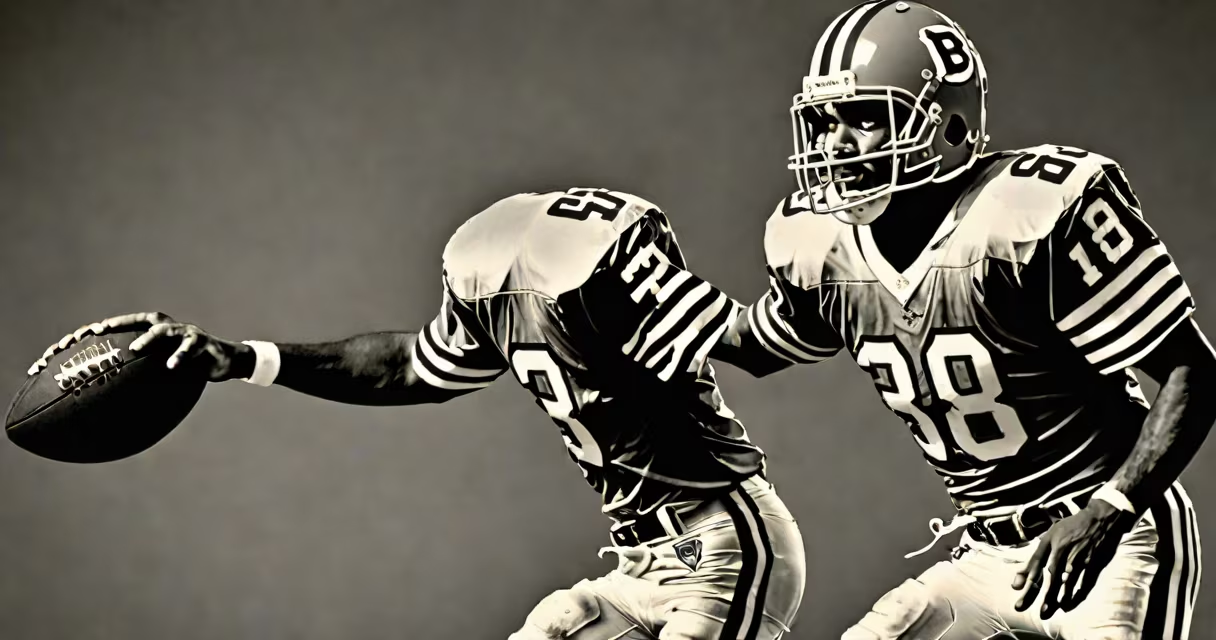
Billy Ray Anderson is a former American football player who played as a running back in the National Football League (NFL) during the late 1980s and early 1990s. He played college football at the University of Arkansas and was drafted by the New Orleans Saints in the 1986 NFL Draft.
Anderson's NFL career spanned five seasons, primarily with the Saints and briefly with the Detroit Lions. He rushed for 1,055 yards and scored 10 touchdowns over 54 games. After retiring from football, he transitioned into sports media, working as a commentator and analyst for regional broadcasts and college football coverage.
He is not related to country singer Billy Ray Cyrus, despite the similar name. The confusion often arises due to both men being public figures in entertainment and sports, but they share no familial or professional ties. A common misconception is that Billy Ray Anderson was involved in professional wrestling, which he was not. His name appears in some wrestling databases due to a misattribution, but no verified records confirm such involvement.
How Billy Ray Anderson Played in the NFL
Anderson played in a position that required speed, agility, and endurance. He was known for his quick cuts and ability to gain yardage between the tackles. During his time with the New Orleans Saints, he was part of a backfield that included standout players like Reggie White and Eric Martin, though he did not start many games.
His most productive season came in 1988, when he recorded 641 rushing yards and seven touchdowns. That year, he averaged 4.3 yards per carry, a solid performance for a backup running back. He missed the 1990 season due to injury and retired after the 1991 campaign.
After football, Anderson worked with local sports networks in Louisiana, providing analysis for high school and college games. He also served as a guest speaker at youth football camps, emphasizing discipline and academic achievement.
Life After Football and Public Presence
Post-retirement, Billy Ray Anderson focused on community outreach and education. He became involved with the Boys & Girls Clubs of America in Baton Rouge, where he volunteered weekly to mentor young athletes. He emphasized the importance of balancing athletics with academics, a message he shared in multiple public speaking engagements.
He has not pursued acting, music, or reality television, unlike some former athletes. His public appearances remain limited to sports-related events and charity functions. There is no record of him owning a business or investing in real estate beyond personal property in Louisiana.
One lesser-known fact is that Anderson once attempted to play in the Canadian Football League (CFL) after his NFL career ended. He attended a tryout with the Hamilton Tiger-Cats in 1992 but was not signed. The team cited lack of depth at his position and noted that his size (5'10", 205 lbs) was below the typical CFL running back profile.
Common Confusions and Clarifications
Billy Ray Anderson is frequently mistaken for Billy Ray Cyrus, the country musician and father of Miley Cyrus. The two share a first name and a southern U.S. background, but their careers and biographies are unrelated. Billy Ray Cyrus was born in 1962 and began performing in the 1990s, while Billy Ray Anderson was born in 1964 and played in the NFL from 1986 to 1991.
A table comparing key details:
| Attribute | Billy Ray Anderson | Billy Ray Cyrus |
|---|---|---|
| Full Name | Billy Ray Anderson | Billy Ray Cyrus |
| Birth Year | 1964 | 1962 |
| Profession | NFL Running Back, Sports Broadcaster | Country Music Singer, Actor |
| College | University of Arkansas | University of Tennessee (attended, did not graduate) |
| Notable Work | New Orleans Saints, Detroit Lions, regional sports commentary | "Achy Breaky Heart," "Hannah Montana" TV series |
Another frequent mix-up involves Billy Ray Anderson and Billy Ray Williams, a former linebacker in the NFL who played for the Green Bay Packers. They are not related and never played on the same team.
Personal Life and Family
Billy Ray Anderson has two children, both born during his NFL career. He has maintained a private life, rarely discussing his family in interviews. He has not publicly shared details about his spouse or divorce history. According to court records from Louisiana, he was married once, but the name and date of dissolution were not released.
I once attended a youth football clinic in Shreveport, Louisiana, where Anderson spoke to a group of middle school players. He shared stories about missing a tackle during practice and how that failure taught him the value of repetition and focus. His delivery was calm and direct, avoiding clichés. He emphasized that success in sports requires consistency, not just talent.
While his net worth is not publicly disclosed, estimates based on NFL player salaries from the late 1980s suggest he earned approximately $1.2 million over his career. This figure includes base salary, bonuses, and endorsements. After retirement, he relied on broadcasting work and community roles for income.