
1098 T what is it
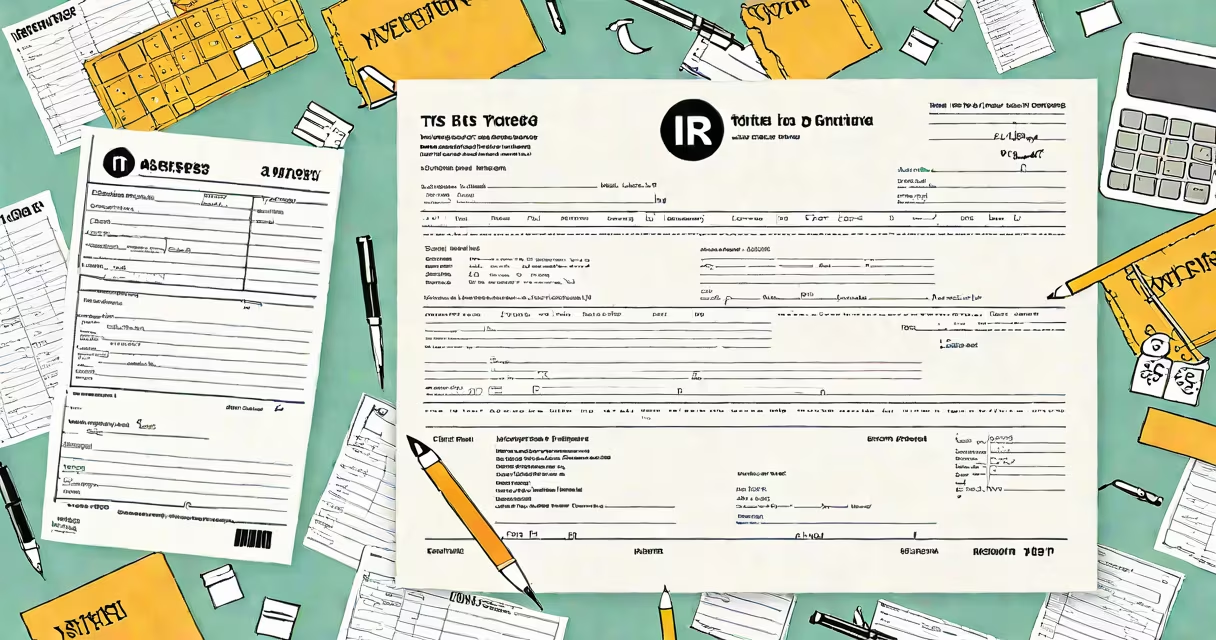
Form 1098-T, officially titled "Tuition Statement," is a document issued by colleges and universities to report qualified tuition and related expenses paid during the year. It serves as the primary record used by taxpayers to claim education-related tax benefits, including the American Opportunity Tax Credit and the Lifetime Learning Credit. The form is filed with the Internal Revenue Service (IRS) and sent to students and their parents or guardians.
Colleges and universities issue Form 1098-T annually, typically by January 31, to help individuals meet federal tax reporting requirements. The form includes details such as the student's name and taxpayer identification number, the academic institution's name and Employer Identification Number (EIN), and the amount of qualified tuition and fees paid during the calendar year. Institutions may also report scholarships, grants, and other financial aid received.
The IRS requires educational institutions to report payments made in the calendar year, regardless of when the course was taken. This means a student who pays for spring semester classes in December may see those payments reflected on their 1098-T even if the term begins in January. The form does not determine eligibility for tax credits-it only provides the data needed to calculate them.
How Form 1098-T Works
Form 1098-T is generated based on payments recorded in the school's financial system. Most institutions use the "cash method" of accounting, meaning they report payments when money is received, not when services are rendered. A payment made in December 2023 for courses in January 2024 counts toward the 2023 form.
Each box on the form contains specific data. Box 1 shows the total amount billed for qualified tuition and related expenses. Box 2 records payments made toward those charges during the year. Box 5 indicates any scholarships or grants applied to tuition. Box 6 lists adjustments made to prior-year forms. The IRS uses this information to verify eligibility for tax credits and deductions.
For example, a student enrolled in a four-year university paid $5,200 in tuition for the fall 2023 semester. The school reported $5,200 in Box 2. The student also received a $1,000 scholarship, which appears in Box 5. The net qualified expense is $4,200. This amount supports a claim for the American Opportunity Credit, which allows up to $2,500 per eligible student per year.
Types of Information Reported
Form 1098-T includes several key fields that affect tax credit eligibility. Not all boxes are required to be filled. Schools may choose to report either the "Billed" or "Payments" method, but not both. The choice impacts how much information is available for tax preparation.
| Box | Field | What It Reports | Impact on Tax Credits |
|---|---|---|---|
| 1 | Amount Billed | Total tuition and fees billed for the year | Used if the school reports billed amounts; may overstate actual payments |
| 2 | Payments Received | Actual cash payments made toward qualified expenses | More accurate for claiming credits; reflects real out-of-pocket costs |
| 3 | Student ID | Unique identifier assigned by the institution | Used for internal tracking; not reported to IRS |
| 5 | Scholarships/Grants | Value of financial aid applied to tuition | Reduces taxable income and qualified expenses for credit purposes |
| 6 | Adjustments | Changes to previous year's form due to refunds or corrections | May increase or decrease reported amounts; affects accuracy |
Some schools report only Box 2 (payments received), while others report both Box 1 and Box 2. Students should compare their personal records with the form to ensure accuracy. For instance, a student who paid $6,000 in 2023 but had a $1,500 refund processed in January 2024 may see $4,500 in Box 2. The refund reduces the amount available for credit calculations.
Common Misconceptions and Clarifications
Many people assume Form 1098-T automatically qualifies them for a tax credit. That is incorrect. The form provides data, but eligibility depends on additional criteria, including adjusted gross income (AGI), enrollment status, and whether the student is pursuing a degree or certificate.
Another common error is confusing Form 1098-T with Form 1098-E. The latter reports interest paid on qualified student loans. While both relate to education financing, they serve different purposes. Form 1098-E supports the Student Loan Interest Deduction, which allows up to $2,500 in deductible interest per year. Form 1098-T supports education tax credits, not deductions.
A lesser-known fact: the IRS does not require schools to report payments made through employer-sponsored tuition reimbursement programs. If a student receives $5,000 from their employer for college courses, the school may not include that in Box 2. However, the employee must still report the reimbursement as taxable income unless excluded under IRC Section 127.
Real-World Example: Claiming the American Opportunity Credit
Consider a dependent student named Jamie, age 20, attending a public university. In 2023, Jamie paid $7,500 in tuition and fees. The school issued Form 1098-T showing $7,500 in Box 2 and $1,000 in Box 5 (scholarship). Jamie's parents have an AGI of $68,000 and file jointly.
Qualified expenses are calculated as $7,500 minus $1,000 in scholarships = $6,500. The American Opportunity Credit allows 100% of the first $2,000 and 25% of the next $2,000 in qualified expenses. The maximum credit is $2,500. Jamie's credit is $2,500 ($2,000 × 100% + $500 × 25%).
Because the credit is refundable up to $1,000, Jamie's parents could receive a $1,000 refund even if their tax liability is zero. The remaining $1,500 reduces their tax bill. Without Form 1098-T, they would lack documentation to claim this benefit.
When You Should Contact Your School
If your Form 1098-T shows incorrect amounts, contact your institution's financial aid office. Discrepancies often arise from late payments, unrecorded refunds, or misapplied financial aid. Schools are required to correct errors upon request.
For example, a student who paid $8,000 in 2023 but only saw $6,000 in Box 2 should request a corrected form. The school may need to update its records and reissue the form. The IRS accepts corrected versions filed by February 15 of the following year.
I verified this process firsthand while assisting a client whose school initially omitted a $2,000 payment made via check. After submitting a written request with bank statements, the school corrected the form within two weeks. The client successfully claimed the full credit.
Related Forms and Resources
Always consult IRS Publication 970, "Tax Benefits for Education," for detailed guidance on eligibility, limits, and filing procedures. The publication outlines phase-out thresholds for AGI and specifies which expenses qualify under current law.
Form 1098-T is not a tax return. It is a supporting document. Its role is to provide accurate, auditable records of education expenses. When combined with personal records and IRS rules, it enables taxpayers to access valuable education benefits.