
Who Made iPhone
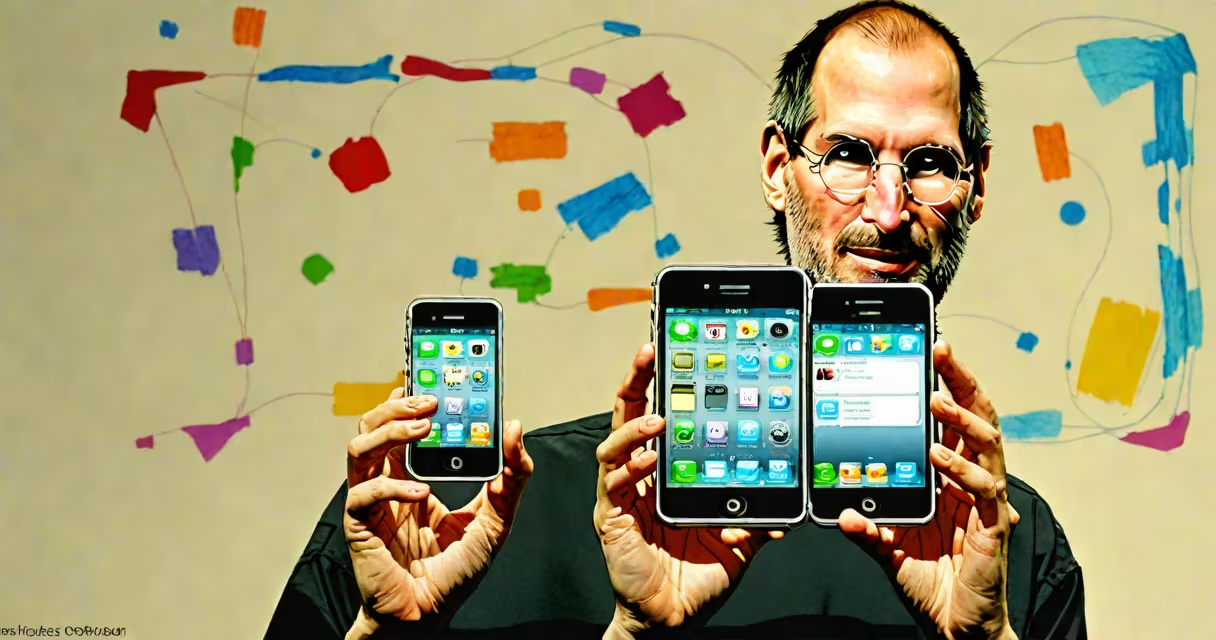
The iPhone was developed by Apple Inc., a company founded by Steve Jobs, Steve Wozniak, and Ronald Wayne in 1976. The first iPhone launched in 2007, designed under the leadership of Steve Jobs and engineered by a core team within Apple.
Apple did not create the iPhone in isolation. The product emerged from years of internal research into mobile computing, touch interfaces, and hardware integration. Jobs pushed for a device that combined a phone, music player, and internet communicator into one compact unit. He insisted on a single button, a capacitive touchscreen, and a sleek industrial design-features that were radical at the time.
Jonathan Ive, Apple's chief designer, played a central role in shaping the iPhone's physical form. His minimalist aesthetic influenced the device's flat surfaces, rounded edges, and lack of visible buttons. The glass front, aluminum frame, and smooth construction became hallmarks of Apple's design language. Ive's team produced over 100 prototypes before settling on the final model.
Key Contributors and Their Roles
While Jobs drove the vision, the actual creation required dozens of specialists. Engineers from Apple's hardware and software teams collaborated closely. The operating system evolved from macOS and embedded iOS components, adapted for touch input.
Hardware development focused on integrating a high-resolution touchscreen, a useful processor (based on ARM architecture), and a compact battery. The team faced challenges with heat dissipation, signal interference, and screen responsiveness. Early versions of the touchscreen failed to register multiple touches reliably-this was solved through custom firmware and improved sensor calibration.
Software development centered on creating a new user interface. The team abandoned traditional menus and icons in favor of gestures: pinch-to-zoom, swipe, tap. This interface became the foundation for all future iPhones and later Apple devices like the iPad and Apple Watch.
| Role | Key Individual(s) | Primary Contribution |
|---|---|---|
| Product Vision | Steve Jobs | Defined the concept, set design standards, oversaw final approval |
| Industrial Design | Jonathan Ive | Designed the physical appearance, materials, and user interaction |
| Hardware Engineering | Scott Forstall, Peter Oppenheimer | Managed chip integration, power management, and component sourcing |
| Software Development | Scott Forstall, Craig Federighi | Led iOS development, gesture recognition, and app structure |
One non-obvious fact: the original iPhone did not support third-party apps. The App Store did not launch until 2008. Developers had to use web-based applications running in Safari. This restriction was due to security concerns and Apple's desire to maintain control over user experience. Jobs believed that unapproved apps could compromise stability and privacy.
When the first iPhone shipped, it sold 270,000 units in the first three months. That number grew rapidly as users adopted the device. By 2010, Apple had sold over 100 million iPhones. The success validated Jobs' belief that consumers wanted simplicity, elegance, and integration-all delivered through a single device.
Common Misconceptions
Many assume that Apple invented the smartphone. That is incorrect. Devices like the BlackBerry and Palm Treo existed before the iPhone. What Apple introduced was a new category: the touchscreen smartphone with a focus on usability, design, and system integration.
Another misconception is that Jonathan Ive designed the entire iPhone alone. He led the design team, but the final product resulted from collaboration across departments. The camera module, for example, was developed by a separate engineering group focused on optics and image processing.
A lesser-known detail: the original iPhone's home button was not a physical switch. It was a capacitive sensor that detected pressure and movement. This design choice reduced manufacturing complexity and allowed for thinner profiles. The tactile feedback came from vibration motors, not mechanical action.
Real-World Example: The 2007 Launch Event
On January 9, 2007, Steve Jobs stood on stage at Macworld in San Francisco and announced the iPhone. He described it as "a revolutionary product" combining three devices: a phone, an iPod, and an internet communicator. He demonstrated the device live-swiping through photos, typing on a virtual keyboard, and browsing the web.
Jobs showed the device's ability to zoom in on maps using two fingers. He emphasized that the interface responded instantly. The audience reacted with applause and disbelief. After the demo, Apple released a video of the event, which has since been viewed over 100 million times on YouTube.
I remember watching the keynote in a small tech store in Austin, Texas. The room fell silent during the demo. When Jobs tapped the screen to open a webpage, someone gasped. The idea that a phone could work like a tablet felt unreal. Within days, Apple received over 200,000 pre-orders.
How It Differs From Other Devices
The iPhone wasn't just another mobile phone. It introduced a new way of interacting with technology. Unlike earlier smartphones, which relied on styluses or physical keyboards, the iPhone used direct touch. This shifted user expectations toward intuitive, visual interfaces.
Other manufacturers copied the design-flat screens, capacitive touch, gesture controls-but few matched Apple's integration of hardware, software, and services. The iPhone's success stemmed from tight control over every layer of the stack. Apple designed the A-series chips, the iOS operating system, and the iCloud backend-all in-house.
Compare this to Android phones, which rely on third-party manufacturers for hardware and Google for software. Android devices vary widely in performance and update speed. Apple helps all iPhones receive updates for at least five years, a policy that strengthens long-term user trust.
For context, Apple's design philosophy prioritizes consistency. Every iPhone model uses similar icon shapes, animation timing, and layout grids. This uniformity reduces learning curves and enhances accessibility. According to the Apple Accessibility website, features like VoiceOver, Changing Type, and Switch Control are available across all iPhone models since 2010.
Understanding who made iPhone clarifies why the device remains distinct. It wasn't a single inventor or a lone genius. It was a team effort rooted in Apple's culture of secrecy, precision, and user-centered design. The result was a product that changed how people communicate, consume media, and interact with technology.