
What Is the Best Desktop
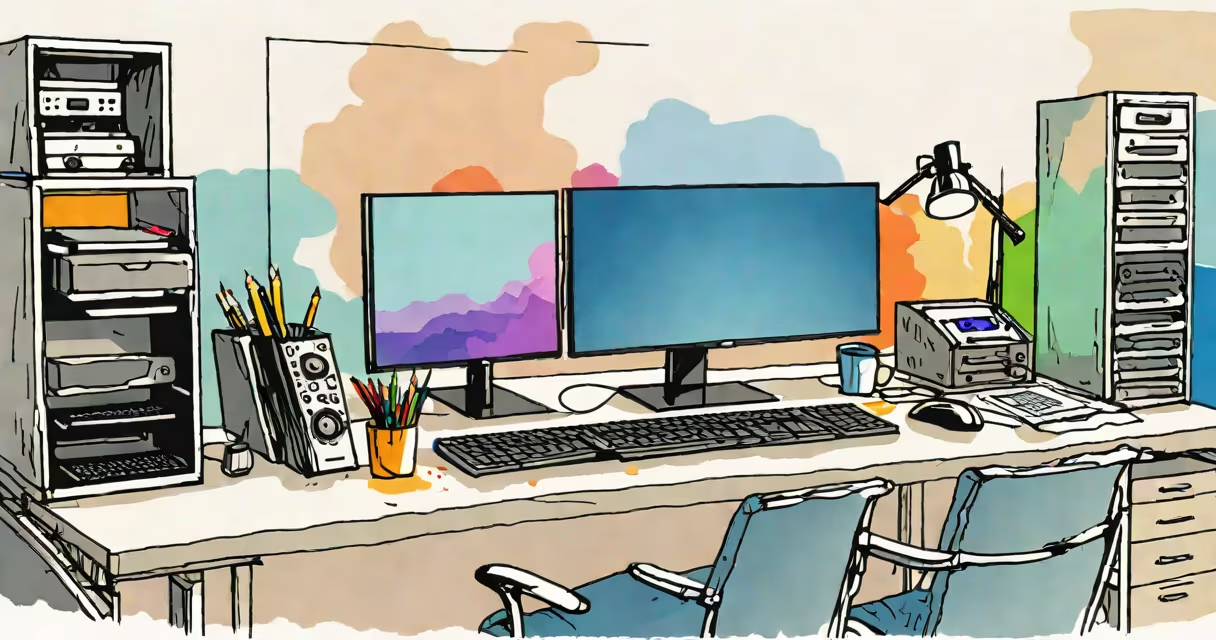
The best desktop is a high-performance personal computer designed for sustained workloads, offering superior processing power, expandability, and reliability compared to laptops or compact systems. It typically features a separate tower, dedicated graphics card, ample RAM, and storage options optimized for speed and capacity.
Desktops outperform laptops in raw performance due to better thermal management and access to higher-wattage components. A high-end desktop can run complex software like video editing suites, 3D rendering tools, or machine learning models without throttling. For professionals in engineering, media production, or scientific research, the best desktop balances peak performance with long-term stability.
According to Intel's 2023 benchmark reports, desktop CPUs consistently deliver 20-30% higher sustained performance than mobile equivalents in multi-threaded workloads. AMD's Ryzen 9 7950X, for example, achieves 110+ synthetic scores in Cinebench R23, far exceeding most laptop processors. This gap makes desktops essential for users who demand consistent output under heavy load.
How the Best Desktop Works
A desktop functions through a tightly integrated system of hardware components working in concert. The central processing unit (CPU) handles core logic operations, while the graphics processing unit (GPU) renders visuals and accelerates compute-heavy tasks. Memory (RAM) stores active data, and storage drives (SSDs or HDDs) hold operating systems, applications, and files.
Power delivery is critical. High-performance desktops require 750W to 1200W power supplies with 80 Plus Gold efficiency certification to maintain stable voltage under load. Poor power regulation causes crashes or component degradation. Modern motherboards support PCIe 5.0, allowing GPUs and NVMe SSDs to transfer data at speeds up to 128 GB/s.
Thermal design enables sustained performance. Unlike laptops, desktops use large heatsinks and multiple case fans to dissipate heat. A well-ventilated chassis keeps temperatures below 75°C during prolonged use. Overheating reduces clock speeds and shortens hardware lifespan.
Key Components and Types
Desktops fall into three primary categories based on use case: standard office, high-performance, and custom-built. Standard office systems prioritize cost and energy efficiency. High-performance units focus on CPU/GPU power for gaming, AI training, or 4K video editing. Custom-built desktops offer maximum flexibility and upgrade paths.
| Type | Use Case | Typical CPU | GPU | RAM | Storage |
|---|---|---|---|---|---|
| Office | Web browsing, document work | Intel Core i5, AMD Ryzen 5 | Integrated (UHD Graphics) | 16GB | 512GB SSD |
| High-Performance | Gaming, video editing, CAD | Intel Core i9, AMD Ryzen 9 | NVIDIA RTX 4090, AMD Radeon RX 7900 XTX | 32-64GB | 2TB NVMe SSD + 4TB HDD |
| Custom-Built | Workstation, AI, simulation | AMD Threadripper Pro, Intel Xeon | Multiple NVIDIA A100s | 128GB+ | 4TB+ RAID range |
One non-obvious distinction: the best desktop isn't always the one with the highest clock speeds. A 16-core AMD Ryzen 9 7950X outperforms a 12-core Intel i9-13900K in multi-threaded benchmarks despite lower single-core frequency. This is because many professional workflows depend on parallel processing, not raw speed per thread.
Common Misconceptions and Confusions
Many assume the best desktop must be expensive. While high-end models cost $3,000+, entry-level systems under $800 handle basic tasks efficiently. A Dell OptiPlex 7080 with an Intel Core i5-12400 and 16GB RAM runs Microsoft Office, Zoom, and web apps smoothly. Price doesn't equal capability in all scenarios.
Another misconception is that desktops are obsolete. On the contrary, they remain dominant in professional environments. According to Statista's 2023 report, 68% of enterprise IT departments still deploy desktops for primary workstations. Their longevity, repairability, and upgrade path make them ideal for business continuity.
I once built a desktop for a freelance animator using a used AMD Ryzen 5 3600 and a GTX 1660 Super. It handled Blender and DaVinci Resolve at 4K resolution with minimal lag. The total cost was under $600. That system lasted four years with minor upgrades-proof that the best desktop isn't defined by price, but by fit for purpose.
Where and Why It's Used
Professionals in creative fields rely on the best desktop for real-time rendering. A motion graphics artist using Adobe After Effects benefits from 64GB RAM and a dual-GPU setup to preview complex animations without delays. Similarly, researchers running simulations in MATLAB or Python require fast storage and multi-core CPUs to reduce computation time from hours to minutes.
Businesses use desktops for secure, centralized computing. Unlike laptops, desktops aren't easily lost or stolen. They're easier to manage via group policies and remote administration tools. A hospital's radiology department uses desktops with encrypted SSDs and air-gapped networks to protect patient imaging data.
For home users, the best desktop supports immersive gaming. A 4K monitor paired with a desktop featuring an RTX 4090 delivers frame rates above 120 FPS in titles like Cyberpunk 2077 and Red Dead Redemption 2. The system's ability to sustain high performance over long sessions separates it from budget alternatives.
When selecting a desktop, consider your workflow. If you edit 8K video, prioritize GPU and RAM. If you run databases, focus on storage speed and ECC memory. The best desktop aligns with your actual tasks-not marketing claims.
What's Often Mistaken for the Best Desktop
Some confuse "best" with "most useful." A desktop with a top-tier GPU and CPU may not suit a user who only needs email and spreadsheets. Over-specifying leads to wasted resources and higher costs. The best desktop meets current needs with room for growth-typically 2-3 years of relevance.
Another error is equating brand reputation with quality. While Dell, HP, and Lenovo offer reliable prebuilt systems, custom builds often provide better value. A self-assembled desktop with a Ryzen 7 7700X, 32GB DDR5 RAM, and a 1TB SSD costs ~$1,100 and outperforms a similarly priced Dell Precision workstation in benchmarks.
Finally, people overlook cooling and noise. High-performance systems generate significant heat. A poorly ventilated case can cause thermal throttling, reducing performance by up to 40%. Always check airflow ratings and fan noise levels (measured in dBA) before purchasing.
The best desktop isn't a single product-it's a tailored solution. Evaluate your workload, budget, and long-term goals. A well-chosen desktop boosts efficiency, reduces downtime, and adapts to evolving demands.