
lumbar spine pain icd 10
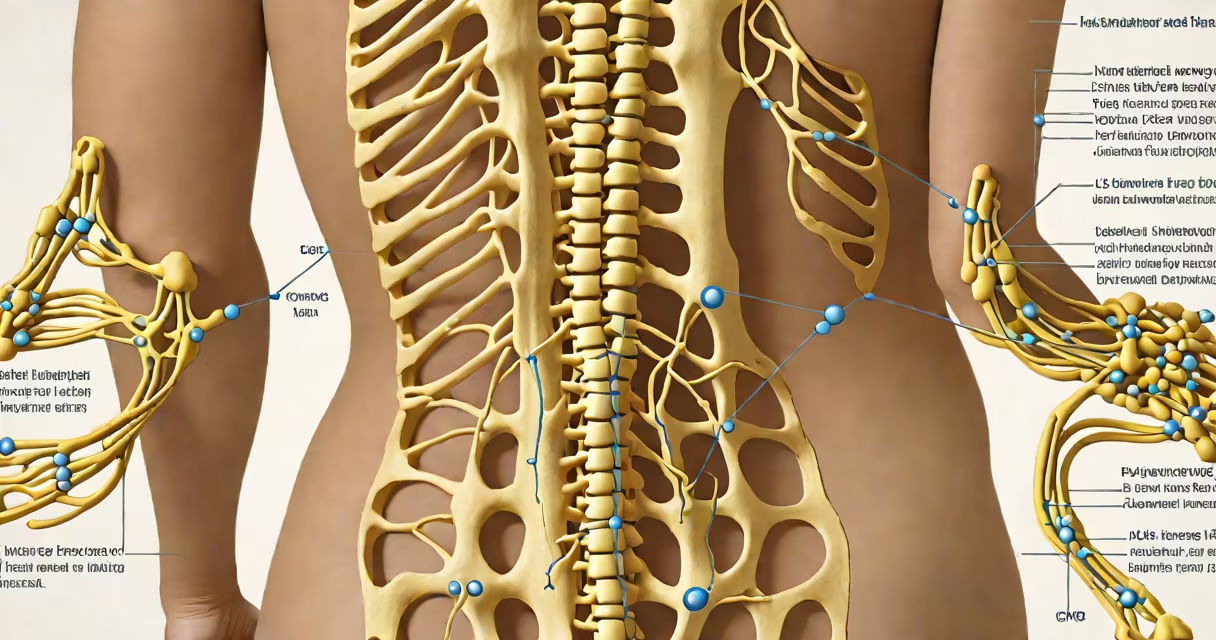
Lumbar spine pain ICD-10 refers to the standardized diagnostic code set used in U.S. healthcare to classify lower back pain conditions for clinical documentation, treatment planning, and insurance billing. These codes specify the location, cause, and duration of pain originating in the five lumbar vertebrae (L1-L5).
The International Classification of Diseases, 10th Revision (ICD-10), is maintained by the World Health Organization and adopted by the U.S. Centers for Medicare & Medicaid Services (CMS) and the American Medical Association (AMA). Each code maps to a specific clinical condition, ensuring consistent data reporting across providers.
For example, M54.5 specifies "lumbago with sciatica," a common presentation involving lower back pain radiating down the leg due to nerve root compression. This differs from M54.6, which describes "lumbago with neuralgia" - pain along a nerve without radiation. Misapplication leads to claim denials or audit flags.
How Lumbar Spine Pain ICD-10 Codes Work
Each ICD-10 code begins with a letter indicating the category. For musculoskeletal disorders, the prefix is "M." The second character denotes the anatomical site. For lumbar spine issues, this is "5." The third character identifies the specific condition, such as "4" for lumbago, "5" for sciatica, or "6" for neuralgia.
Clinicians assign codes based on physical exams, imaging results (like MRI or CT scans), and patient history. A diagnosis of "chronic lumbar strain" uses M53.9 (unspecified dorsalgia), while acute disc herniation at L4-L5 requires M51.22 (herniated disc of lumbar region, lumbar level, with radiculopathy).
Proper coding requires linking symptoms to confirmed pathology. A patient reporting low back pain without imaging evidence of nerve compression should not be coded for radiculopathy unless supported by clinical findings like diminished reflexes or muscle weakness.
Types of Conditions and Their ICD-10 Codes
Below are common lumbar spine conditions and their corresponding ICD-10 codes:
| Condition | ICD-10 Code | Description |
|---|---|---|
| Lumbago with sciatica | M54.5 | Pain radiating from lower back down leg, often due to nerve root irritation |
| Herniated disc, lumbar region | M51.22 | Disc protrusion compressing spinal nerves at L4-L5 level |
| Lumbar spondylosis without myelopathy | M47.89 | Degenerative joint disease affecting lumbar spine joints |
| Chronic low back pain, unspecified | M54.5 | Used when pain persists beyond 3 months without clear structural cause |
Some codes require additional specificity. M51.22 mandates specifying the side (left, right, or bilateral) and whether it's with or without radiculopathy. Failure to do so results in incomplete claims.
One non-obvious rule: ICD-10 does not allow coding for pain alone. You cannot bill for "back pain" without a documented underlying etiology. A patient with unexplained lower back discomfort must have a diagnosis such as "mechanical back pain" (M54.5) or "lumbar spondylosis" (M47.89) to justify the code.
Common Confusions and Coding Pitfalls
Many clinicians confuse "lumbar spine pain" with "sciatica." Sciatica is a symptom, not a standalone diagnosis. The correct code is M54.5 only when both lower back pain and radiating leg pain are present. Using M54.5 for isolated back pain is incorrect.
Another frequent error is using M54.5 for chronic pain without supporting documentation. The code implies acute or subacute onset. For persistent pain lasting over three months, M54.5 may still apply if the episode is ongoing, but the provider must document recurrence or flare-ups.
I've seen a case where a primary care physician coded a patient's back pain as M54.5 without confirming neurological deficits. The insurance denied the claim because the provider failed to meet the diagnostic criteria for radiculopathy. After reviewing the EMR, we added a note about reduced ankle reflex and positive straight leg raise test - then resubmitted with M54.5 and received payment.
Where and Why These Codes Are Used
Healthcare providers use lumbar spine pain ICD-10 codes during visits, surgeries, and follow-ups. They appear on prescriptions, referrals, and discharge summaries. Insurance companies rely on them to determine coverage eligibility and reimbursement amounts.
For example, a worker injured lifting boxes at a warehouse may receive a diagnosis of "acute lumbar strain" (M53.0). The employer's workers' compensation insurer uses M53.0 to process the claim and authorize physical therapy. Without the correct code, treatment approval is delayed.
Clinical research also depends on accurate coding. The National Center for Health Statistics (NCHS) aggregates ICD-10 data to track regional trends in back pain prevalence. A 2022 study published in JAMA Network Open used M54.5 and M51.22 to estimate that 12.7 million U.S. adults sought care for sciatica annually.
When coding for multiple conditions, use the most specific code first. If a patient has both lumbar spondylosis (M47.89) and sciatica (M54.5), list M54.5 as the principal diagnosis if treatment focuses on nerve-related symptoms.
Related ICD-10 Categories
Understanding lumbar spine pain ICD-10 requires awareness of adjacent categories. Cervical spine pain uses codes starting with M50-M53, such as M50.12 (cervical disc disorder with radiculopathy at C5-C6). Explore cervical spine pain ICD-10 codes for comparison.
Always verify codes against the latest official ICD-10-CM Official Guidelines for Coding and Reporting, issued annually by CMS. These guidelines clarify edge cases, such as coding for pain after surgery or when imaging shows degeneration but no symptoms.
Accurate lumbar spine pain ICD-10 coding prevents claim rejections, supports quality reporting, and enables better health outcomes through data-driven care. Use the correct code based on clinical findings, not assumptions.