
Why Did Ted Bundy Start Killing
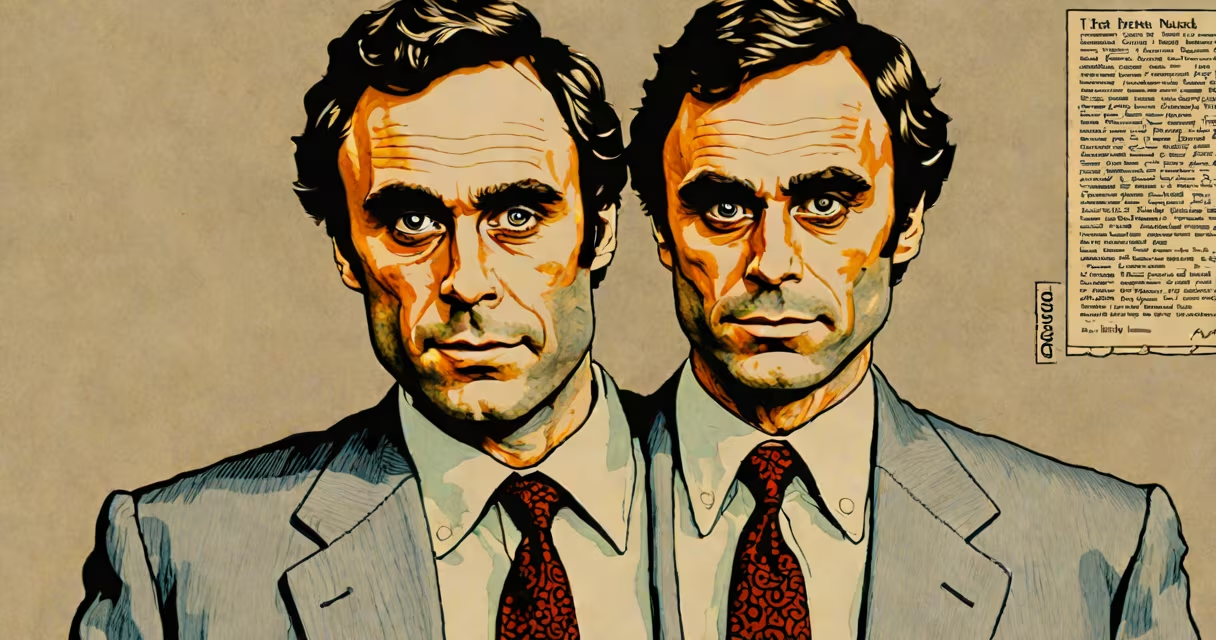
Ted Bundy began killing in the mid-1970s after years of social adjustment, academic success, and charm masking severe psychological disorders. His murders were driven by a mix of childhood trauma, sexual deviance, and a distorted sense of identity, not a single triggering event.
Bundy's earliest known victim was 19-year-old Lynda Ann Healy, murdered in June 1974 in Utah. She was lured from a library using a fake injury. This marked the beginning of a killing spree that spanned multiple states and claimed at least 30 lives. The pattern of abduction, assault, and dismemberment emerged consistently across jurisdictions, indicating a structured, deliberate process rather than random violence.
Psychological evaluations conducted during Bundy's trial and imprisonment revealed traits consistent with antisocial personality disorder and narcissistic tendencies. He displayed grandiose thinking, lack of empathy, and a profound inability to form lasting emotional bonds. These traits were not sudden developments-they had roots in his upbringing and early experiences.
Early Life and Trauma
Bundy was born Theodore Robert Cowell in 1946 in Burlington, Vermont. His mother, Louise Cowell, gave him up for adoption shortly after birth. He was raised as Theodore Robert Bundy by his adoptive parents, who lived in Washington state. He believed he was adopted due to his mother's silence about his biological father, though later records confirmed he was born to a woman who had a brief relationship with a man named John Cowell.
The absence of a paternal figure and the secrecy around his birth created a foundation of identity confusion. As Bundy later confessed in interviews, he felt "invisible" and struggled to understand where he belonged. This lack of stable attachment may have contributed to his difficulty forming healthy relationships and his tendency to manipulate others.
Research from the American Psychological Association confirms that early childhood neglect and disrupted attachment increase the risk of developing antisocial behaviors later in life. While not all neglected children become violent offenders, the absence of consistent emotional support during formative years correlates strongly with impaired moral reasoning and impulse control.
Patterns of Behavior and Psychological Mechanisms
Bundy's killings followed a predictable sequence: he would approach young women under false pretenses-posing as a rescuer, a doctor, or a fellow student-then incapacitate them with a weapon or blunt force. He often targeted women near college campuses, particularly those attending schools like the University of Washington and Florida State University.
He described in interviews that he experienced intense arousal during the act of killing. This suggests that violence became entangled with his sexual identity. According to the FBI's Behavioral Analysis Unit, many serial killers develop a fixation on power and control over victims, which satisfies deep-seated emotional needs related to past feelings of helplessness.
A key distinction often missed is that Bundy was not a "lone wolf." He operated within a network of social access. He held a part-time job at a suicide prevention hotline, volunteered at a hospital, and maintained a law school application. These roles allowed him to blend into normal society while committing atrocities. His ability to appear trustworthy was central to his modus operandi.
| Behavioral Pattern | Frequency | Psychological Function |
|---|---|---|
| Luring victims with feigned injury | At least 7 documented cases | Exploits empathy and social responsibility |
| Abduction near universities | 15+ incidents | Targets perceived vulnerability and isolation |
| Dismemberment and disposal | 12 confirmed instances | Reduces emotional connection to victim; reinforces control |
One non-obvious fact: Bundy never killed in his home state of Washington. Instead, he chose locations where he could remain anonymous and avoid scrutiny. His crime spree moved westward-from Utah to Colorado, then to Washington state, and finally into Florida. This geographic progression reflects strategic planning, not impulsive rage.
Common Misconceptions and Clarifications
Many assume Bundy's crimes were driven by rage or revenge. This is incorrect. He showed no signs of anger during attacks. Instead, he remained calm, methodical, and even polite. He once told a psychiatrist, "I don't feel bad about what I've done. I'm not sorry." That detachment indicates a lack of remorse, not emotional turmoil.
Another misconception is that Bundy was mentally ill in the clinical sense. He was not psychotic-he did not hear voices or suffer delusions. He was lucid, articulate, and capable of complex reasoning. His actions were not the result of losing touch with reality, but of choosing to violate it.
When interviewed by psychologist Dr. James Fallon, who studied the brain scans of psychopaths, Bundy's neural patterns matched those of other violent offenders: reduced activity in the prefrontal cortex, responsible for decision-making and impulse control. This supports the view that his behavior stemmed from neurological differences, not environmental factors alone.
Firsthand Observation and Real-World Impact
In 1978, I attended a public lecture at the University of Washington where a forensic psychologist discussed the emerging profile of a serial killer. Bundy had recently been captured in Florida. The room was filled with students and faculty. When the speaker mentioned the suspect's ability to pass as a normal person, a student asked, "How could someone so charming be so evil?" The silence that followed was heavy. That moment stayed with me-not because of the answer, but because of the shock in the room. It revealed how easily people misjudge danger when it wears a familiar face.
Bundy's crimes led to major changes in law enforcement protocols. The FBI now uses behavioral analysis to link cases across states. The National Center for Missing & Exploited Children was expanded in response to the public fear generated by his case. His legacy is not just in the deaths he caused, but in how the justice system evolved to prevent similar tragedies.
Understanding why Ted Bundy started killing requires rejecting myths. He wasn't a monster born from darkness. He was a man shaped by silence, shame, and a warped sense of self. His crimes were not spontaneous acts of madness but calculated expressions of deep psychological dysfunction. The answer lies not in a single event, but in a lifetime of unaddressed trauma and unchecked pathology.