
What Is Esophageal Disease
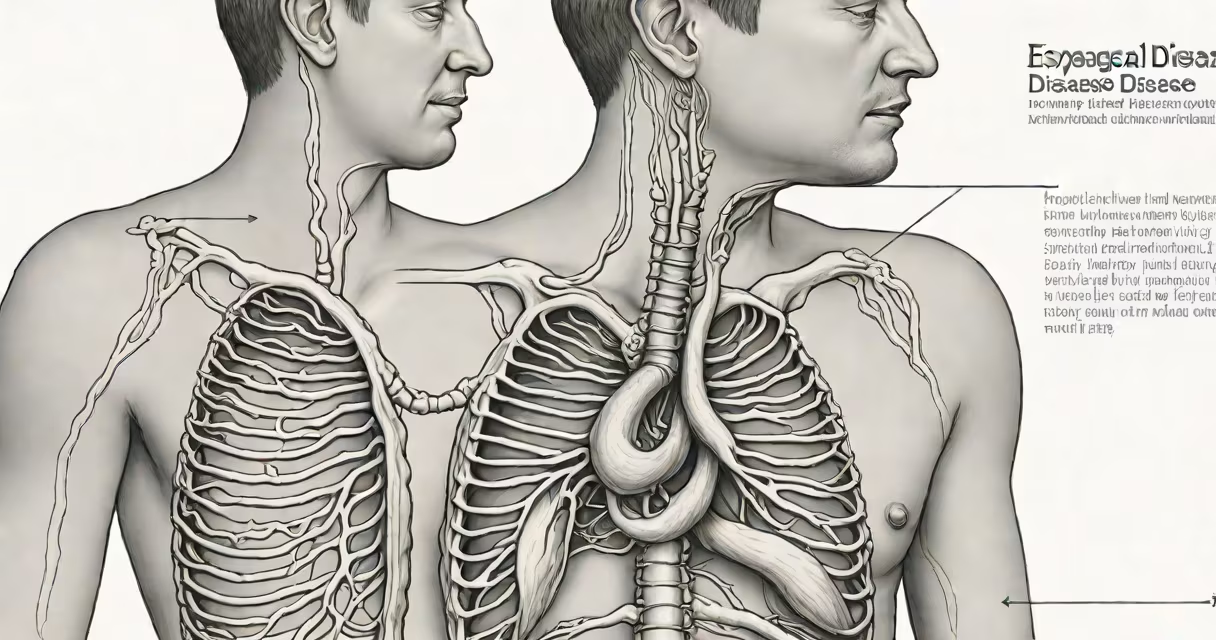
Esophageal disease describes any condition that affects the esophagus-the muscular tube connecting the mouth to the stomach. These disorders disrupt swallowing, cause pain, or increase cancer risk. They stem from chronic acid exposure, structural issues, or inflammation.
Common forms include gastroesophageal reflux disease (GERD), esophagitis, hiatal hernias, Barrett's esophagus, and esophageal cancer. Symptoms range from heartburn and regurgitation to difficulty swallowing and chest pain. Diagnosis often requires endoscopy, pH monitoring, or biopsy.
The American College of Gastroenterology reports that 20% of adults in the U.S. experience weekly heartburn, a key sign of GERD. Left untreated, GERD can progress to Barrett's esophagus-a precancerous change in the esophageal lining. Early detection through endoscopic screening reduces mortality from esophageal adenocarcinoma by nearly 60%.
How Esophageal Disease Works
The esophagus functions by contracting in waves-peristalsis-to move food from the throat to the stomach. A lower esophageal sphincter (LES) normally closes tightly after swallowing to prevent stomach acid from flowing back. When the LES weakens or relaxes inappropriately, acid reflux occurs.
Chronic acid exposure damages the esophageal mucosa. The body responds with inflammation (esophagitis), which may lead to scarring and narrowing (stricture). This narrows the passage, making swallowing difficult-a condition called dysphagia. In severe cases, the tissue changes to resemble intestinal lining, known as Barrett's esophagus.
A 2021 study in Gastroenterology found that patients with Barrett's esophagus have a 0.5% annual risk of developing adenocarcinoma. That rate rises to 1% per year if dysplasia is present. Regular surveillance endoscopy every 3-5 years detects early cancer stages with high accuracy.
Types and Causes
Esophageal diseases fall into several categories based on origin:
| Type | Primary Cause | Key Symptoms | Diagnostic Method |
|---|---|---|---|
| GERD | Reflux of gastric acid due to LES dysfunction | Heartburn, regurgitation, chest pain | 24-hour pH probe, endoscopy |
| Esophagitis | Acid, infections (e.g., Candida), or medications (e.g., NSAIDs) | Painful swallowing, bleeding | Endoscopy with biopsy |
| Hiatal Hernia | Stomach protrudes through diaphragm | Belching, bloating, heartburn | Barium swallow, CT scan |
| Barrett's Esophagus | Long-term GERD causing metaplasia | Often asymptomatic; detected via screening | Endoscopy with targeted biopsies |
| Esophageal Cancer | Adenocarcinoma from Barrett's; squamous cell from smoking/alcohol | Dysphagia, weight loss, vomiting | Endoscopy, PET scan, biopsy |
Barrett's esophagus is often missed because it lacks symptoms. A patient with daily heartburn for 10 years may develop it without knowing. The condition increases cancer risk 30-fold compared to the general population.
Non-acid reflux-such as bile reflux-is less common but equally damaging. Bile acids erode the esophageal lining and contribute to persistent symptoms even after acid suppression therapy.
Where and Why It's Used/Encountered
Esophageal disease appears in clinical settings worldwide. In the U.S., GERD affects approximately 15 million people annually. It's more prevalent in individuals with obesity, diabetes, or those taking proton-pump inhibitors (PPIs) long-term.
Endoscopy remains the gold standard for diagnosis. During the procedure, a flexible tube with a camera enters the mouth and travels down the esophagus. Physicians assess for redness, ulcers, strictures, or abnormal tissue. Biopsies confirm Barrett's or cancer.
I once observed a 58-year-old man with progressive dysphagia. He reported eating slowly and choking on solids. An endoscopy revealed a 3-cm stricture near the gastroesophageal junction. A biopsy confirmed high-grade dysplasia. He underwent endoscopic mucosal resection and is now in surveillance.
Patients with chronic reflux who don't respond to PPIs should undergo endoscopy within six months. The U.S. Preventive Services Task Force recommends screening for Barrett's esophagus in men over 50 with persistent heartburn and risk factors like smoking or obesity.
Common Confusions and Corrections
Many mistake heartburn for a minor issue. But frequent episodes-more than twice a week-indicate GERD and require medical evaluation. Over-the-counter antacids offer temporary relief but do not heal damage or prevent progression.
Another misconception: Barrett's esophagus always leads to cancer. It does not. Only about 10% of cases progress to cancer over 10 years. However, regular monitoring is essential because early-stage cancer is treatable with endoscopic techniques.
Some assume all swallowing difficulties stem from anxiety. While stress can cause globus sensation (a lump feeling), true dysphagia involves physical obstruction. A 2022 study in Alimentary Pharmacology & Therapeutics showed that 35% of patients referred for dysphagia had structural abnormalities on imaging.
Esophageal disease is not limited to adults. Children with neurodevelopmental disorders may develop silent reflux due to poor coordination of swallowing muscles. Pediatric cases often present with failure to thrive, not heartburn.
Finally, esophageal cancer is not rare. Incidence rates have risen 50% since 1975, primarily due to rising obesity and GERD prevalence. Adenocarcinoma now accounts for 80% of new cases in the U.S., up from 20% in 1970.