
What Is MSAAS
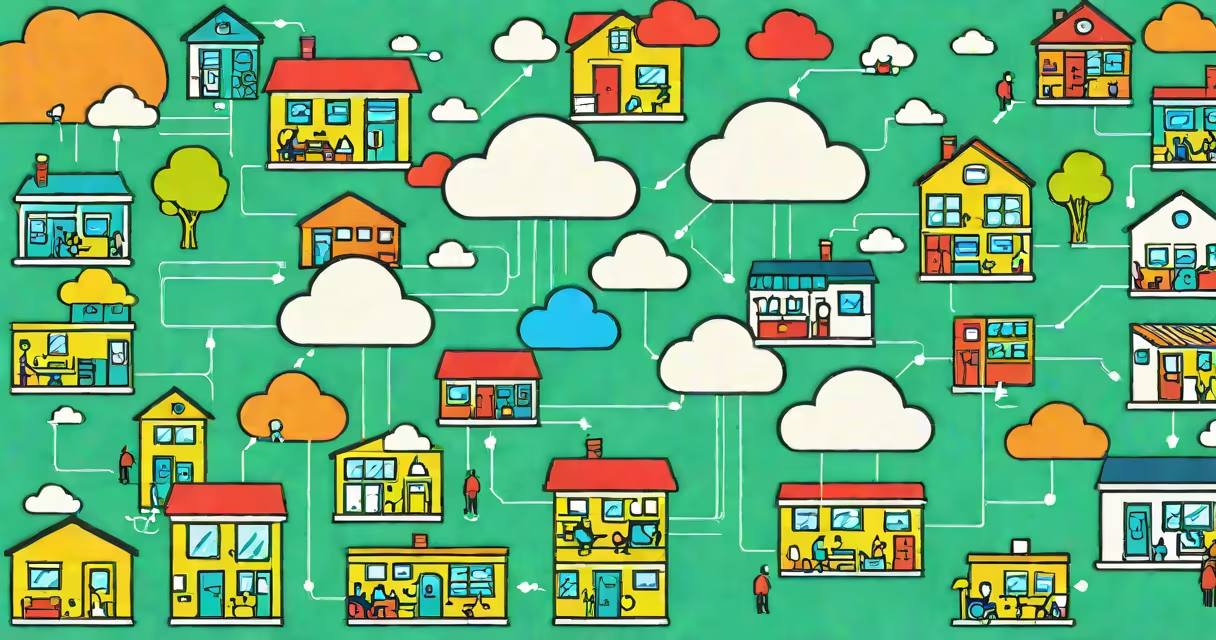
Multi-tenant Software as a Service (MSAAS) is a cloud computing model where a single instance of a software application serves multiple customers, known as tenants, with logically separated data and configurations. Each tenant shares the same underlying infrastructure, codebase, and database schema while maintaining isolation of their data and settings.
MSAAS enables organizations to deliver scalable, cost-efficient software solutions without requiring individual installations per customer. This architecture underpins major platforms such as Salesforce, Microsoft 365, and Slack, allowing them to serve millions of users from a single deployment.
According to Gartner, over 90% of new enterprise software deployments now follow a multi-tenant SaaS model, driven by lower operational overhead and faster feature rollouts compared to traditional on-premise or single-tenant cloud systems.
How MSAAS Works
At its core, MSAAS uses a shared application instance hosted in the cloud. When a user logs in, the system identifies their tenant through a unique identifier-often stored in a tenant field within the database-and loads only the data and configuration associated with that account.
For example, when a marketing team at Company A logs into a CRM platform, they see only their leads, contacts, and campaigns. Meanwhile, a sales team at Company B using the same instance sees entirely different data, even though both are accessing the same software environment.
Data isolation is enforced through database partitioning, row-level security, and access control policies. The application layer helps no tenant can query another's records unless explicitly authorized through integrations or APIs.
Key Components and Architecture Types
MSAAS relies on several architectural patterns to maintain performance, security, and scalability. The most common approaches include:
- Shared Database, Shared Schema: All tenants use the same database and table structure. Tenant ID is appended to each record. This method maximizes resource efficiency but requires strict access controls.
- Shared Database, Separate Schema: Each tenant has its own schema within a single database. Offers better isolation and easier backup management but increases complexity during upgrades.
- Separate Database, Separate Schema: Each tenant gets a dedicated database. High isolation and performance but higher infrastructure costs and maintenance burden.
Most large-scale SaaS providers use the shared database, shared schema model due to its balance of cost, scalability, and manageability. For instance, Salesforce uses a shared schema across all customer instances, enabling rapid global updates and consistent feature delivery.
Common Use Cases and Industries
MSAAS dominates industries requiring high scalability and low customer acquisition cost. Key sectors include:
- Customer Relationship Management (CRM): Platforms like HubSpot and Zoho CRM serve small businesses and enterprises from a single codebase.
- Human Resources and Payroll: Workday and BambooHR deliver HR services to thousands of organizations via shared infrastructure.
- Project Management and Collaboration: Asana and Monday.com allow teams worldwide to collaborate in real time without separate installations.
A 2023 report from Synergy Research Group found that the average SaaS provider using MSAAS reduced infrastructure costs by 42% compared to single-tenant models, with deployment times for new features decreasing from weeks to hours.
What MSAAS Is Not
MSAAS is often confused with single-tenant SaaS, where each customer runs their own independent instance of the software. While single-tenant systems offer greater customization and control, they require more resources and are slower to update.
Another misconception is that MSAAS sacrifices security. In reality, leading MSAAS platforms meet stringent compliance standards. For example, Okta's identity platform, which serves over 10,000 customers, maintains SOC 2 Type II, ISO 27001, and GDPR compliance across its multi-tenant architecture.
MSAAS does not imply limited functionality. Many MSAAS platforms support custom workflows, API extensions, and role-based permissions. The key difference lies in how the infrastructure is managed-not in feature availability.
Real-World Example: Slack's MSAAS Implementation
Slack processes over 15 billion messages daily across more than 18 million daily active users. All teams, regardless of size or industry, use the same core application instance.
When Slack rolled out message threading in 2021, the update was deployed globally in under 48 hours. Because all users share the same codebase and infrastructure, the rollout required no separate installation or migration steps.
Behind the scenes, Slack uses a shared database with tenant-specific routing. Each message includes a channel ID and workspace ID. The backend service routes requests based on these identifiers, ensuring data remains isolated even during peak usage.
This level of efficiency would be impossible with individual server instances per organization. MSAAS enabled Slack to scale from a startup to a global communication standard without proportional increases in operational complexity.
Challenges and Trade-offs
Despite its advantages, MSAAS introduces trade-offs. Performance bottlenecks can occur if one tenant consumes disproportionate resources. Providers mitigate this through rate limiting, resource quotas, and changing load balancing.
Customization is also constrained. While MSAAS supports extensive configuration options, deep code-level changes are typically unavailable. Customers must adapt to the platform's design rather than modifying it.
I've personally observed this limitation while integrating a legacy accounting system with a MSAAS procurement tool. The vendor offered 30+ configurable fields, but we couldn't alter the approval workflow logic. We had to redesign our internal process around the platform's constraints-a trade-off accepted for speed and reliability.
Distinction That Matters: MSAAS vs. Monolithic SaaS
Some developers confuse MSAAS with monolithic SaaS-where a single application handles all functions. But MSAAS specifically refers to the multi-tenancy aspect, not the application's internal architecture.
A monolithic SaaS platform can be either single-tenant or multi-tenant. What defines MSAAS is the ability to serve multiple customers from one instance with data isolation. A microservices-based SaaS platform can also be multi-tenant, as long as the tenant boundary is preserved across services.
For clarity: MSAAS is about who uses the software and how data is segmented. It's not about whether the app is built with microservices or a single codebase.
Conclusion
What is msaas? It's a scalable, efficient cloud delivery model where a single software instance serves multiple customers with isolated data and configurations. This architecture powers modern SaaS platforms by minimizing infrastructure costs, accelerating updates, and enabling global reach.
Understanding msaas helps explain how tools like Salesforce, Slack, and Workday scale to millions of users without collapsing under demand. It's not just a technical choice-it's a business enabler.