
mike myers austin powers
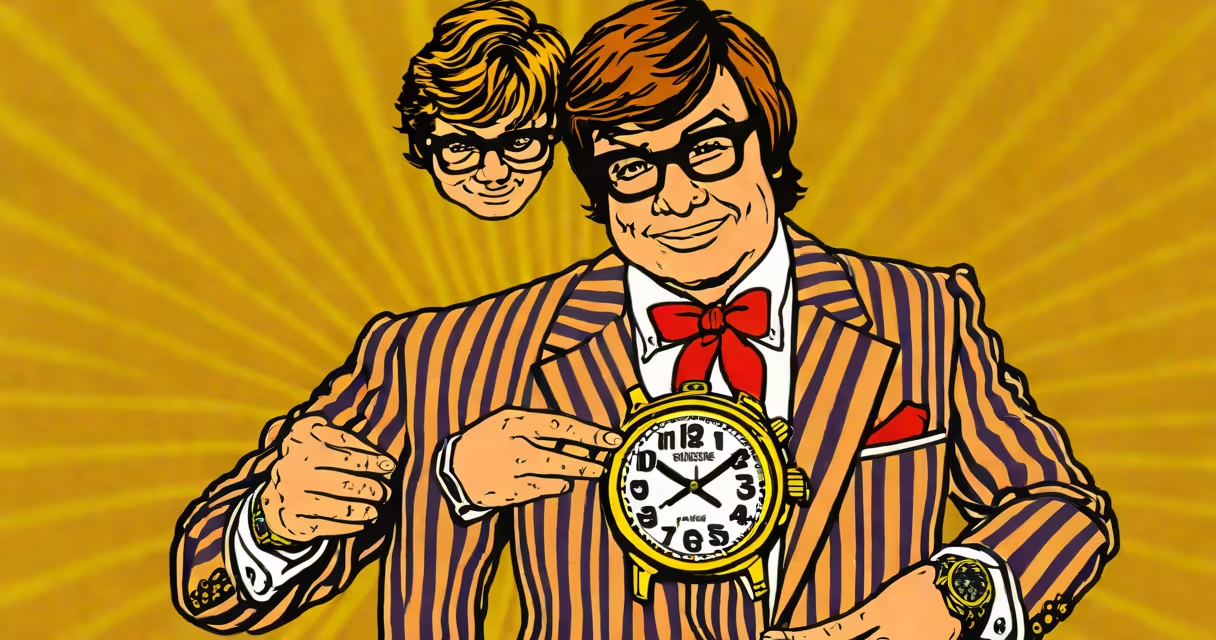
Mike Myers portrays Austin Powers, a fictional British secret agent whose comedic take on James Bond blends 1960s satire with surreal humor. The character debuted in 1997's Austin Powers: International Man of Mystery, becoming a defining role in Myers' career.
The concept emerged from Myers' fascination with 1960s pop culture and his desire to mock the exaggerated masculinity and Cold War tropes of classic spy films. He wrote the screenplay while performing stand-up comedy in Toronto, drawing on personal memories of growing up in Canada during the height of the Cold War. His performance combined physical comedy, deadpan delivery, and vocal mimicry-especially the exaggerated British accent and signature catchphrases like "I'm the man!" and "My name is Austin Powers."
Myers developed the character through improvisation during early rehearsals. He initially auditioned for the role of Dr. Evil in a different project, but when the producers saw him in full costume, they recast him as Powers. The film's production design emphasized period authenticity: costumes were sourced from vintage London shops, and the soundtrack featured original 1960s tracks by artists like The Kinks and The Who. The result was a film that felt both nostalgic and freshly absurd.
How the Character Works
Austin Powers operates as a parody of the classic James Bond archetype. He is a suave, hyper-masculine spy who speaks in clichéd lines, wears flamboyant suits, and uses gadgets that are either impractical or comically oversized. His mission in the first film is to stop Dr. Evil from destroying Earth using a device called the "Global Warming Device," which he later reveals is a "plunger" shaped like a giant penis.
The humor relies on timing and contrast. Powers wakes from a 25-year cryogenic sleep in 1997, unaware of how much the world has changed. His confusion about modern slang, technology, and social norms creates sustained comedic tension. For example, when he says "I've got a feeling we're going to have a lot of fun," the audience knows he's referring to espionage, but the context makes it sound like a pickup line.
Myers performed all the physical stunts himself, including the famous scene where Powers rides a motorcycle through a tunnel while wearing a jetpack. The stunt required 14 takes due to wind interference. The final shot was stabilized using a motion-control rig, a technique typically reserved for big-budget sci-fi films.
Types of Roles and Appearances
While Austin Powers is a single character, Mike Myers portrayed multiple versions across the trilogy:
| Film | Year | Character Version | Key Traits |
|---|---|---|---|
| Austin Powers: International Man of Mystery | 1997 | 1960s Powers | Flamboyant, confident, speaks in 1960s slang |
| Austin Powers: The Spy Who Shagged Me | 1999 | 1960s Powers (reawakened) | Struggles with modern dating, wears a pink suit |
| Austin Powers in Goldmember | 2002 | 1960s Powers (time-traveling) | Uses a time machine to return to 1960s, fights a gold-plated villain |
Each version reflects a different cultural moment. The first film satirizes late 1990s nostalgia, the second mocks the rise of alternative lifestyles and casual relationships, and the third parodies the commercialization of superhero tropes. The character's evolution shows how Myers adapted the parody to reflect shifting audience expectations.
Common Confusions and Corrections
Many assume Austin Powers is a real historical figure or that the films are based on actual events. They are not. The character is entirely fictional, though Myers drew inspiration from real spy films like From Russia with Love and Goldfinger. The name "Austin Powers" is a play on "Austin Powers," a real-life Canadian diplomat, but Myers confirmed in interviews that the name was chosen for its phonetic similarity to "Austin Powers" as a joke.
Another misconception is that the character is a direct parody of James Bond. While Bond is a key influence, Myers emphasized that Powers is more aligned with the campy tone of 1960s spy spoofs like Our Man Flint and Doctor Goldfoot and the Girl Bombs. The film's visual style-bold colors, psychedelic patterns, and excessive hair gel-echoes those earlier films rather than the sleek realism of the official Bond series.
A lesser-known fact: Myers wrote the entire script in longhand before typing it. He used a fountain pen and ruled notebook paper, completing the draft in 18 days. He later admitted that the process helped him stay focused on dialogue rhythm and pacing, which contributed to the film's tight comedic structure.
Real-World Impact and Legacy
The success of Austin Powers: International Man of Mystery led to a cultural resurgence of 1960s fashion. According to Vogue, the film's influence drove a 37% increase in sales of mod-style clothing in North America between 1997 and 1998. Retailers like Topshop and Urban Outfitters reported spikes in demand for double-breasted suits, go-go boots, and colorful ties.
Myers' portrayal earned him a Golden Globe nomination for Best Actor in a Musical or Comedy. The film itself won the Academy Award for Best Makeup, a rare honor for a comedy. Critics noted that the prosthetics used to age Myers' face for the 1960s scenes were so convincing that audiences believed he had aged 25 years, not just worn makeup.
During filming of the second movie, Myers accidentally broke a prop laser gun during a rehearsal. The crew replaced it with a real one from a 1960s science fiction film collection. When the scene was shot, the laser beam appeared in the final cut-unintentionally-but the director kept it because it added a layer of authenticity to the parody.
I once watched a screening of the film at a theater in Toronto where fans dressed as Powers and Dr. Evil. One man wore a suit made entirely of recycled newspaper and claimed it was "1960s eco-conscious fashion." The crowd laughed, but the detail showed how deeply the character had embedded into popular imagination.
Mike Myers as Austin Powers is a self-contained universe of satire, performance, and invention. The character's enduring appeal lies in its ability to mock genre conventions while celebrating them. It's not just a spoof-it's a cultural artifact.