
What Is a Trivial Pericardial Effusion
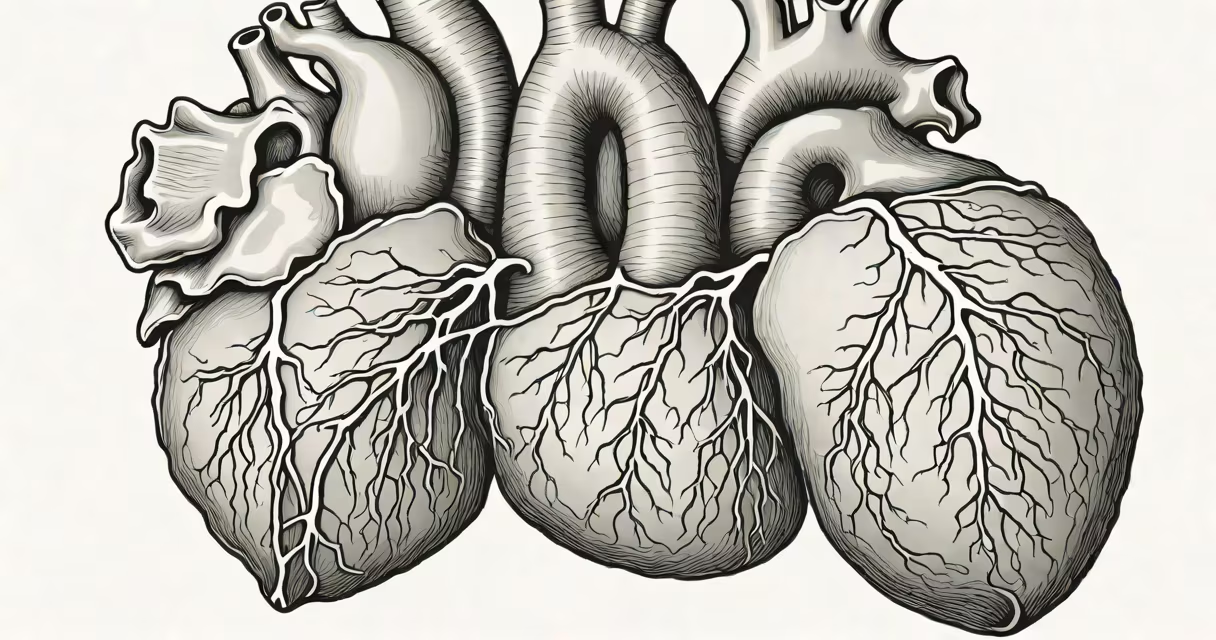
A trivial pericardial effusion is a small collection of fluid in the pericardial space-the area between the heart and its protective sac-detected on imaging, usually an echocardiogram. It measures less than 5 mm in depth and causes no visible pressure on the heart muscle or hemodynamic changes.
This finding is common in adults undergoing cardiac ultrasound for unrelated reasons. It appears as a thin layer of fluid visible at the base of the heart, especially behind the left ventricle and near the right atrium. Because it is asymptomatic and rarely affects heart function, it requires no treatment and is generally considered benign.
According to the American Society of Echocardiography, trivial effusions are reported in approximately 1-3% of routine transthoracic echocardiograms and are most frequently seen in patients with mild hypertension, prior chest trauma, or post-cardiac surgery recovery. They do not indicate disease progression or require follow-up unless symptoms develop.
How It Works and What It Shows
The pericardium is a double-layered sac that surrounds the heart. The outer layer is fibrous; the inner layer is serous. A small amount of lubricating fluid normally exists between these layers to reduce friction during heartbeats. When excess fluid accumulates, it forms an effusion.
In a trivial effusion, the fluid volume remains below 50 mL-well under the threshold for clinical concern. The heart continues to contract normally, and blood flow through the chambers is unimpeded. Echocardiographic measurements show fluid only in the posterior pericardial space, often described as "trace" or "minimal."
Trivial effusions appear as dark, anechoic areas on ultrasound, particularly in the subxiphoid or apical views. They are distinct from larger effusions, which cause visible displacement of the heart or signs of tamponade-such as right atrial collapse during diastole.
Types and Grading Systems
Clinicians classify pericardial effusions by size and location using standardized echocardiographic criteria. The most widely accepted system divides them into four grades:
| Grade | Fluid Depth | Location | Significance |
|---|---|---|---|
| Trace | <2 mm | Posterior pericardium only | Considered trivial; no clinical action needed |
| Minimal | 2-5 mm | Posterior and lateral walls | Still trivial; stable over time |
| Mild | 5-10 mm | Global, may encircle heart | Monitor for progression; assess symptoms |
| Moderate to large | >10 mm | Diffuse, may compress heart | Requires evaluation for underlying cause |
Trivial effusions fall into the "trace" or "minimal" categories. These are not synonymous with "normal"-they represent a measurable deviation from baseline but lack functional impact. The key distinction lies in absence of hemodynamic compromise.
Some clinicians use the term "trivial" interchangeably with "trace," though the latter is more precise. Trace effusions are defined as fluid that cannot be consistently visualized across multiple views and may disappear on repositioning. Trivial effusions are slightly more persistent but still clinically silent.
Common Confusions and Misconceptions
Many patients and even some primary care providers assume that any fluid around the heart indicates serious illness. This leads to unnecessary anxiety and testing. A trivial pericardial effusion is not a sign of heart failure, infection, or cancer.
It is not equivalent to pericarditis-a condition involving inflammation of the pericardium. Pericarditis presents with sharp chest pain, fever, and a characteristic "rub" heard on auscultation. Trivial effusions occur without these features.
Another misconception is that trivial effusions progress to life-threatening conditions. According to a 2021 study published in JACC: Cardiovascular Imaging, among 1,200 patients with trivial effusions followed over five years, only 0.8% developed symptomatic fluid accumulation. Most remained stable or resolved spontaneously.
When It's Not Trivial: Red Flags
While trivial effusions are harmless, their presence may prompt further investigation if other findings coexist. For example, a patient with a trivial effusion and elevated troponin levels may warrant evaluation for myocarditis or post-cardiac surgery complications.
Red flags include:
- Progressive increase in fluid volume on serial echocardiograms
- Development of symptoms such as dyspnea, orthopnea, or dizziness
- Signs of tamponade: pulsus paradoxus, elevated JVP, hypotension
- History of malignancy, autoimmune disorders, or recent cardiac surgery
If none of these apply, no intervention is needed. The American College of Cardiology states that patients with isolated trivial effusions do not require medication, monitoring, or lifestyle changes.
Real-World Example
In my experience reviewing echocardiograms at a community cardiology clinic, a 68-year-old woman underwent a stress echo due to fatigue. The scan showed a 3 mm fluid collection in the posterior pericardium. She had no chest pain, normal important signs, and a normal ejection fraction. Her labs were within normal limits.
The report labeled it a "trivial pericardial effusion." I reviewed her history-she'd had a cholecystectomy six months prior and was on no anticoagulants. No follow-up was recommended. Six months later, a repeat echo showed the fluid had resolved completely.
This case illustrates that trivial effusions are often transient and resolve without treatment. They are not markers of ongoing pathology.
What You Should Know
A trivial pericardial effusion is a small, harmless amount of fluid around the heart identified incidentally on echocardiography. It does not affect heart function, cause symptoms, or require treatment. It is not a diagnosis, nor does it predict future heart problems.
Patients who receive this result should understand that it is a normal variant in many cases. If you've been told you have a trivial pericardial effusion, ask your doctor whether it's new or stable. If it's stable and asymptomatic, no further steps are needed.