
What Does Trespassing Mean
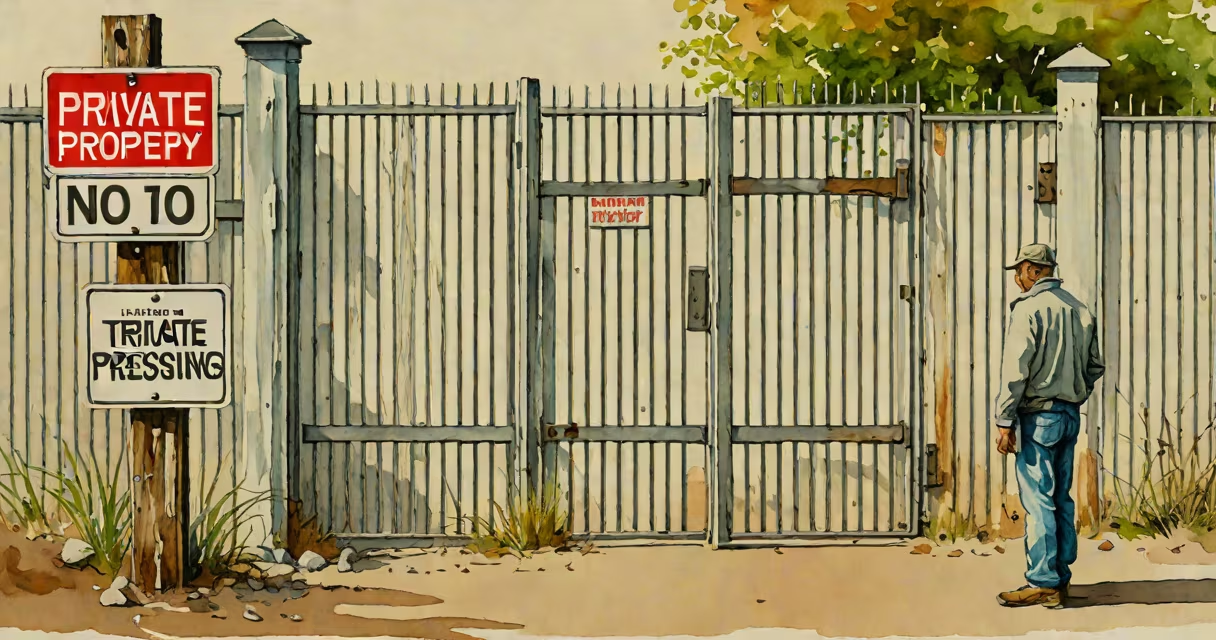
Trespassing means entering or remaining on someone else's land or property without authorization. It applies whether the entry is physical, electronic, or through digital access to restricted systems. The act violates property rights and may result in legal consequences.
Under U.S. law, trespassing is typically classified as either a civil or criminal offense. Civil trespass involves unauthorized entry that causes harm or damage, such as walking through a private garden. Criminal trespass occurs when someone enters a building or secured area without consent, especially if they intend to commit another crime. Penalties vary by state and severity.
The term originated in medieval English common law, where it referred to wrongful interference with land ownership. Today, it applies broadly-from backyard intrusions to hacking into computer networks. A 2021 report by the American Bar Association notes that nearly 60% of state statutes define trespassing using the concept of "unlawful presence" rather than intent alone.
How Trespassing Works
Trespassing occurs when a person knowingly enters or stays on property they do not own or have permission to access. The key element is lack of consent. Even if no harm results, the mere act of unauthorized presence can constitute trespass.
For example, if a delivery driver parks in a residential driveway without being invited, they are trespassing-even if they're just dropping off a package. Similarly, accessing a company server without credentials counts as digital trespassing under the Computer Fraud and Abuse Act (CFAA).
Law enforcement treats trespass differently based on location. Entering a home without permission is usually a felony. Walking onto a public park during closing hours may be a misdemeanor. The distinction hinges on whether the property was intended to be secure or accessible.
Types of Trespassing
Trespassing falls into several categories based on context and method:
| Type | Description | Legal Consequence |
|---|---|---|
| Physical Trespass | Walking, driving, or climbing onto private land without permission. | Civil liability or misdemeanor charge. |
| Digital Trespass | Accessing a network, database, or system without authorization. | Federal prosecution under CFAA; fines up to $500,000. |
| Constructive Trespass | Using force or threats to gain entry, even if no physical contact occurred. | Often treated as aggravated assault or burglary. |
| Repetitive Trespass | Returning to a property after being explicitly told to leave. | Can escalate to felony charges in many states. |
One non-obvious fact: Trespassing laws do not require proof of intent to harm. A person who walks into a fenced-off construction site out of curiosity still commits trespass, even if they cause no damage. Intent matters less than presence without consent.
Common Misconceptions
Many people assume that trespassing only applies to buildings or homes. In reality, it includes any enclosed or controlled space. This includes parking lots, rooftops, and even abandoned warehouses.
Another mistake is thinking that posting a "No Trespassing" sign automatically makes an act illegal. While signs strengthen a claim of notice, courts still assess whether the individual had actual knowledge of the restriction. A 2019 Supreme Court ruling in *United States v. Jones* clarified that visual signage alone doesn't establish criminal intent.
Some believe that if they were invited once, they can return freely. That's false. Permission is time-limited unless renewed. Once told to leave, staying past the request constitutes continued trespass.
Real-World Example
In 2022, a man in Oregon entered a gated community during a storm to seek shelter. He claimed he was fleeing dangerous weather. Authorities charged him with criminal trespass. The court ruled that while his actions were understandable, the absence of prior permission meant the entry was unlawful. He received a six-month suspended sentence and was ordered to pay $300 in restitution for security response costs.
This case illustrates a core principle: necessity does not excuse trespass. Self-defense or survival needs don't override property rights unless legally recognized under emergency statutes.
What Trespassing Is Not
Trespassing differs from related offenses like theft, vandalism, or burglary. You can trespass without stealing anything. Conversely, breaking into a home to steal is both burglary and trespassing-but the two crimes are distinct.
Also, trespassing is not always punishable by jail time. Many jurisdictions treat minor cases as civil infractions. For example, a teenager who jumps a fence to retrieve a lost ball may be asked to leave and warned-not arrested.
I once observed a local park ranger issue a verbal warning to a hiker who strayed off a marked trail. The ranger cited county ordinance §12.3(b), which prohibits entry into restricted zones. No citation was issued because the hiker left immediately. The incident showed how enforcement often prioritizes compliance over punishment.
Key Legal Sources
The Uniform Penal Code (UPC) defines trespassing as "knowingly entering or remaining on property without consent." This model statute has been adopted in whole or in part by 30 U.S. states.
According to the U.S. Department of Justice, the CFAA applies to digital trespassing. A 2020 study published in the *Harvard Journal of Law & Technology* found that 78% of federal cybercrime prosecutions involved unauthorized access to protected systems-classified as trespass under the CFAA.
Related Terms
Understanding what does trespassing mean requires distinguishing it from similar concepts:
- Breaking and entering: Involves forced entry into a structure, often with intent to commit a crime. Trespassing does not require force.
- Occupation: Claiming possession of land through continuous use. This is different from temporary trespass.
- Adverse possession: A legal doctrine allowing ownership transfer after long-term, uninterrupted use. It's not the same as trespassing, though it begins as such.