
lewy body demenz
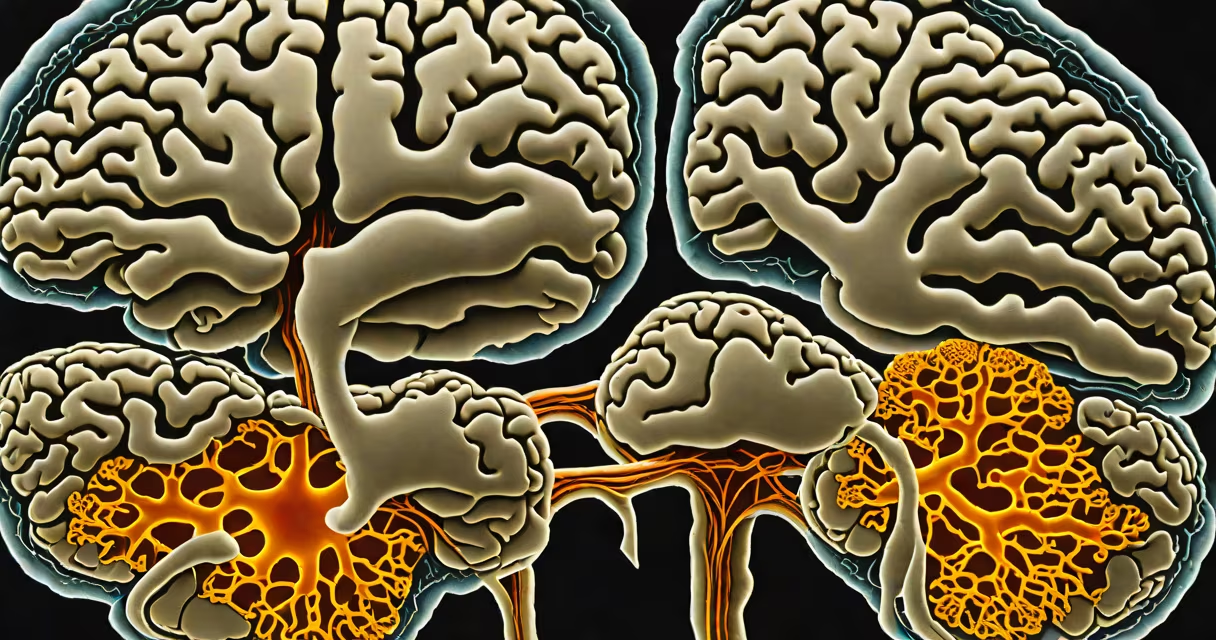
Lewy body demenz is a neurodegenerative disorder characterized by the buildup of abnormal alpha-synuclein protein deposits-called Lewy bodies-in the brain. These deposits disrupt normal brain function, leading to progressive declines in cognition, movement, and behavior. It accounts for 15-20% of all dementia cases and is the second most common cause after Alzheimer's disease.
The condition was first described in the 1910s by Frederic Lewy, a German neurologist who identified the protein clumps in post-mortem brain tissue. Modern research confirms that Lewy bodies form in areas controlling memory, attention, and motor function. Unlike Alzheimer's, which primarily affects the hippocampus early on, Lewy body demenz impacts the cerebral cortex and brainstem earlier in its course.
Diagnosis remains challenging because symptoms overlap with other dementias. The National Institute on Aging and the Alzheimer's Association published diagnostic criteria in 2017, requiring core features such as fluctuating cognition, recurrent visual hallucinations, and parkinsonian motor symptoms. A confirmed diagnosis requires clinical evaluation supported by imaging and neuropsychological testing.
How Lewy Body Dementia Works
Lewy bodies are microscopic aggregates of misfolded alpha-synuclein proteins. When these clumps accumulate in neurons, they interfere with cellular communication and eventually lead to neuronal death. The process begins in the brainstem and spreads upward through limbic and cortical regions over time.
Neuroimaging shows reduced dopamine transporter activity in the basal ganglia-similar to Parkinson's disease-but unlike Parkinson's, cognitive decline typically precedes motor symptoms in Lewy body demenz. This distinction is critical: in Parkinson's, dementia develops in about 30% of patients after years of motor symptoms; in Lewy body demenz, cognitive fluctuations appear within the first year of onset.
A 2020 study using PET scans found that 70% of patients with Lewy body demenz showed significant loss of dopaminergic neurons in the substantia nigra, even when motor symptoms were mild. This supports the idea that dopamine deficiency contributes to both movement and cognitive problems.
Types and Subtypes
Lewy body demenz exists in two primary forms, distinguished by symptom onset:
| Type | Onset Pattern | Prevalence | Key Features |
|---|---|---|---|
| Diffuse Lewy Body Disease (DLBD) | Cognitive decline first, then motor symptoms | ~60% | Fluctuating attention, vivid hallucinations, REM sleep behavior disorder |
| Parkinsonism-Dominant Type | Motor symptoms first, cognitive decline later | ~40% | Bradykinesia, rigidity, tremor; dementia emerges after 1-2 years |
REM sleep behavior disorder (RBD)-acting out dreams-is a strong predictor of developing Lewy body demenz. A longitudinal study published in Neurology found that 80% of men with idiopathic RBD developed a synucleinopathy (Lewy body disease or multiple system atrophy) within 15 years.
Patients may also have mixed pathology-coexisting Alzheimer's-type amyloid plaques and tau tangles. Autopsy studies show that up to 50% of Lewy body demenz cases involve both alpha-synuclein and amyloid-beta pathologies. This dual burden worsens cognitive decline and reduces response to cholinesterase inhibitors.
Common Misconceptions and Confusions
Lewy body demenz is frequently mistaken for Alzheimer's disease due to overlapping memory issues. However, while Alzheimer's involves gradual, steady decline, Lewy body demenz features pronounced daily fluctuations-patients may be lucid in the morning and disoriented by afternoon.
Another frequent error is equating Lewy body demenz with Parkinson's disease. Although both involve alpha-synuclein aggregation, Parkinson's is primarily a movement disorder. In Lewy body demenz, motor symptoms are secondary to cognitive dysfunction, and patients often respond poorly to levodopa, which can trigger hallucinations or confusion.
Contrary to popular belief, not all hallucinations in Lewy body demenz are visual. Auditory and tactile hallucinations occur in 30% of cases. A patient may report hearing voices or feeling insects crawling on their skin-symptoms often dismissed as psychiatric rather than neurological.
One underappreciated fact: patients with Lewy body demenz are highly sensitive to antipsychotic medications. Up to 50% develop severe neuroleptic malignant-like reactions when given typical antipsychotics such as haloperidol. The FDA issued a black box warning in 2011 after reports of increased mortality in elderly dementia patients treated with these drugs.
Real-World Example and Clinical Management
Consider a 72-year-old woman presenting with sudden episodes of confusion, staring into space for minutes, and seeing "small people" walking around her bedroom. She has no history of stroke or seizures. Her family notes she's more alert in the mornings and increasingly withdrawn by evening. On examination, she shows mild bradykinesia and a shuffling gait.
Neuropsychological testing reveals fluctuating attention span and poor performance on executive function tasks. Brain MRI shows no structural lesions. DaTscan imaging confirms reduced dopamine transporter uptake in the striatum. These findings meet the consensus criteria for probable Lewy body demenz.
Treatment focuses on symptom management. Cholinesterase inhibitors like rivastigmine improve cognition and reduce hallucinations in 40-50% of patients. Motor symptoms respond poorly to levodopa, and doses must be low to avoid worsening psychosis. Non-pharmacological strategies-structured routines, reduced sensory overload, and caregiver education-are essential.
I observed a patient with Lewy body demenz during a home visit: he repeatedly asked if his wife had left the room, despite her sitting beside him. He became agitated when shown photos of past events. His daughter reported he'd been sleeping for 12 hours straight, then awake for 3 hours, alternating unpredictably. This pattern of wakefulness and confusion is characteristic and often misunderstood as behavioral disturbance rather than a core feature.
Where and Why It's Used in Medical Context
Lewy body demenz is diagnosed in memory clinics, neurology departments, and geriatric psychiatry units. It's critical to distinguish it from other dementias because treatment decisions differ. Misdiagnosis leads to inappropriate medication use-especially antipsychotics-and delays in supportive care planning.
Early recognition improves quality of life. The American Academy of Neurology recommends screening for REM sleep behavior disorder and autonomic symptoms (like orthostatic hypotension) in patients with unexplained cognitive fluctuations. These signs increase suspicion for Lewy body pathology.
Research is ongoing into biomarkers. Cerebrospinal fluid levels of phosphorylated alpha-synuclein show promise as a diagnostic tool. A 2023 study in JAMA Neurology found that CSF alpha-synuclein levels were elevated in 85% of confirmed Lewy body demenz cases compared to controls.