
What Is Degenerative Disc Disease
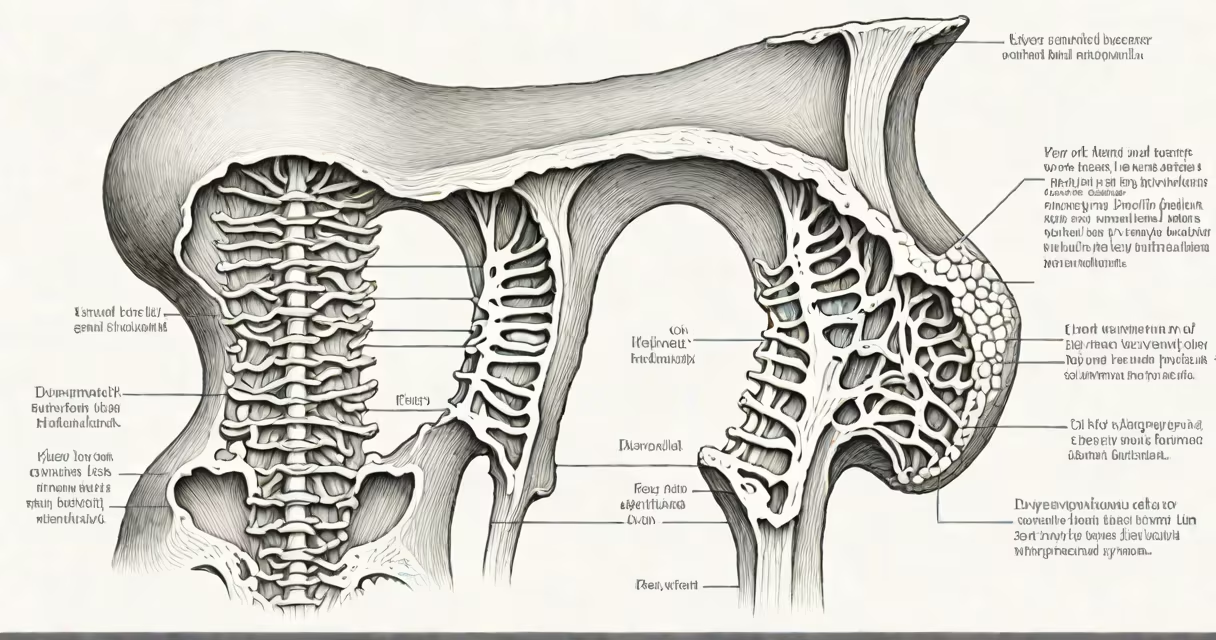
Degenerative disc disease (DDD) is a condition where intervertebral discs in the spine lose hydration and structural integrity over time, leading to pain, stiffness, and reduced mobility. It's not a disease in the traditional sense but a natural aging process accelerated by injury, genetics, or repetitive stress.
Discs act as shock absorbers between vertebrae. As they dehydrate and shrink, the space between bones narrows, increasing pressure on joints and nerves. This can result in localized pain, radiating discomfort, or neurological symptoms depending on location.
According to the National Institute of Neurological Disorders and Stroke (NINDS), DDD affects nearly 85% of adults over age 40, though many remain asymptomatic. The condition most commonly impacts the lumbar (lower back) and cervical (neck) regions of the spine.
How Degenerative Disc Disease Develops
Discs consist of a tough outer layer (annulus fibrosus) and a gel-like inner core (nucleus pulposus). With age, water content in the nucleus decreases, reducing cushioning ability. Microtears in the annulus allow material to leak out, triggering inflammation and nerve irritation.
Repetitive motion, heavy lifting, poor posture, and obesity increase mechanical stress on discs. A single traumatic event-like a fall or car accident-can accelerate degeneration even in younger individuals. Once damage begins, the body's repair mechanisms often fail to keep pace.
A 2021 study published in Spine Journal found that people with sedentary jobs had a 3.2 times higher risk of developing symptomatic DDD compared to those in physically active roles. The study tracked 12,000 participants over 15 years using MRI scans and clinical assessments.
Types and Locations of Degenerative Disc Disease
DDD typically occurs in two primary areas: lumbar (lower back) and cervical (neck). Each presents distinct patterns of pain and functional impact.
| Region | Common Symptoms | Impact on Daily Life | Prevalence |
|---|---|---|---|
| Lumbar (lower back) | Lower back pain, sciatica, leg weakness, numbness | Difficulty walking, bending, standing for long periods | Accounts for ~60% of symptomatic cases |
| Cervical (neck) | Neck pain, headaches, arm tingling, hand weakness | Problems with fine motor control, driving, prolonged sitting | Occurs in ~30% of symptomatic patients |
When degeneration affects multiple levels, symptoms may overlap. For example, a person with both lumbar and cervical DDD may report fatigue from compensatory movement patterns and difficulty maintaining posture during work tasks.
One non-obvious fact: disc degeneration doesn't always correlate with pain severity. Some individuals have advanced MRI changes but minimal symptoms, while others report severe pain with mild structural changes. This disconnect highlights the role of central sensitization-where the nervous system amplifies pain signals beyond tissue damage.
Common Misconceptions and Confusions
Many confuse degenerative disc disease with disc herniation or spinal stenosis. While related, they are distinct conditions. DDD describes the gradual breakdown of discs. Herniation involves the rupture of the annulus and protrusion of nucleus material. Spinal stenosis refers to narrowing of the spinal canal, which can compress nerves.
Another misconception is that DDD always requires surgery. In reality, over 90% of cases improve with conservative management. Surgery is reserved for persistent neurological deficits, unrelenting pain, or progressive instability.
I once treated a 52-year-old office worker whose MRI showed L4-L5 disc collapse and facet joint arthritis. He reported constant low back pain and difficulty rising from a chair. After six weeks of physical therapy focusing on core stabilization and ergonomic adjustments, his pain dropped from 8/10 to 2/10 on a visual analog scale. He never required injections or surgical intervention.
Diagnosis and Treatment Pathways
Diagnosis begins with a clinical history and physical exam. Imaging-typically MRI-is used to confirm disc changes and rule out other causes like tumors or infections. X-rays show alignment and bone spurs but not soft tissue details.
Treatment follows a stepwise approach. First-line options include activity modification, targeted exercise, nonsteroidal anti-inflammatory drugs (NSAIDs), and heat/cold therapy. Physical therapists often prescribe McKenzie exercises for lumbar DDD and cervical traction for neck-related cases.
If conservative care fails after 6-12 weeks, interventions such as epidural steroid injections may be considered. These reduce inflammation around compressed nerves. For refractory cases, minimally invasive procedures like radiofrequency ablation or spinal cord stimulation are available.
For patients with significant instability or neurological compromise, surgical options include discectomy, fusion, or artificial disc replacement. A 2020 review in Journal of Neurosurgery: Spine found that 78% of patients undergoing lumbar fusion reported meaningful improvement in function at two-year follow-up.
While lumbar DDD is more frequently discussed, cervical degeneration poses unique risks. It can lead to myelopathy-a rare but serious condition involving spinal cord compression. Symptoms include gait imbalance, loss of coordination, and bladder dysfunction. Prompt evaluation is essential.
There is no cure for degenerative disc disease, but outcomes are highly favorable with early, consistent care. The goal is not reversal but symptom control, functional preservation, and improved quality of life.