
What Does My Kidney Do
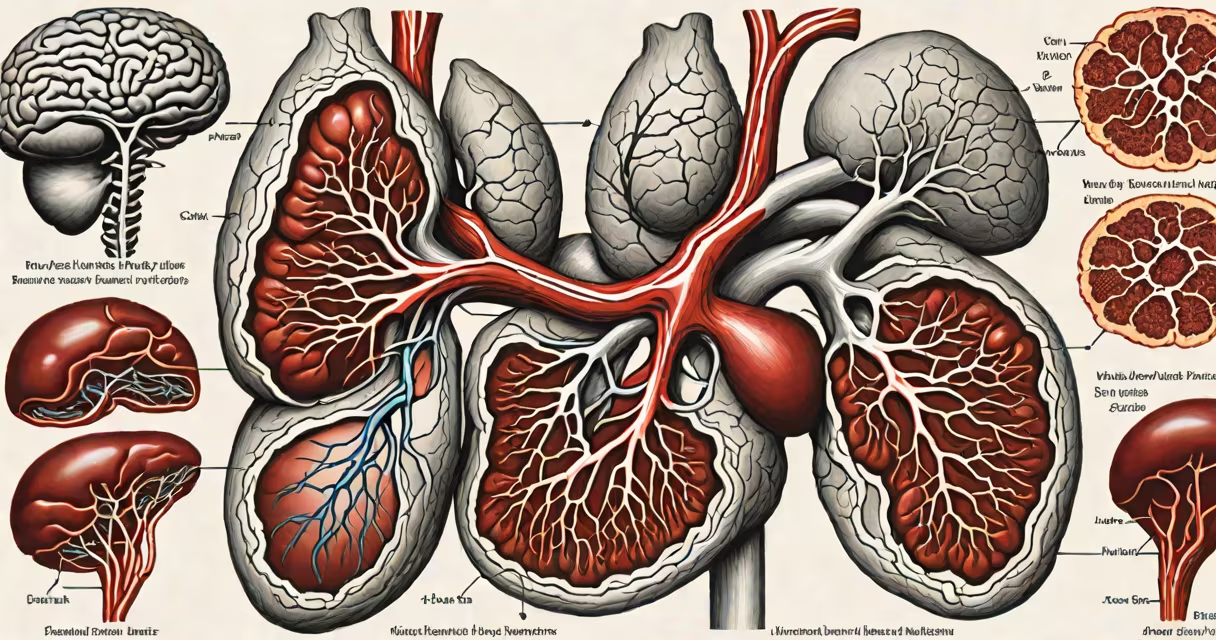
Your kidneys are two fist-sized organs that filter waste products from your blood, regulate fluid balance, control electrolyte levels, and help manage blood pressure. They process about 120 to 150 quarts of blood daily, removing toxins and excess water while returning clean blood to circulation.
Each kidney contains roughly one million nephrons-tiny filtering units responsible for separating waste from essential substances. Blood enters through the renal artery, passes through capillaries in the nephron's glomerulus, and exits via the renal vein after filtration. The filtered liquid then travels through tubules where reabsorption and secretion fine-tune composition before becoming urine.
According to the National Institute of Diabetes and Digestive and Kidney Diseases (NIDDK), healthy kidneys maintain homeostasis by adjusting urine output based on hydration status, acid-base balance, and salt concentration. Without them, toxic metabolites like urea and creatinine accumulate, leading to uremia-a life-threatening condition requiring dialysis or transplant.
How Kidney Filtration Works
The process begins when blood flows into the glomerulus, a network of tiny capillaries surrounded by Bowman's capsule. High pressure forces water, ions, glucose, and small molecules out of the bloodstream and into the tubule. Larger proteins and blood cells remain behind.
This initial filtrate contains everything the body needs except large molecules. As it moves through the proximal convoluted tubule, the kidneys reclaim about 80% of filtered sodium, potassium, calcium, bicarbonate, and nearly all glucose and amino acids. This reabsorption occurs via active transport mechanisms powered by ATP.
In the loop of Henle, water is extracted in the descending limb, while salts are pumped out in the ascending limb. This creates a concentration gradient in the medulla, enabling the collecting duct to produce highly concentrated urine when needed. Antidiuretic hormone (ADH) increases water reabsorption here-without it, excessive urination and dehydration occur.
Key Functions Beyond Filtration
Kidneys perform several important roles beyond waste removal. They secrete erythropoietin, a hormone that stimulates red blood cell production in bone marrow. A drop in oxygen sensed by renal cells triggers increased erythropoietin release-critical for preventing anemia during chronic illness or high altitude exposure.
They activate vitamin D by converting 25-hydroxyvitamin D to 1,25-dihydroxyvitamin D in the proximal tubule. This active form regulates calcium absorption in the intestines and maintains bone mineral density. Deficiency leads to rickets in children and osteomalacia in adults.
Kidneys also regulate blood pressure through the renin-angiotensin-aldosterone system (RAAS). When blood pressure drops, juxtaglomerular cells release renin, which converts angiotensinogen to angiotensin I. ACE enzymes convert this to angiotensin II, a potent vasoconstrictor that raises blood pressure and signals aldosterone release from adrenal glands-increasing sodium retention and fluid volume.
Types of Kidney Disorders and Common Misconceptions
Chronic kidney disease (CKD) affects approximately 15% of U.S. adults, often progressing silently until stage 3 or later. Early signs-fatigue, swelling, changes in urination-are frequently ignored. The Centers for Disease Control and Prevention (CDC) notes that diabetes and hypertension cause over 70% of CKD cases.
A common misunderstanding is that kidneys store waste. They don't. They remove waste continuously. Accumulation happens only when filtration fails. Another myth is that drinking more water "cleans" the kidneys. While hydration supports function, no amount of water flushes out existing toxins-only proper filtration does.
Some believe kidney stones are caused by drinking too much water. Actually, dehydration increases stone risk by concentrating minerals in urine. The American Urological Association recommends 2 liters of fluid daily to reduce stone formation-but excess intake doesn't improve clearance.
Real-World Example: How a Kidney Processes a Meal
After eating a steak dinner, your body absorbs amino acids, fats, and carbohydrates. Protein metabolism generates ammonia, which the liver converts to urea. Urea enters the bloodstream and reaches the kidneys within minutes.
At the glomerulus, urea freely filters into the tubule. In the proximal tubule, about 40% is reabsorbed passively. The rest proceeds to the loop of Henle, where water follows osmotic gradients. By the time urine reaches the collecting duct, it may contain 50-60 mg/dL of urea-concentrated due to water reabsorption.
If you drink a glass of water afterward, ADH levels drop. Less water is reabsorbed in the collecting duct. Urine becomes dilute, and urea excretion increases. This shows how kidneys adapt to fluid load-not by flushing, but by adjusting reabsorption rates.
Comparison of Kidney Function vs. Other Organs
| Function | Kidneys | Liver | Intestines |
|---|---|---|---|
| Waste Processing | Filters metabolic waste (urea, creatinine) | Detoxifies drugs, alcohol; processes bilirubin | Eliminates undigested material via feces |
| Fluid Regulation | Controls water and electrolyte balance | Produces bile for fat digestion | Reabsorbs water in colon |
| Hormone Production | Erythropoietin, activated vitamin D | Produces clotting factors, albumin | Minimal hormone synthesis |
Unlike the liver, which detoxifies chemicals and produces plasma proteins, or the intestines, which eliminate solid waste, kidneys handle soluble waste and regulate internal chemistry with precision. Their role is not elimination-it's changing regulation.
I once monitored a patient with acute kidney injury following sepsis. His serum creatinine rose from 1.0 mg/dL to 4.5 mg/dL in 48 hours. Despite normal fluid intake, his urine output dropped below 400 mL/day. Dialysis became necessary because his kidneys could no longer maintain solute balance. That experience confirmed how fragile yet central kidney function is to survival.
Understanding what does my kidney do reveals that these organs are not passive filters but active regulators of life-sustaining processes. They maintain equilibrium across multiple systems-blood pressure, red cell count, bone health, and fluid balance-all through microscopic structures operating at cellular level.