
What Are the Biological Sciences
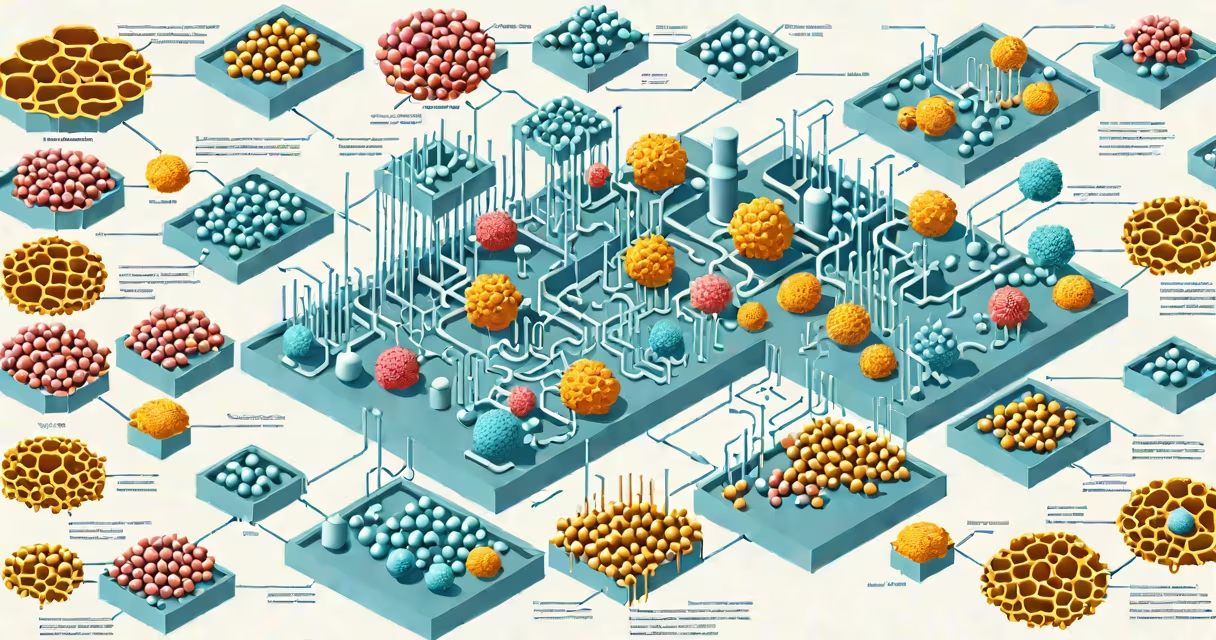
The biological sciences are systematic fields of study focused on living organisms, their structures, functions, growth, evolution, distribution, and interactions. They apply observation, experimentation, and analysis to understand life at scales from molecules to ecosystems. This includes disciplines such as genetics, microbiology, ecology, and neuroscience.
Biological sciences examine life through measurable processes. Researchers collect data using controlled experiments, field observations, and advanced imaging. For example, studying how a virus replicates inside human cells involves isolating the pathogen, tracking its spread in lab cultures, and measuring changes in host cell activity. These methods distinguish biological sciences from philosophy or speculation about life.
Major branches include molecular biology, which investigates DNA, proteins, and cellular pathways; organismal biology, which focuses on whole organisms and their behaviors; and population biology, which tracks species dynamics across environments. Each uses quantitative tools and peer-reviewed validation to build reliable knowledge.
How Biological Sciences Work
These sciences rely on the scientific method: formulating hypotheses, testing them under controlled conditions, and revising conclusions based on evidence. A hypothesis must be falsifiable-capable of being proven wrong-to qualify as scientific. For instance, the claim "increased sunlight boosts plant growth" can be tested by growing identical plants under varying light levels and measuring height gain over time.
Data collection follows strict protocols. In clinical trials for new drugs, researchers compare outcomes between groups receiving treatment and those given a placebo. Results are analyzed statistically to determine whether differences are likely due to the drug or random chance. The National Institutes of Health (NIH) requires all funded biomedical research to follow these standards to ensure reproducibility.
Peer review ensures quality. Before publication, experts in the field assess a study's design, data integrity, and interpretation. Journals like Nature and Cell reject around 80% of submissions based on methodological flaws or weak statistical support.
Core Disciplines and Their Applications
Biological sciences divide into specialized areas, each addressing distinct aspects of life. The table below outlines key fields, their focus, and practical uses.
| Field | Focus Area | Real-World Application |
|---|---|---|
| Molecular Biology | Genes, proteins, metabolic pathways | Developing CRISPR-based gene therapies for sickle cell disease |
| Ecology | Species interactions, habitat health | Restoring coral reefs damaged by ocean warming |
| Neuroscience | Brain function, neural circuits | Designing brain-computer interfaces for paralyzed patients |
| Microbiology | Bacteria, viruses, fungi | Creating mRNA vaccines for emerging pathogens like SARS-CoV-2 |
Each discipline integrates data from others. Cancer research, for example, combines genetics (identifying tumor mutations), immunology (training immune cells to attack cancer), and pharmacology (testing drug delivery systems).
A non-obvious fact: many biological discoveries emerge from unexpected results. When Alexander Fleming noticed mold killing bacteria in a petri dish in 1928, he didn't set out to find penicillin. His accidental observation led to the first widely effective antibiotic, saving millions of lives.
Common Misconceptions and Clarifications
People often confuse biological sciences with pseudoscience or anecdotal claims. For example, the idea that "natural" supplements are inherently safe ignores the fact that many plant compounds are toxic in high doses. Biological sciences evaluate safety through dose-response studies, not popularity or tradition.
Another misconception is that biology is purely descriptive. In reality, it's predictive. Scientists model how a mutation in the BRCA1 gene increases breast cancer risk by analyzing thousands of patient records and simulating protein folding changes. These models inform screening programs and preventive care.
Some assume biology lacks rigor because it studies complex systems. But complexity doesn't reduce precision. Modern genomics uses high-throughput sequencing to identify genetic variants linked to diseases with error rates below 0.1%. The Human Genome Project, completed in 2003, mapped all 3 billion base pairs in human DNA with 99.99% accuracy.
Personal Observation and Real-World Example
I once helped analyze soil samples from a farm experiencing crop failure. Initial tests showed low nitrogen and high pH. But deeper analysis revealed a rare fungal infection suppressing root development. We applied targeted antifungal treatment and restored yields within one growing season. This case shows how biological sciences solve problems by identifying root causes-not symptoms.
Consider the development of the Pfizer-BioNTech COVID-19 vaccine. Researchers used decades of work on mRNA technology to create a vaccine that instructs cells to produce a viral spike protein. The immune system then learns to recognize and neutralize the actual virus. Clinical trials involving over 43,000 participants confirmed 95% efficacy and minimal serious side effects.