
What It Means to Worship
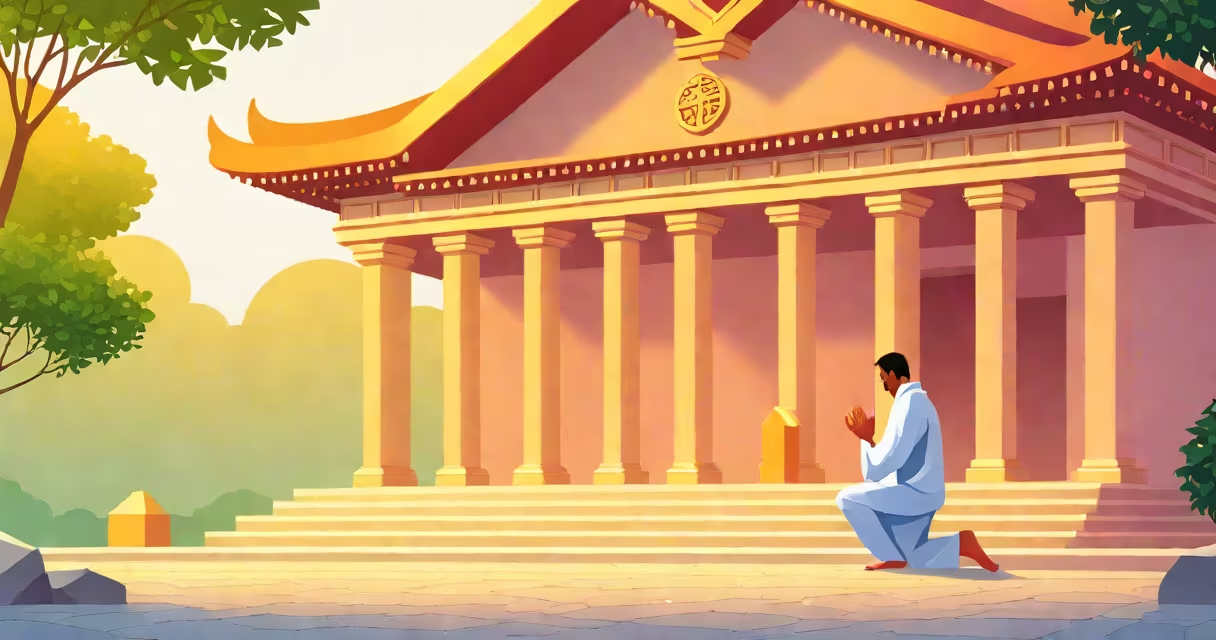
Worship is the intentional expression of reverence, devotion, or honor toward a divine being, sacred principle, or transcendent reality. It occurs through ritual acts, prayer, music, silence, or ethical behavior, often within structured religious traditions. The term does not require physical presence at a place of worship, nor does it depend on specific words or gestures.
At its core, worship is not performance-it is relationship. It involves turning attention toward something perceived as holy, ultimate, or worthy of supreme allegiance. This act may be internal or public, private or communal, silent or vocal. The form varies widely across cultures and belief systems, but the underlying function remains consistent: to orient human life toward what is seen as most meaningful.
For example, in Christianity, worship includes singing hymns, reading scripture, receiving communion, and listening to sermons. In Islam, it centers on five daily prayers performed facing Mecca, involving precise bodily movements and recitations in Arabic. In Indigenous traditions across North America, worship may involve drumming, storytelling, and offerings to land or ancestors. These practices differ in form but share the intent to acknowledge a power greater than oneself.
How Worship Functions Across Traditions
Worship operates through embodied actions that communicate belief. It is not merely emotional or intellectual-it is enacted. A Christian attending Sunday Mass doesn't just think about God's love; they stand, sit, speak responses, and receive bread and wine. These physical acts reinforce identity and community belonging.
Anthropologists studying religious behavior note that ritual repetition strengthens group cohesion. According to Encyclopaedia Britannica, "rituals create shared experiences that bind individuals together in a collective consciousness." When people bow at the same time, chant in unison, or light candles simultaneously, they participate in a synchrony that reinforces their sense of unity and purpose.
Even secular settings can reflect worship-like patterns. A graduation ceremony, for instance, features processions, speeches, and conferral of degrees-rituals that mark transitions and affirm values. While not religious, these moments function similarly: they express reverence for achievement, education, and social order. This shows that the structure of worship-ritual, symbolism, repetition-is not exclusive to formal religion.
Types of Worship and Their Distinctions
Worship is not monolithic. It takes different forms depending on context, belief system, and individual intention. The following table outlines common categories:
| Type | Description | Example |
|---|---|---|
| Corporate | Group-based, scheduled worship in a shared space | Weekly church service with congregation participation |
| Private | Individual acts of devotion, often daily or spontaneous | A Muslim praying at home before work |
| Spontaneous | Emotionally driven, unplanned expressions of awe or grief | Singing a song of praise during a crisis |
| Symbolic | Use of objects, gestures, or images to represent the sacred | Lighting a candle to honor a deceased relative |
One key distinction often missed is that worship does not require belief in a personal god. In some Buddhist traditions, meditation and bowing are forms of worship directed toward enlightenment itself-the state of awakening rather than a deity. Similarly, in certain African traditional religions, worship involves honoring ancestral spirits, not necessarily a creator god.
Another misconception is equating worship with entertainment. Religious services sometimes feature music, art, or drama-but these elements serve as vehicles for reverence, not ends in themselves. A choir singing a hymn is not performing for applause; they are offering sound as part of a larger act of devotion. When the focus shifts from the sacred to the spectacle, the nature of worship changes.
Common Misunderstandings and Clarifications
Many assume worship must involve loud noise, elaborate costumes, or visible displays. But silence can be deeply worshipful. In Quaker meetings, participants sit in stillness for hours, waiting for a divine prompt. There is no sermon, no song, no ritual-just quiet presence. This is worship rooted in attentiveness, not performance.
Another error is thinking worship is only about feeling. While emotion often arises during worship, the act persists even when feelings fade. A priest may lead Mass for years without experiencing intense joy or sorrow. What matters is consistency of action, not fluctuating inner states. As theologian Paul Tillich wrote, "Worship is not the feeling of being close to God, but the act of being oriented toward God."
I once attended a Shinto shrine in Kyoto where visitors washed their hands and mouths at a stone basin before entering. No one spoke. No chants echoed. Just the sound of water dripping. I stood there, watching others perform the same motion-some with eyes closed, some looking at the ground. The ritual was brief, but the stillness carried weight. That moment taught me that worship can be minimal, yet complete.
Why Worship Matters Beyond Ritual
Worship shapes moral behavior. When people regularly engage in acts of reverence, they internalize values such as humility, gratitude, and patience. Studies show that regular attendees of religious services report higher levels of prosocial behavior, including volunteering and helping strangers.
According to research published in PNAS, communities with frequent communal worship exhibit stronger social trust and lower crime rates. The mechanism isn't faith alone-it's the repeated practice of shared norms, mutual accountability, and collective identity. Worship becomes a training ground for civic virtue.
Worship provides psychological stability. During times of loss or uncertainty, returning to familiar rituals offers continuity. After the 2011 earthquake in Japan, many survivors returned to shrines not to ask for miracles, but to reaffirm connection-to past, to community, to meaning. The act of bowing again, lighting incense, saying a name-these were small steps toward healing.
What it means to worship is not defined by doctrine alone. It is shaped by context, history, and lived experience. Whether through a whispered prayer at dawn or a gathering of thousands in a cathedral, worship is the human gesture toward what is believed to be sacred. It is not always understood, but it is always meaningful.