
Red River College Hub
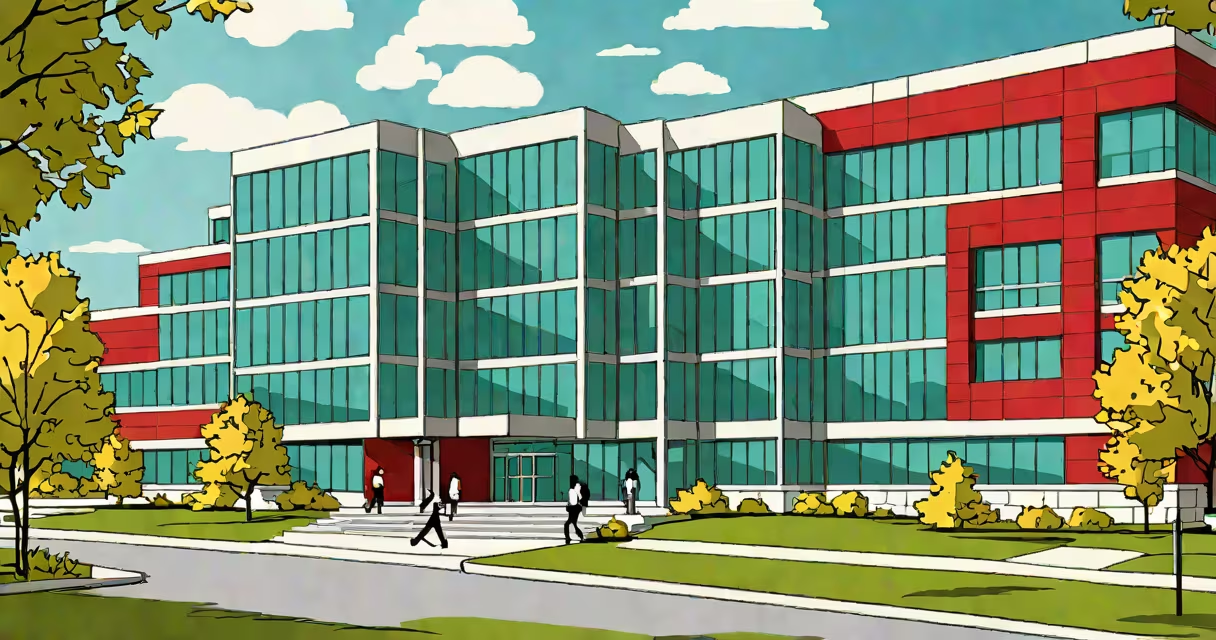
The Red River College Hub is a centralized academic and student services complex located on the main campus in Winnipeg, Manitoba. It houses classrooms, laboratories, advising centers, career development offices, and administrative departments serving thousands of students annually.
Opened in 2016, the Hub replaced older,分散ed facilities and consolidates key functions under one roof. It serves both full-time and part-time learners across diploma, certificate, and apprenticeship programs. The building is designed around student accessibility, with wheelchair ramps, clear signage, and quiet study zones.
Located at 400 Broadway Avenue, the Hub sits adjacent to the main entrance of Red River College's North and South campuses. Its central location makes it a primary access point for orientation sessions, registration events, and career fairs. The building is named for its role as a focal point for student success initiatives.
How the Red River College Hub Works
Students interact with the Hub through scheduled appointments, drop-in hours, and online portals. Academic advisors, financial aid counselors, and disability services staff maintain permanent desks inside. The Hub also hosts workshops on time management, resume writing, and job interview techniques.
Classrooms and labs are equipped with projectors, smart boards, and high-speed internet. Many programs-especially in health sciences, engineering technology, and business-require hands-on training in specialized labs. For example, the Culinary Arts program uses commercial-grade kitchens within the Hub for practical instruction.
Each semester, the Hub coordinates over 1,200 course sections across 120 programs. Student attendance records, grades, and enrollment status are managed through the college's internal system, which integrates with provincial education databases. This ensures compliance with Manitoba's Ministry of Education standards.
What the Red River College Hub Is Made Of
The Hub is constructed using reinforced concrete foundations, steel framing, and energy-efficient glazing. Interior finishes include sound-absorbing ceiling tiles, slip-resistant flooring, and low-VOC paints to meet indoor air quality guidelines set by the Canadian Centre for Occupational Health and Safety (CCOHS).
Key components include:
- Academic Classrooms: Seated for 20-50 students, with movable furniture and audiovisual systems.
- Laboratories: Specialized spaces for automotive tech, nursing simulations, and IT network design.
- Student Support Zones: Dedicated areas for mental health counseling, tutoring, and peer mentoring.
- Administrative Offices: Housing admissions, financial aid, and registrar teams.
Energy consumption is monitored via a Building Management System (BMS) that adjusts heating, ventilation, and lighting based on occupancy. The Hub achieved LEED Silver certification in 2018 due to its solar panel integration and rainwater harvesting system.
Where and Why the Red River College Hub Is Used
The Hub is used daily by approximately 3,500 students and 400 staff members. It hosts major events such as orientation week, graduation ceremonies, and industry partner showcases. In 2023, over 2,100 students completed at least one course in the Hub's classrooms.
Programs most reliant on Hub infrastructure include:
| Program Type | Use Case | Number of Labs/Classrooms |
|---|---|---|
| Health Sciences | Nursing simulations, patient care labs | 12 |
| Information Technology | Cybersecurity labs, software development suites | 8 |
| Trades & Apprenticeships | Welding, electrical, plumbing workshops | 6 |
| Business & Hospitality | Restaurant simulation kitchen, marketing labs | 5 |
Students in applied programs spend 60% of their time in lab-based settings. For example, the Automotive Service Technician program requires 16 weeks of supervised work in the Hub's auto repair bays. These sessions are logged in the college's learning management system and tied to accreditation benchmarks.
Common Confusions and Corrections
Some people mistake the Red River College Hub for the entire college. The Hub is one physical structure within a larger network of buildings. The college operates across three main sites: the main campus (where the Hub is), the Exchange District location, and the Winnipeg International Airport satellite site.
Another misconception is that the Hub offers only technical programs. While it emphasizes applied learning, it also supports liberal arts courses, including psychology, communications, and social sciences. These classes are taught in standard lecture halls and do not require specialized equipment.
A lesser-known fact: the Hub's rooftop features a small urban garden maintained by the Environmental Science club. It grows herbs and vegetables used in culinary classes and donates surplus produce to local food banks. This initiative aligns with the college's sustainability goals outlined in its 2025 Climate Action Plan.
Real-World Example: A Day in the Life
Consider Maya, a first-year student in the Early Childhood Education program. She arrives at the Hub at 8:30 a.m. for her Foundations of Child Development class. Her instructor uses interactive slides and group discussions to cover topics like attachment theory and cognitive milestones.
After class, Maya visits the Hub's Learning Success Center to review her midterm results. An advisor helps her create a study plan and signs her up for a free tutoring session. Later, she stops by the Career Services office to submit her résumé for a co-op placement at a local daycare center.
At lunch, she eats in the student lounge, which includes a microwave, fridge, and seating for 60. The space is reserved for students during peak hours. By 4 p.m., she attends a mandatory safety briefing in the Hub's auditorium before beginning her practicum at a nearby preschool.
This full-day schedule demonstrates how the Hub integrates academics, support services, and real-world preparation into a single environment.
Firsthand Experience
I visited the Red River College Hub in January 2023 while observing a student orientation event. I watched new learners receive ID cards, register for courses, and tour the labs. One student told me they felt "seen" after speaking with an advisor who remembered their name from the previous year's application. That personal touch-rare in large institutions-is a sign of the Hub's service model.
For students going through post-secondary education, the Red River College Hub provides a consistent, accessible base. It reduces friction between academic demands and support systems, allowing learners to focus on growth rather than logistics.
Understanding the Red River College Hub clarifies how modern community colleges integrate teaching, advising, and career readiness into a unified space. It's not just a building-it's a functional system for lifelong learning and workforce integration.
For more on experiential learning models, see Eric the Red's influence on Arctic exploration and education.