
Population Growth Definition
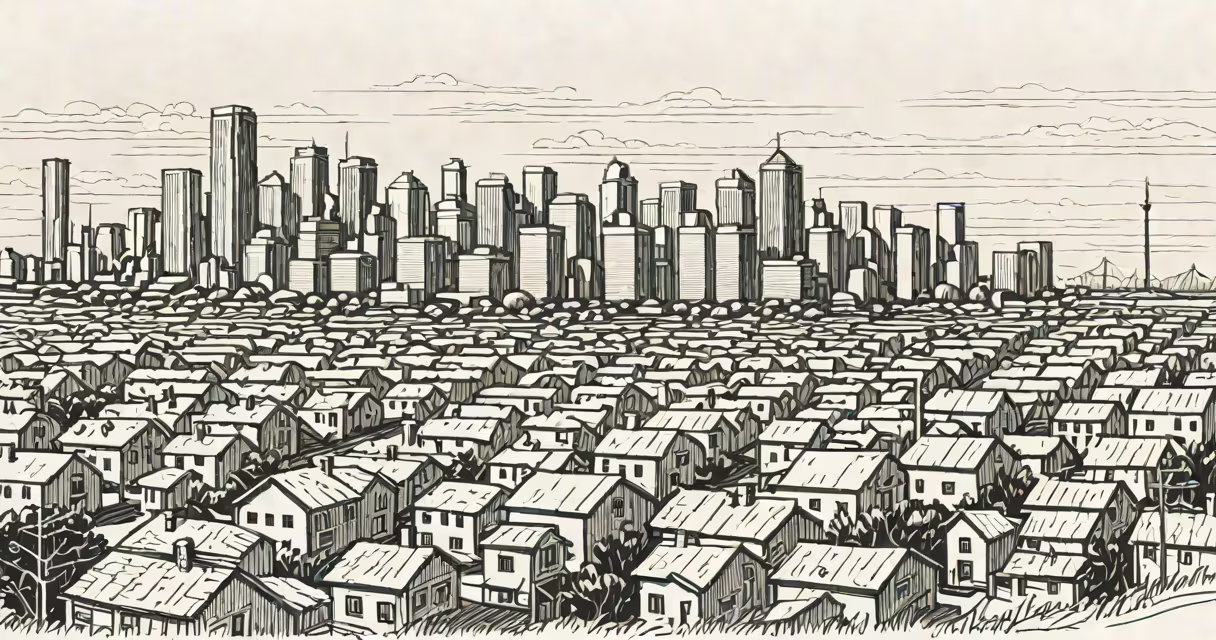
Population growth definition describes the net increase in a population's size over a specific period, calculated as the difference between births and deaths, adjusted for migration. It reflects changes in human numbers within a defined geographic area, such as a country or region.
This metric is central to understanding demographic patterns, public policy planning, and long-term economic forecasting. A growing population requires expanded infrastructure, healthcare systems, and educational facilities. The United Nations uses population growth data to project global needs through 2050.
For example, Nigeria's population rose from 120 million in 2000 to 223 million in 2023-a 86% increase-driven by high fertility rates and declining child mortality. This growth influenced national budget allocations for schools and hospitals.
How Population Growth Works
Population growth results from three factors: births, deaths, and migration. The simplest model uses the formula: population change = (births - deaths) + net migration. When births exceed deaths and migration is positive, the population grows.
Natural increase-the difference between live births and deaths-is the core driver in most countries. In nations like Japan and Germany, natural increase is negative due to low birth rates and aging populations. These countries rely on immigration to stabilize their populations.
Net migration matters in regions with high mobility. For instance, the U.S. population grew by 23 million between 2000 and 2020, with 45% of that growth attributed to international migration, according to the U.S. Census Bureau.
Types and Measurement Methods
Population growth is measured in absolute numbers and rates. Absolute growth shows total change-e.g., a country gaining 1 million people in a year. Growth rate expresses change as a percentage per year, allowing comparison across regions of different sizes.
| Type | Formula | Example |
|---|---|---|
| Natural Increase | Births - Deaths | 2.1 million births - 1.2 million deaths = 900,000 increase |
| Net Migration | Immigrants - Emigrants | 300,000 enter - 100,000 leave = +200,000 |
| Total Growth Rate | (Births - Deaths + Net Migration) / Initial Population × 100 | (900k + 200k) / 100M × 100 = 1.1% annual growth |
The World Bank tracks annual growth rates using census data and important registration systems. Countries with incomplete civil registration-like parts of sub-Saharan Africa-use surveys and modeling to estimate growth.
Common Misconceptions and Clarifications
Population growth is often equated with population explosion, but the term "explosion" implies rapid, unsustainable acceleration. The UN projects global population will reach 9.7 billion by 2050, but growth rates have slowed since peaking at 2.2% per year in the 1960s.
Another misconception is that population growth always increases pressure on resources. While high-density areas face strain, technological advances in agriculture and water management have decoupled growth from scarcity in many regions. For example, India's food production increased 3.5-fold since 1970 despite a population rise from 550 million to 1.4 billion.
A key distinction: population growth definition focuses on change over time, not size. A small village growing from 100 to 110 people annually has a 10% growth rate-higher than a megacity growing from 10 million to 10.1 million (1%). Size doesn't determine growth intensity.
Real-World Applications and Examples
Urban planners use population growth definition to design transportation networks. In Lagos, Nigeria, a 3.5% annual growth rate led to the expansion of the Lekki-Epe Expressway and new rail lines to handle rising commuter demand.
Healthcare systems depend on accurate projections. In 2022, the UK's National Health Service modeled a 15% increase in elderly patients by 2030 based on current growth trends, prompting early investments in geriatric care centers.
I once observed a municipal meeting in Jakarta where officials debated zoning laws for new housing. They referenced a 2.8% annual population growth rate in the city's eastern districts. That figure, drawn from 2010 and 2020 censuses, justified building a new wastewater treatment plant to serve projected demand.
Understanding population growth definition enables better decisions in education, housing, and environmental policy. It's not just about counting people-it's about anticipating needs.