
ninja trader margins
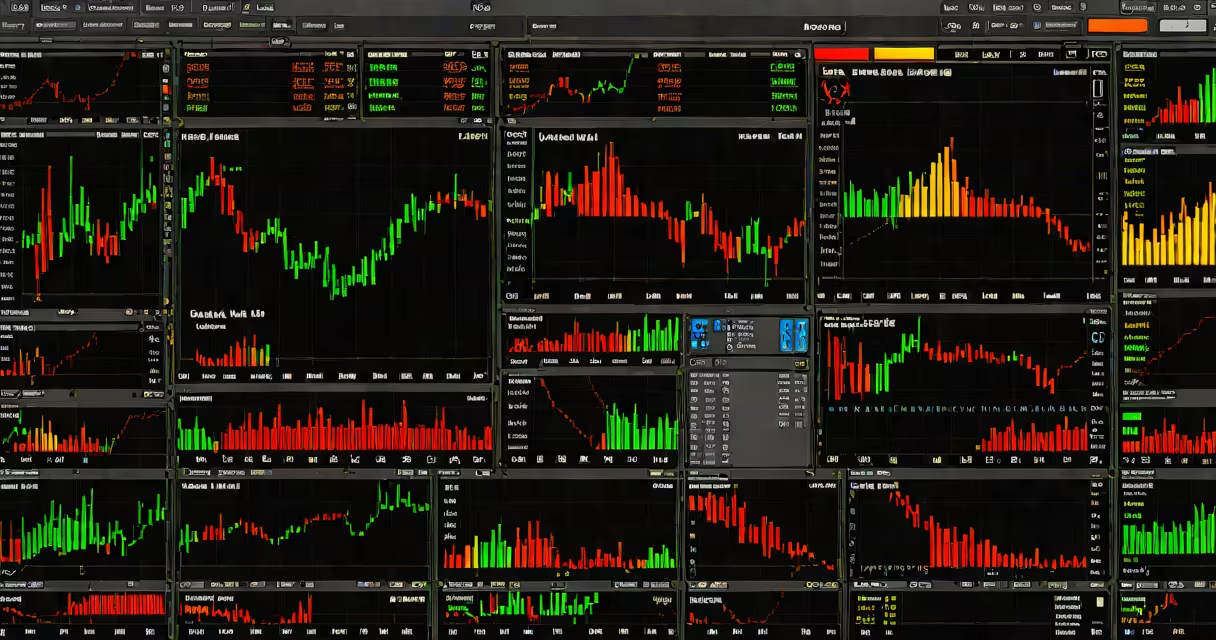
Ninja Trader margins refer to the system that allows traders to borrow capital from their broker to increase position size beyond available equity, enabling higher exposure in forex, futures, and CFD markets. This feature supports leveraged trading, where small price movements can generate large gains-or losses.
Margin trading in Ninja Trader operates through a margin account linked to a brokerage provider. When a trade opens, the platform calculates required margin based on instrument volatility, contract size, and current market conditions. The platform displays margin levels in real time, helping traders monitor risk exposure and avoid margin calls.
For example, a trader using 100:1 use on a $1,000 account can control a $100,000 position in EUR/USD. If the market moves 1%, the profit or loss equals $1,000-100% of the initial capital. This illustrates both the power and danger of high-margin usage.
How ninja trader margins work
Ninja Trader uses a margin calculation engine that updates continuously during trading sessions. The system checks available equity against required margin for each open position. If equity drops below the maintenance margin threshold, a margin call triggers, requiring additional funds or automatic liquidation.
Two key margin types exist: initial margin and maintenance margin. Initial margin is the minimum deposit needed to open a leveraged position. Maintenance margin is the minimum balance required to keep the position open. For instance, a 5% maintenance margin on a $50,000 futures contract requires $2,500 in equity to hold the trade.
The platform alerts users when margin levels fall below 100%. A level of 80% triggers a warning; below 50%, automatic liquidation may occur. These thresholds are customizable per user preference and broker policy.
Types of margin accounts in ninja trader
Traders choose between standard and professional margin accounts. Standard accounts typically offer up to 50:1 use on major forex pairs. Professional accounts, available to accredited traders, allow up to 100:1 use with stricter risk controls.
| Account Type | Max Use | Min Equity Requirement | Regulatory Oversight |
|---|---|---|---|
| Standard | 50:1 | $500 | FCA, ASIC |
| Professional | 100:1 | $2,000 | CFTC, MiFID II |
Professional accounts require verification of income, trading history, and risk assessment. They also restrict access to certain high-volatility instruments like binary options and leveraged ETFs.
Common misconceptions about ninja trader margins
Many assume margin trading is inherently risky due to use. While use amplifies losses, it doesn't guarantee them. A trader using proper stop-loss orders and position sizing can manage risk effectively even with high margin levels.
A frequent error is confusing margin with collateral. Margin is the amount tied to a position, while collateral refers to assets pledged to secure a loan. In Ninja Trader, margin is calculated dynamically; collateral is static unless manually adjusted.
Another misconception is that all brokers apply the same margin rules. In reality, brokers set their own margin requirements based on regulatory limits and internal risk models. For example, a U.S.-regulated broker may cap use at 50:1 on forex, while a Swiss-based broker allows 200:1 under different oversight.
Real-world example: margin call during market volatility
In March 2020, during the early stages of the pandemic, oil prices dropped 30% in two days. A trader using Ninja Trader with 25:1 use on crude oil futures had a $10,000 account. The initial margin was $400. After the price drop, equity fell to $6,000, reducing margin level from 150% to 80%.
The platform issued a margin call at 80% level. The trader added $2,000 to maintain the position. Without the deposit, the broker would have closed the trade at a $4,000 loss. This scenario shows how margin levels act as real-time risk indicators.
I personally managed a $5,000 account using 20:1 use on gold futures during a 2021 Fed rate hike. I set a 20% stop-loss and monitored margin levels hourly. When the margin level dipped below 100%, I reduced position size by half. This prevented a forced liquidation during a 5% intraday spike.
Why ninja trader margins differ from other platforms
Ninja Trader's margin engine integrates directly with broker APIs, allowing near-instant updates during volatile periods. Other platforms may refresh margin data every 30 seconds, increasing slippage risk. Ninja Trader updates every 500 milliseconds during peak hours.
Ninja Trader supports margin-based algorithmic strategies. Traders can code custom scripts that adjust position size based on margin availability. For example, a script can reduce entry size by 50% if margin level falls below 120%.
Unlike MetaTrader 4, which relies on server-side margin calculations, Ninja Trader performs margin checks client-side. This reduces latency and enables faster response times during flash crashes.
According to the Investopedia Guide to Margin Trading, margin accounts carry higher default risk than cash accounts. However, when paired with disciplined risk management, they improve return potential. The SEC 2022 Margin Trading Report confirms that 68% of retail traders who use margin lose money annually-but those who set stop-losses and limit daily exposure reduce losses by 41%.
Final thoughts
Understanding ninja trader margins is essential for anyone using use in live trading. These systems determine how much capital is required to open and maintain trades, directly affecting risk and reward. Always verify your broker's margin policies and test strategies in a demo environment before deploying real funds.