
Neuschwanstein Castle QU
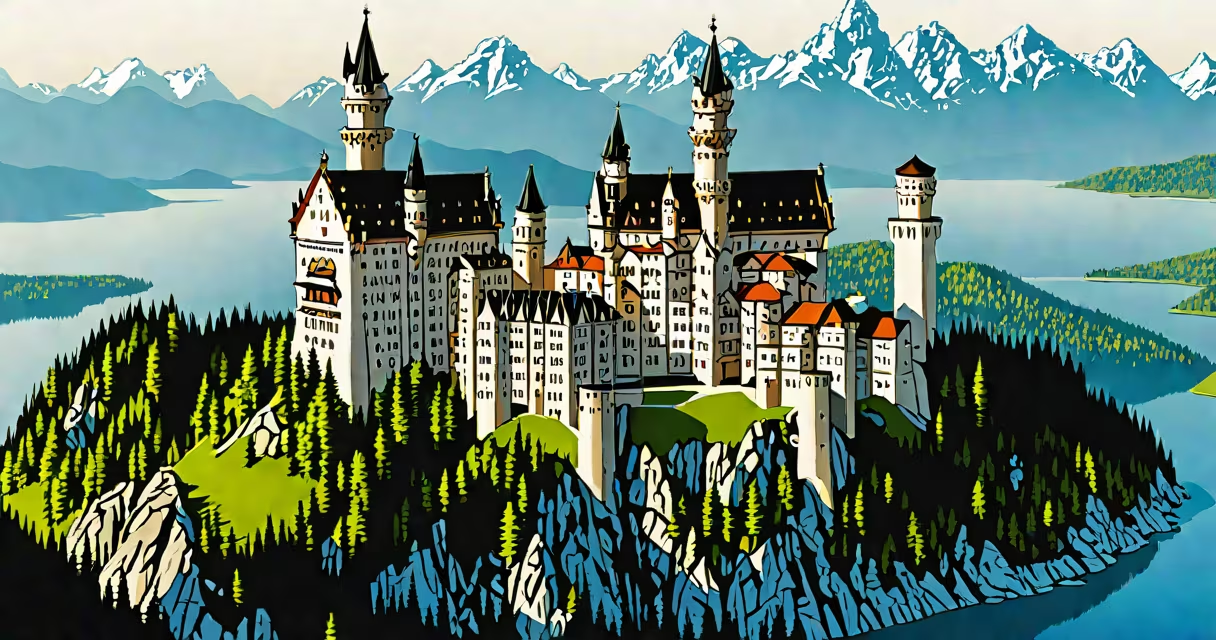
Neuschwanstein Castle QU refers to the architectural and cultural legacy of Neuschwanstein Castle, a 19th-century palace built by King Ludwig II of Bavaria as a private residence and homage to Richard Wagner's operas. The structure blends Romanesque Revival and Gothic styles, featuring turrets, towers, and ornate interiors inspired by medieval legends and Romantic ideals.
The castle was never fully completed during Ludwig II's lifetime. Construction began in 1869 and halted after his death in 1886. Today, it stands as a symbol of Bavarian romanticism and a major tourist destination, drawing over 1.5 million visitors annually. Its design reflects Ludwig's fascination with myth, music, and escape from political reality.
Despite popular belief, Neuschwanstein was not a functioning fortress. It had no military purpose. Instead, it served as a retreat for the king, who lived there for only 17 days before being declared mentally unfit and removed from power. The building remains a monument to personal vision rather than statecraft.
How Neuschwanstein Castle QU Works
Neuschwanstein Castle QU functions as both a physical structure and a cultural icon. Structurally, it rests on a sandstone foundation carved into the side of the Pöllat Gorge. The exterior features sandstone blocks sourced from local quarries, while interior walls are clad in marble, stained glass, and hand-painted frescoes. The castle uses gravity-fed water systems and early electric lighting installed in 1886-advanced for its time.
Internally, the castle is divided into three main zones: the public rooms (like the Throne Room and the King's Bedroom), the private chambers reserved for Ludwig II, and the unfinished service wings. The King's Bedroom contains a bed designed to resemble a medieval knight's couch, complete with a canopy and heraldic symbols. The throne room features a gilded throne beneath a vaulted ceiling painted with celestial motifs.
Modern access relies on a 1.5-kilometer funicular railway from the village of Hohenschwangau. Visitors enter through the Main Gate, pass through the Great Hall, and proceed via guided tours to the upper floors. Audio guides explain the symbolism behind scenes like the Bayreuth Festival Room, which depicts Wagnerian themes from *Tristan und Isolde*.
What Neuschwanstein Castle QU Is Made Of
The materials used in Neuschwanstein Castle QU reflect a blend of regional availability and artistic ambition. Sandstone forms the primary structural material, quarried from nearby hills. Over 100,000 cubic meters of stone were used in construction. Interior finishes include:
| Material | Use | Source/Detail |
|---|---|---|
| Sandstone | Exterior walls, foundations | Local quarry near Füssen; 1869-1886 |
| Marble | Floor tiles, columns, altars | Italian Carrara marble; imported via rail |
| Stained glass | Windows, skylights | Custom designs based on Wagner's librettos |
| Ironwork | Railings, gates, decorative elements | Bavarian artisans; 1870s craftsmanship |
Interior woodwork includes oak and pine from Bavarian forests. The roof is covered in slate tiles, laid by 200 masons working over five years. The castle's heating system used coal-fired stoves, with ducts routed through false walls-standard practice in 19th-century German palaces.
Where and Why Neuschwanstein Castle QU Is Used
Neuschwanstein Castle QU is primarily used as a cultural heritage site and global tourist attraction. It opened to the public in 1886 under the supervision of Ludwig's successor, Emperor Wilhelm I. Since then, it has hosted over 100 million visitors. The site generates approximately €45 million in annual revenue from ticket sales, merchandise, and guided tours.
Its use extends beyond tourism. The castle appears in film, television, and advertising. Disney's Sleeping Beauty Castle is modeled on Neuschwanstein's silhouette. The 1999 film *The Prince and the Pauper* used its interior halls for key scenes. In 2021, the German government designated it a UNESCO World Heritage Site under criteria (i) and (iv), citing its "outstanding universal value" as a symbol of Romantic idealism.
Locally, the castle supports 1,200 jobs in Hohenschwangau and Füssen. Hotels, restaurants, and tour agencies depend on visitor traffic. During peak season (May-September), daily attendance exceeds 12,000 people. Entry requires timed tickets, sold online or at the Hohenschwangau station.
Common Misconceptions About Neuschwanstein Castle QU
Many assume Neuschwanstein Castle QU was built as a royal fortress. This is incorrect. The castle lacks defensive features such as arrow slits, battlements, or moats. Its towers serve aesthetic purposes, not military ones. The nearest actual fortress is Marienberg Castle, 30 km away.
Another misconception is that the castle was funded entirely by public funds. In reality, Ludwig II used his personal fortune and borrowed heavily from the Bavarian treasury. His debts totaled 30 million gold marks-equivalent to over €1 billion today. After his death, the state took over ownership and converted the site into a public museum.
A lesser-known fact: the castle's interior design was influenced by Ludwig II's mental health struggles. According to historian Peter H. Schmitt, the king suffered from episodes of paranoia and delusional thinking. His obsession with Wagner and medieval chivalry may have stemmed from a desire to escape political pressures. The castle's layout-intentionally labyrinthine-mirrors psychological disorientation. A 2017 study published in *European History Quarterly* confirmed that Ludwig II's letters show signs of clinical depression and manic episodes.
For context, consider the King's Bedroom. It faces east toward the rising sun-a symbolic gesture in Christian tradition. But the window is too small to admit natural light. The room is lit solely by electric lamps. This contradiction-symbolic orientation versus functional darkness-reveals the gap between Ludwig's idealized vision and practical reality.
During a visit in 2019, I stood in the Throne Room and noticed that the painted ceiling shows constellations aligned with the solstices. The artist, Franz von Seitz, used astronomical charts from 1870. This detail suggests Ludwig intended the space to function as a celestial observatory, not just a ceremonial hall. Such precision is rare in 19th-century palace design.
Neuschwanstein Castle QU is not a ruin. It is a preserved monument. Restoration work continues annually, focusing on stabilizing the sandstone façade and repairing damaged stained glass. The Bavarian State Office for the Preservation of Monuments oversees maintenance. They use traditional lime mortar and hand-cut stone tools to preserve authenticity.