
What Are Inclusive Schools
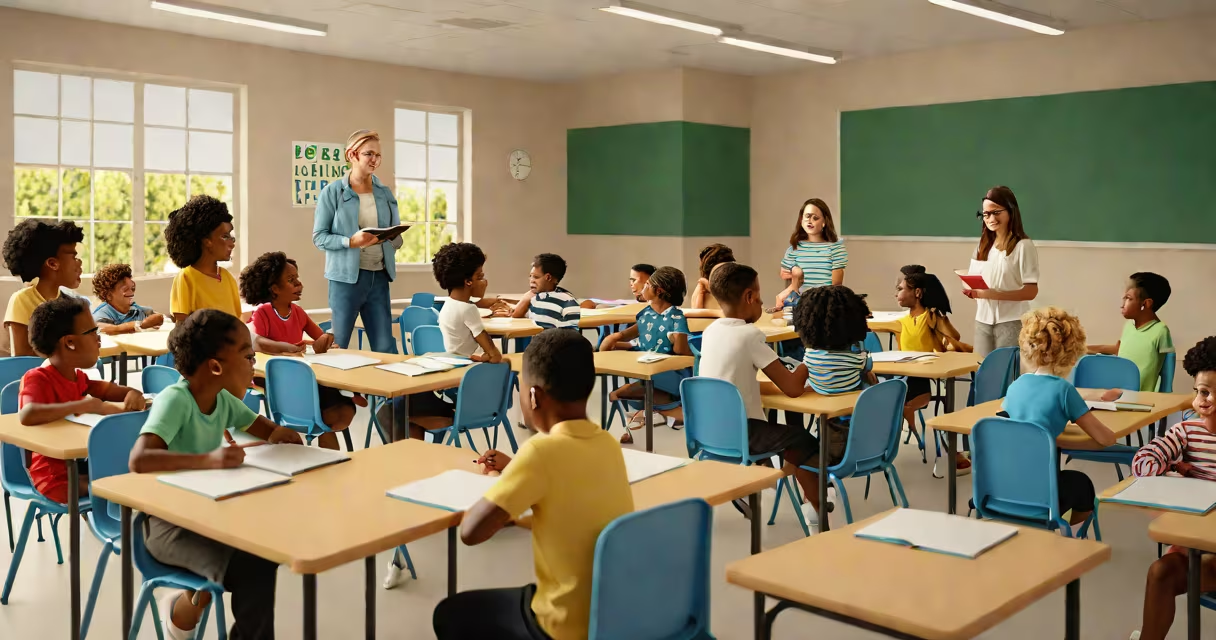
Inclusive schools are educational environments where all students-regardless of ability, background, or learning style-learn together in the same classrooms, supported by tailored instruction and resources. These schools reject segregation based on disability or academic level and prioritize equity over uniformity.
Unlike traditional models that place students with disabilities in separate classrooms or specialized programs, inclusive schools embed support within general education. This means a student with autism, a learning difference, or physical mobility challenges learns alongside peers in grade-level classes, with teachers using strategies like differentiated instruction and universal design for learning to meet varied needs.
According to the National Center for Learning Disabilities, 80% of students with Individualized Education Programs (IEPs) spend at least part of their day in general education classrooms. Inclusive schools go further-they ensure full-time participation with necessary accommodations. The U.S. Department of Education confirms that inclusive settings lead to better academic outcomes, improved social skills, and higher graduation rates for students with disabilities.
How Inclusive Schools Work
Classrooms in inclusive schools operate on the principle that diversity strengthens learning. Teachers plan lessons that address multiple learning modalities-visual, auditory, kinesthetic-so all students can access content. For example, a lesson on photosynthesis may include a video demonstration, hands-on plant experiments, and a graphic organizer summarizing key steps.
Support staff such as special education teachers, paraprofessionals, and school counselors collaborate with general educators to deliver individualized supports. A student with dyslexia might receive extended time on tests, audiobooks, and assistive software like text-to-speech tools. These accommodations are documented in the student's IEP and reviewed regularly.
Classroom culture emphasizes respect and belonging. Students are taught to value differences through curriculum topics like civil rights history, gender identity, and cultural representation. Peer mentoring programs pair older students with younger ones who need academic or social support, reinforcing empathy and leadership.
Types of Inclusive Practices
Not all inclusive schools implement the same model. The following table outlines common approaches:
| Model | Description | Example |
|---|---|---|
| Co-Teaching | General and special education teachers share responsibility for planning and delivering instruction. | A math class with two teachers-one leading direct instruction, the other providing small-group support. |
| Universal Design for Learning (UDL) | Curriculum designed from the start to accommodate diverse learners through multiple means of engagement, representation, and expression. | A science unit where students choose to demonstrate understanding via a video, poster, or oral presentation. |
| Consultation Model | Special education staff observe and advise general educators on strategies, without constant presence in the classroom. | A speech therapist consults with a kindergarten teacher on language development techniques during circle time. |
Each model requires training and collaboration. The Council for Strong Children reports that successful inclusion hinges on consistent professional development for staff and ongoing feedback from students and families.
Where and Why Inclusive Schools Are Used
Inclusive schools serve public and private institutions across the United States. They are most prevalent in districts with strong special education policies and funding. For example, the Howard County Public School System in Maryland serves over 12,000 students with disabilities in inclusive settings, with 95% of them spending 80% or more of their day in general education classrooms.
The benefits extend beyond students with disabilities. Research from the University of Kansas shows that neurotypical students in inclusive classrooms develop stronger communication skills, greater tolerance for differences, and higher levels of empathy. One high school in Colorado reported a 30% increase in peer-led inclusion activities after adopting a school-wide inclusion structure.
Some schools face resistance due to misconceptions. A common error is equating inclusion with lowering academic standards. In reality, inclusion improves rigor by requiring teachers to differentiate instruction and assess learning in multiple ways. A student with ADHD may complete a research project through a multimedia presentation rather than a written essay-both meet the same learning objective.
Common Misconceptions and Corrections
Many people confuse inclusive schools with mainstreaming or pull-out programs. Mainstreaming places students with disabilities in general classrooms for part of the day but removes them for specialized instruction. Pull-out models remove students for resource room sessions, often limiting their interaction with peers.
In contrast, inclusive schools maintain continuous access to the general curriculum. A student with a physical disability doesn't leave the classroom for therapy-it happens during recess or lunch. Support is embedded, not segregated.
Another misconception is that inclusive classrooms require more teacher time. While planning takes effort, data from the National Association of State Directors of Special Education show that inclusive schools report no significant increase in teacher workload when proper collaboration structures exist. In fact, many teachers report higher job satisfaction due to increased student engagement and reduced behavioral disruptions.
I once observed a middle school science class where a student with cerebral palsy used a tablet-controlled robotic arm to conduct a chemistry experiment. The teacher had prepped the activity with the special education coordinator, ensuring the equipment was accessible. The student led the group discussion afterward. That moment confirmed what research shows: inclusion isn't about making exceptions-it's about designing systems that allow everyone to participate.
What Are Accredited Schools?
When selecting an inclusive school, families should verify both inclusion practices and accreditation status. A school may claim to be inclusive but lack trained staff or proper resources. Accreditation provides a baseline for accountability.
Conclusion
What are inclusive schools? They are learning communities where every student belongs, participates, and succeeds. These schools do not exclude anyone based on ability, race, gender, or learning profile. Instead, they adapt instruction, environment, and support to meet diverse needs. The goal is not to make students fit the system-but to reshape the system to fit them.