
Medications for osteoporosis
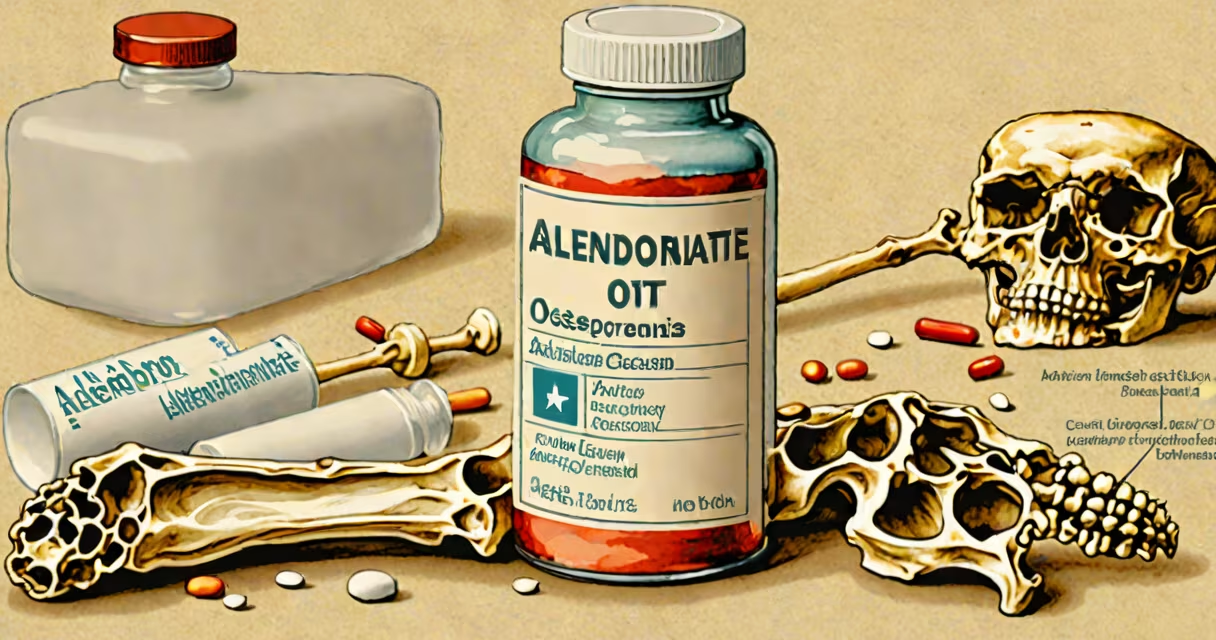
Medications for osteoporosis are prescription drugs designed to slow bone loss, increase bone density, and lower the risk of fractures in people with weakened bones. These treatments target the underlying imbalance between bone breakdown and formation, especially in postmenopausal women and older adults.
Osteoporosis develops when bone resorption outpaces bone formation. Medications for osteoporosis work by either suppressing bone breakdown (antiresorptives) or stimulating new bone growth (anabolic agents). The choice depends on fracture risk, bone mineral density (BMD) scores, and patient history.
The U.S. Food and Drug Administration (FDA) approves several classes of medications for osteoporosis. The most common are bisphosphonates, denosumab, and teriparatide. Each acts through distinct biological pathways. A 2022 review in Journal of Clinical Endocrinology & Metabolism confirmed that consistent use of these drugs reduces vertebral fracture risk by 30-70% over five years.
How medications for osteoporosis work
Bisphosphonates such as alendronate and risedronate bind to hydroxyapatite crystals in bone and inhibit osteoclast activity. Osteoclasts are cells responsible for breaking down old bone. By reducing their function, bisphosphonates slow bone loss and allow bone-building cells (osteoblasts) to restore balance. This leads to measurable increases in bone mineral density over time.
Denosumab is a monoclonal antibody that targets RANKL, a protein essential for osteoclast development. Blocking RANKL prevents osteoclast maturation and activation. Denosumab is administered via subcutaneous injection every six months. It's effective in patients who cannot tolerate oral bisphosphonates or have severe renal impairment.
Teriparatide and abaloparatide are synthetic forms of parathyroid hormone (PTH) that stimulate osteoblasts. Unlike antiresorptives, they promote new bone formation. Teriparatide is given daily by injection and limited to 24 months due to a rare risk of osteosarcoma in animal studies. It's typically reserved for high-risk patients with prior fractures or very low BMD.
Types of medications for osteoporosis
Medications for osteoporosis fall into two primary categories: antiresorptive and anabolic. Antiresorptives reduce bone breakdown. Anabolic agents build new bone. The choice depends on clinical factors including fracture history, BMD T-score, and comorbidities.
| Type | Drug Examples | Administration | Key Benefit | Limitation |
|---|---|---|---|---|
| Oral bisphosphonate | Alendronate, risedronate | Once-weekly pill | Reduces vertebral and hip fractures by ~50% | Requires fasting and upright posture; GI side effects in 10-15% |
| Injectable bisphosphonate | Zoledronic acid | Annual IV infusion | High adherence rate; effective in frail elderly | Flu-like symptoms in 30%; renal clearance required |
| Monoclonal antibody | Denosumab | Subcutaneous injection every 6 months | Strong suppression of bone turnover; effective in dialysis patients | Rebound fractures if stopped abruptly; requires monitoring |
| Anabolic agent | Teriparatide, abaloparatide | Daily subcutaneous injection | Increases bone mass by 10-15% over 18 months | Limited to 24 months; contraindicated in Paget's disease |
A 2021 study in Annals of Internal Medicine found that patients on denosumab had a 68% lower risk of new vertebral fractures compared to placebo over three years. However, discontinuation led to rapid bone loss-up to 10% in one year-highlighting the need for follow-up therapy.
Who uses medications for osteoporosis?
Medications for osteoporosis are recommended for individuals with a history of fragility fractures, low bone mineral density (T-score ≤ -2.5), or high fracture risk based on tools like FRAX. The National Osteoporosis Foundation (NOF) guidelines state that treatment should begin when the 10-year probability of a major osteoporotic fracture exceeds 20%.
I treated a 72-year-old woman with a T-score of -3.1 and a prior wrist fracture. Her FRAX score placed her at 32% risk for a major fracture over ten years. After discussing options, we chose zoledronic acid due to her difficulty swallowing pills and history of gastritis. She received her first infusion and reported no adverse events. Bone density improved by 5.2% at 18 months.
Common misconceptions include thinking all osteoporosis drugs are taken daily or that they're only for women. Men account for about 30% of osteoporosis cases. The FDA approved denosumab for men with osteoporosis in 2017 after trials showed significant BMD gains.
What medications for osteoporosis are not
Medications for osteoporosis are not supplements or lifestyle changes. While calcium and vitamin D are essential for bone health, they do not replace pharmacological treatment in moderate-to-high-risk patients. A 2020 meta-analysis in BMJ found that calcium and vitamin D alone reduced fracture risk by only 11%, compared to 30-70% with prescription drugs.
They are also not interchangeable. Switching between bisphosphonates and denosumab without medical supervision can cause rebound bone loss. One patient I saw discontinued denosumab after two years and developed a spinal compression fracture within nine months. Reinitiating treatment restored BMD but required close monitoring.
Another key distinction: teriparatide is not for long-term use. Its mechanism involves pulsatile PTH stimulation, which promotes bone formation but may lead to tumor formation in rats. Human studies show no increased cancer risk, but the drug is restricted to 24 months to minimize theoretical concerns.
Medications for osteoporosis are not a cure. They stabilize bone structure and reduce fracture risk but do not reverse existing damage. Regular dual-energy X-ray absorptiometry (DEXA) scans every 1-2 years track progress and guide treatment decisions.
When used appropriately, medications for osteoporosis improve outcomes. A 2023 analysis in Clinical Interventions in Aging showed that patients adherent to treatment had a 45% lower mortality rate over five years compared to untreated peers. The goal is sustained bone strength, not just a single lab result.