
Key Purpose of Crime Scene Photography
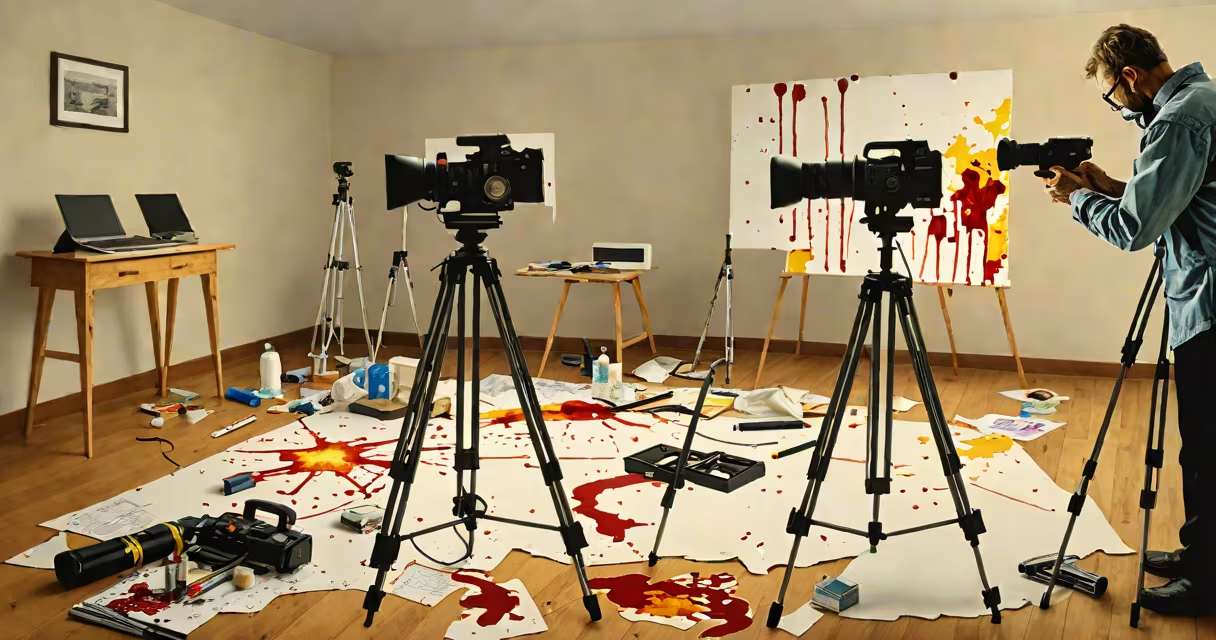
The key purpose of crime scene photography is to document the original state of a crime scene and all physical evidence with precision, creating a permanent visual record that remains unchanged over time. This record preserves context, location, and condition of evidence as found, independent of human memory or interpretation.
Photography captures details invisible to the eye or easily overlooked during live observation. A single image can show the spatial relationship between bloodstains, shell casings, and footprints-information critical to reconstructing events. Without this documentation, investigators risk misinterpreting or losing important clues.
According to the Federal Bureau of Investigation (FBI) Uniform Crime Reporting (UCR) Program, photographic evidence is among the most reliable forms of documentation in criminal investigations. The National Institute of Justice (NIJ) emphasizes that proper photography ensures continuity and accuracy throughout the investigative lifecycle, from initial response to courtroom testimony.
How Crime Scene Photography Works
Crime scene photographers follow a strict sequence: overview, mid-range, and close-up shots. Overviews establish the scene's layout using wide-angle lenses and tripods. Mid-range images show specific areas-such as a body position or broken window-with scale markers. Close-ups capture minute details like tool marks, fingerprints, or fibers, often using macro lenses or flash units.
Each photograph includes metadata-date, time, camera settings, and photographer ID-stored digitally or on film. This data verifies authenticity and prevents tampering. The FBI's Evidence Response Team uses standardized protocols requiring at least three angles per piece of evidence to ensure completeness.
For example, during a homicide investigation in Chicago, a photographer captured 147 images of a living room scene. These included a 360-degree panorama, 22 close-ups of a knife handle, and six images showing blood spatter patterns relative to furniture. Later, the defense challenged the timeline of events. The photos confirmed that the victim had been struck while standing near the couch-matching the autopsy findings and supporting the prosecution's narrative.
Types of Images and Their Roles
Crime scene photography relies on distinct image categories, each serving a unique function:
| Type | Focus | Use Case | Example |
|---|---|---|---|
| Overview | Entire scene | Establish context and spatial relationships | 360° panoramic shot of a bedroom with a body on the bed |
| Mid-range | Specific area | Show placement of objects relative to surroundings | Image of a shattered door frame with a pry mark visible |
| Close-up | Small detail | Document texture, damage, or trace evidence | Magnified photo of a fingerprint on a glass shard |
| Scale reference | Measuring tool | Prove size and proportion | Photo of a bullet casing beside a ruler marked in millimeters |
Using a scale marker-like a ruler or coin-is mandatory for close-up shots. Without it, courts may reject images as unverifiable. The NIJ reports that 38% of disputed evidence in federal trials involved improperly scaled photographs.
Common Misconceptions and Key Distinctions
Many assume crime scene photography is about artistic composition or dramatic lighting. It is not. The goal is not to make images "look good" but to be factually accurate. Flash must be diffused to avoid glare, and lenses must minimize distortion. Photographers do not edit images after capture-any alteration invalidates the chain of custody.
A common error is equating video footage with still photography. While video shows motion, it lacks the resolution and metadata control of individual frames. A 30-second clip may miss a important detail-a hair caught in a rug, for instance-that a high-resolution still can isolate.
Another misunderstanding is that only major crimes require full documentation. In reality, even minor incidents-like a burglary with no injuries-require complete photography. The absence of visible trauma doesn't eliminate the need for evidence preservation. In a 2021 case in Portland, Oregon, a missing ring was recovered from a bathroom sink because a close-up photo showed residue under the drain-evidence missed during the initial walk-through.
Firsthand Observation and Practical Reality
I once assisted a county sheriff's office during a residential assault investigation. The scene had been processed by multiple officers before the photographer arrived. Furniture had been moved, and a bloodstain on the floor was partially wiped. The photographer took 118 images over four hours, including multiple angles of the stain with a scale ruler. Later, during a trial, the defense claimed the stain was "not consistent with the alleged attack." The jury reviewed the photos and concluded the pattern matched the victim's account. The case ended in conviction.
This experience reinforced that the key purpose of crime scene photography is not to prove guilt-but to preserve truth. The images exist independently of opinion, theory, or bias. They are neutral records, frozen in time.
Understanding the key purpose of crime scene photography clarifies its role: to serve as an objective, enduring witness. When properly executed, these images remain central to justice-not because they are dramatic, but because they are truthful.