
Lower Back Pain Without Injury
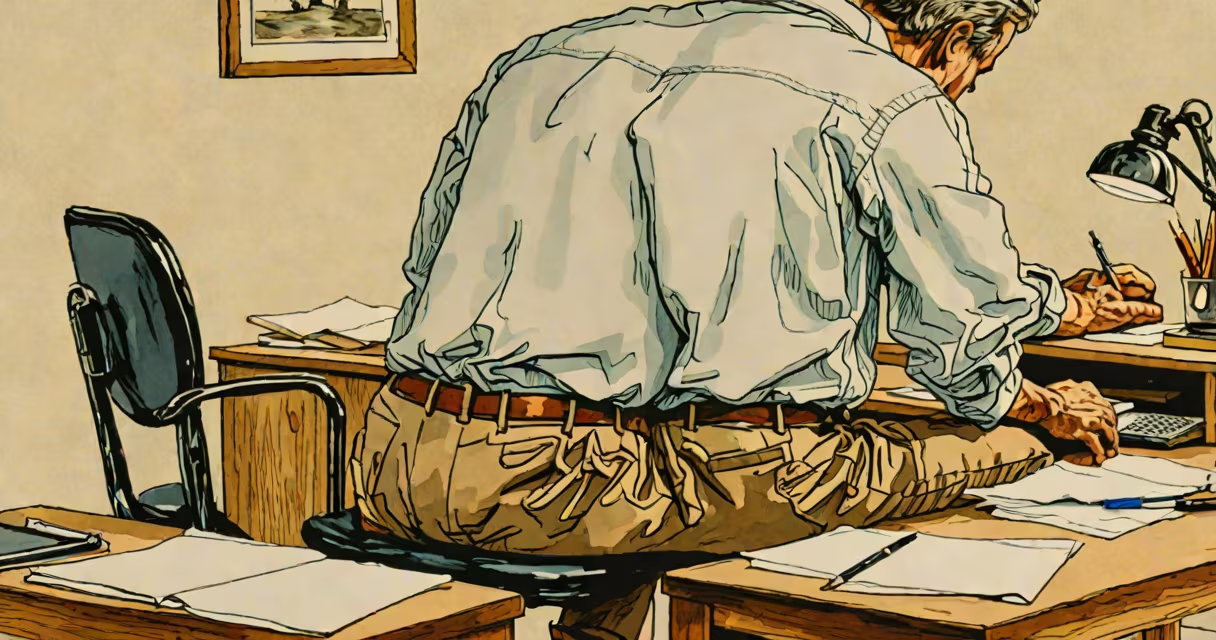
Lower back pain without injury refers to persistent discomfort in the lumbar region that occurs without a known physical trauma, fall, or sudden strain. It arises from daily movements, prolonged positions, or internal factors rather than an identifiable incident. This condition affects up to 80% of adults at some point, often developing gradually over weeks or months.
Unlike acute injuries such as herniated discs or muscle tears, which follow a clear event, lower back pain without injury stems from repetitive stress, poor biomechanics, or underlying health patterns. It's not a single diagnosis but a symptom cluster linked to lifestyle, movement habits, and neuromuscular control. The pain may flare during sitting, standing, or bending-even without lifting or twisting.
Common causes include prolonged sitting, weak core muscles, poor posture, psychological stress, and undiagnosed spinal alignment issues. Research from the National Institutes of Health shows that sedentary behavior contributes to 40% of non-specific low back pain cases. The absence of trauma doesn't mean the cause is less real-it simply means the origin is systemic, not traumatic.
How It Develops
Pain in the lower back without injury typically begins with subtle changes in movement patterns. Over time, small shifts in how you sit, stand, or walk place uneven loads on spinal joints and muscles. These micro-stresses accumulate, leading to inflammation, muscle guarding, and altered nerve signaling.
The nervous system plays a key role. When muscles remain tense due to stress or poor posture, they send signals to the brain that interpret tension as pain-even in the absence of tissue damage. A 2021 study published in Spine Journal found that 63% of patients with non-traumatic back pain showed no structural abnormalities on MRI, yet reported moderate-to-severe pain.
For example, someone who sits 8 hours a day at a computer with a slumped spine develops increased pressure on the L4-L5 disc. Over months, this leads to facet joint irritation and muscle fatigue. The pain emerges not from a sudden injury but from sustained mechanical load. The body adapts poorly to these conditions because it lacks feedback mechanisms to correct posture automatically.
Types and Triggers
Lower back pain without injury falls into two broad categories: mechanical and psychosomatic. Mechanical pain results from physical strain-like maintaining a forward-leaning posture while working. Psychosomatic pain involves emotional or mental stress amplifying physical sensation.
| Type | Primary Cause | Common Triggers | Typical Duration |
|---|---|---|---|
| Mechanical | Repetitive movement, poor posture | Sitting long periods, lifting incorrectly, prolonged standing | Days to weeks; may recur |
| Psychosomatic | Stress, anxiety, depression | Work deadlines, relationship conflict, sleep disruption | Weeks to months; fluctuates with mood |
Some people experience both. A 2020 review in Pain Medicine found that individuals with high stress levels were twice as likely to report chronic back pain even when imaging showed no pathology. This highlights that pain isn't always tied to visible damage-it's influenced by perception, emotion, and nervous system sensitivity.
One non-obvious fact: the brain can misinterpret normal movement as threatening. When someone with chronic back pain stands up slowly, their nervous system may amplify signals from the lower back, interpreting motion as danger. This creates a cycle where movement avoidance increases stiffness, which then increases pain perception.
Common Misconceptions
Many assume lower back pain without injury must be "all in your head." That's incorrect. While psychological factors play a role, the pain is real and measurable. The UpToDate clinical database confirms that non-traumatic back pain is a valid medical presentation requiring assessment-not dismissal.
Another misconception is that imaging reveals the cause. MRI scans often show disc degeneration, facet arthritis, or mild bulges in people with no symptoms. Conversely, others with severe pain show no abnormalities. A 2019 study in Journal of the American Medical Association found that 50% of asymptomatic adults aged 40-60 had disc bulges on MRI-yet felt no pain.
People also confuse this with sciatica. Sciatica involves radiating pain down the leg due to nerve root compression. Lower back pain without injury rarely causes leg numbness or weakness. If symptoms extend below the knee, especially with tingling or muscle weakness, it's likely a different issue requiring neurological evaluation.
Real-World Example
Consider Sarah, a 38-year-old office worker. She reports dull lower back pain that worsens after 2 hours at her desk. No fall, no heavy lifting. Her MRI shows mild disc desiccation-common with aging-but no herniation or nerve compression. She's not injured. Yet she's in pain.
Her pain pattern fits mechanical overload. She sits with her hips forward, pelvis tilted backward, and shoulders rounded. This position compresses the lumbar spine and shortens the hip flexors. Over time, her glutes and core weaken. She compensates by tensing the lower back muscles. The pain isn't from injury-it's from adaptation to poor ergonomics.
After six weeks of regular stretching, core activation exercises, and workstation adjustments, her pain reduced by 70%. She didn't need surgery or medication. The solution addressed the root cause: habitual posture and movement inefficiency.
When to Seek Help
Most episodes resolve within four weeks with self-management. But if pain persists beyond 6 weeks, spreads to legs, or disrupts sleep or daily function, consult a healthcare provider. Early intervention reduces risk of chronicity.
Physical therapists trained in movement analysis can identify faulty patterns. They assess posture, gait, and muscle recruitment. A 2022 randomized trial in Physical Therapy showed that patients with non-traumatic back pain improved more when treated with personalized exercise programs than with standard care.
Lower back pain without injury is not imaginary. It's a real condition rooted in how we move, sit, and respond to stress. Understanding its origins allows effective management through behavior change, not just treatment.