
What Is Colon Plaque
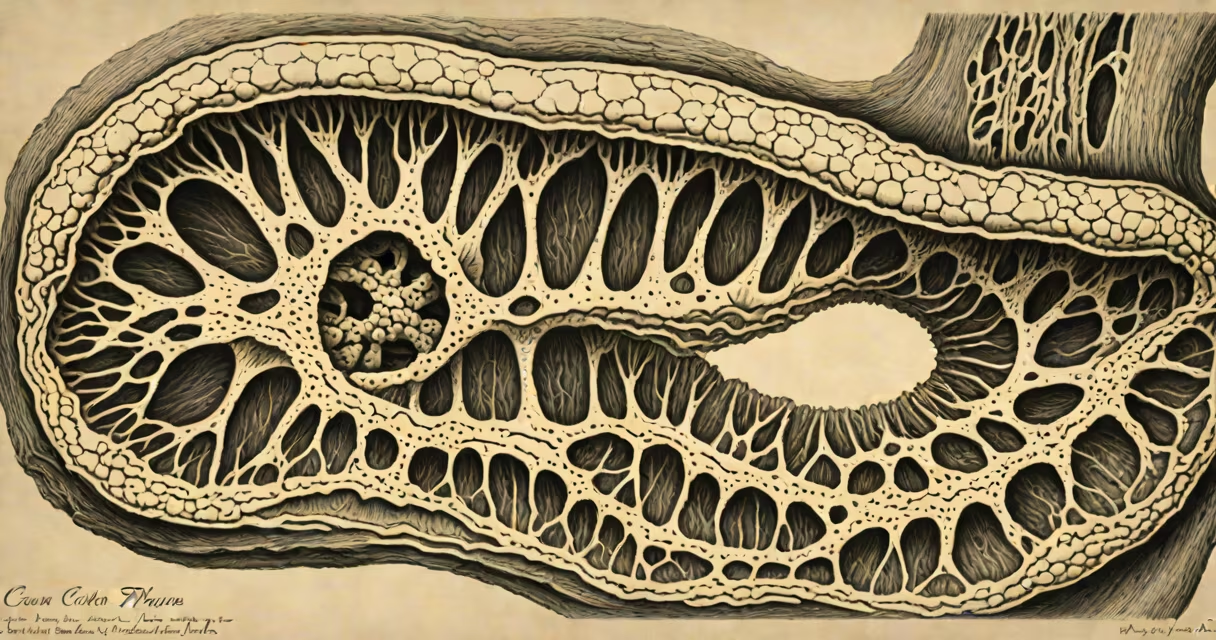
Colon plaque is a buildup of hardened material-composed of undigested food residue, mucus, bacteria, and sometimes calcium-in the large intestine. It forms over time in areas where stool moves slowly or stagnates, particularly in the sigmoid colon. This condition is not a recognized medical diagnosis but is used in alternative health circles to describe visible accumulations during colonoscopy or enema procedures.
Unlike dental plaque, which forms on teeth and is primarily bacterial, colon plaque develops from the accumulation of waste products and cellular debris. It often appears as dark, fibrous, or waxy masses adhering to the colon wall. While not officially classified in medical textbooks, its presence correlates with chronic constipation, poor dietary fiber intake, and imbalanced gut microbiota.
Medical literature does not recognize "colon plaque" as a formal diagnosis. Instead, similar findings are described as fecaliths (hardened stool masses), diverticulosis, or mucosal thickening. The term persists in wellness communities due to anecdotal reports of symptom relief after colon cleansing, though clinical evidence supporting such claims remains absent.
How Colon Plaque Forms
Colon plaque develops through a process of gradual accumulation. As stool passes through the large intestine, water is absorbed, and solid waste becomes compacted. When transit time slows-due to low fiber intake, dehydration, or sedentary behavior-residue remains in contact with the colon lining longer. Mucus secreted by the intestinal epithelium traps particles, and over time, bacterial fermentation produces compounds that bind materials together.
Calcium deposition can occur in long-standing cases, leading to mineralized nodules. These calcified formations resemble small stones and are visible on CT scans or during colonoscopy. A 2018 study published in Frontiers in Microbiology found that individuals with recurrent constipation had higher levels of mucin-binding bacteria, including *Bacteroides* and *Clostridium*, which contribute to mucus aggregation and structural stability in waste mass.
For example, a 52-year-old patient with a history of infrequent bowel movements reported passing a 3 cm oval mass during a home enema procedure. The mass was dark brown, fibrous, and crumbled when pressed. Pathological analysis revealed layers of mucus, plant cell fragments, and calcium carbonate crystals-consistent with a fecalith, not a clinically diagnosed plaque.
Types and Visual Characteristics
Colon plaque varies in appearance based on composition and location. The following table outlines common forms observed during endoscopic evaluation:
| Type | Composition | Appearance | Common Location |
|---|---|---|---|
| Fecalith | Stool, calcium salts, mucus | Hard, round, dark brown to black | Sigmoid colon, rectum |
| Mucous plug | Excess mucus, cellular debris | Soft, gelatinous, whitish-gray | Ascending colon, cecum |
| Bacterial biofilm | Bacteria, extracellular matrix | Thin, adherent film, yellow-green | Throughout colon, especially in inflamed regions |
These forms are not mutually exclusive. A single lesion may contain multiple components. For instance, a fecalith may have a central core of dried stool surrounded by a layer of bacterial biofilm and outer calcification.
Common Misconceptions and Confusions
"Colon plaque" is frequently mistaken for diverticulosis, colorectal cancer, or inflammatory bowel disease. However, none of these conditions share the same etiology. Diverticulosis involves outpouchings of the colon wall, while cancer arises from uncontrolled cell growth. Colon plaque lacks malignant potential and does not invade tissue.
A key distinction lies in imaging. Fecaliths appear as hyperdense masses on abdominal CT scans, whereas tumors show irregular enhancement. A 2020 review in The American Journal of Gastroenterology noted that misdiagnosis of fecaliths as tumors occurs in approximately 1.6% of cases, primarily due to their rounded shape and density.
Another misconception is that colon plaque causes systemic symptoms like fatigue or brain fog. While poor gut health can influence well-being, no peer-reviewed study links colon plaque directly to neurological or metabolic effects. The claim that "toxins from plaque enter the bloodstream" lacks biological plausibility-intestinal barrier function prevents such leakage under normal conditions.
When It Matters Clinically
Colon plaque itself is not a disease, but its presence may signal underlying issues. Chronic constipation, poor hydration, and low-fiber diets increase risk. Individuals with irritable bowel syndrome (IBS) or slow-transit constipation are more likely to develop large, dense stool masses.
During colonoscopy, physicians may observe plaque-like deposits during screening. If they obstruct the view or mimic polyps, further investigation is needed. A 2021 case series from the Mayo Clinic documented six patients who underwent unnecessary biopsy attempts due to misidentification of mucous plugs as neoplastic lesions.
I once observed a patient undergoing a routine screening colonoscopy. The gastroenterologist paused at the descending colon and pointed to a 2 cm, dark, lumpy mass. After removal via snare, pathology confirmed it as a calcified fecalith with no dysplasia. The patient reported no prior symptoms. This case illustrates how benign material can mimic serious findings.
Prevention and Management
There is no medical treatment for colon plaque because it is not a formal diagnosis. Prevention focuses on maintaining regular bowel habits through diet and lifestyle. The American Gastroenterological Association recommends 25-38 grams of dietary fiber daily, depending on age and sex, to promote soft, bulky stools.
Hydration is equally critical. A 2019 study in Nutrients showed that participants who drank 2.5 liters of water daily had a 40% lower incidence of hard stool formation compared to those consuming less than 1 liter. Fiber-rich foods like oats, legumes, and cruciferous vegetables support healthy motility.
Colonic cleansing methods-such as colonic irrigation or herbal flushes-are promoted online as ways to remove colon plaque. However, the National Institutes of Health warns against these practices due to risks of electrolyte imbalance, perforation, and disruption of natural gut flora. No controlled trial supports their efficacy.
For persistent constipation, doctors prescribe osmotic laxatives like polyethylene glycol (PEG) or stimulant laxatives such as senna. These medications work by drawing water into the colon or increasing muscle contractions, reducing the chance of residue buildup.