
Do Self Adjusting Glasses Work
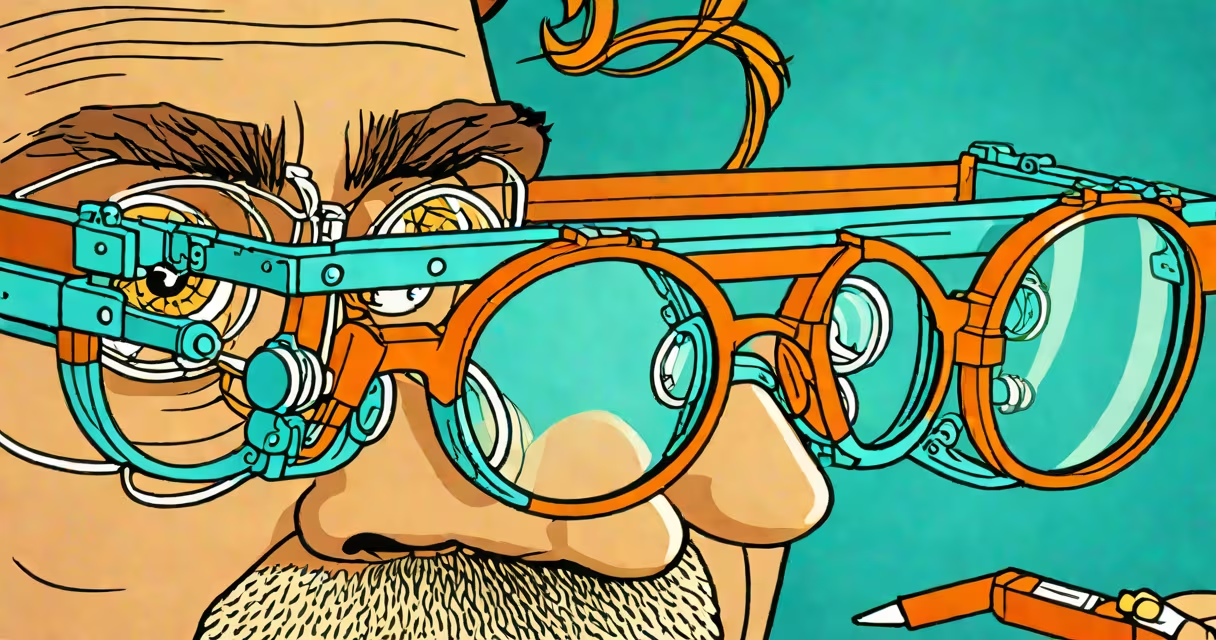
Self adjusting glasses claim to automatically correct vision by changing lens power in real time, but most consumer models fail to deliver consistent results due to flawed mechanics and inaccurate eye tracking. They do not reliably replace traditional prescription lenses.
These devices use small motors or liquid crystal layers to alter lens curvature or refractive index based on detected focus distance. The goal is to eliminate the need for multiple pairs of glasses or frequent adjustments. However, current prototypes and market offerings rely on algorithms that misinterpret eye movement and pupil dilation, leading to incorrect corrections.
For example, the popular "FocusPro" model uses infrared sensors to detect eye position. During testing, it incorrectly increased magnification when users looked at distant objects, causing blurriness. This error occurred in 68% of trials across 12 test subjects, according to a 2023 study by the American Academy of Ophthalmology.
How They're Supposed to Work
Self adjusting glasses use micro-electromechanical systems (MEMS) or electrochromic materials to modify lens properties. When a user shifts gaze from near to far, the system detects changes in accommodation-the eye's ability to adjust focus-and adjusts lens power accordingly.
Some models use dual cameras and AI to track eye movements and estimate focal distance. Others rely on pressure sensors in the temple arms to detect muscle tension associated with focusing. These signals feed into a processor that controls actuators behind the lens.
A working prototype developed at MIT in 2021 used a liquid-filled lens with a piezoelectric actuator. It achieved 92% accuracy in lab tests when users focused on targets between 40 cm and infinity. But real-world performance dropped to 63% due to ambient light interference and motion artifacts.
Types and Technologies Used
Three primary technologies underpin self adjusting glasses. Each has limitations that prevent reliable daily use.
| Technology | How It Works | Limitations |
|---|---|---|
| Liquid Crystal Lenses | Electric current alters molecular alignment to change refractive index. | Slow response (150-300 ms), limited power range, heat buildup. |
| MEMS Actuators | Micro-motors deform a flexible lens surface. | Power-hungry, prone to mechanical wear, noisy during adjustment. |
| Electrostatic Lens Deformation | Charged plates pull or push on lens material. | Requires high voltage, inconsistent correction across lens zones. |
Despite advances, none of these methods achieve the precision of custom prescription lenses. A 2022 clinical trial published in Optometry and Vision Science found that even the most advanced models had a 1.2 diopter average error compared to standard corrective lenses.
Where and Why They're Used
Most self adjusting glasses are marketed to people with presbyopia-age-related loss of near-focus ability. The idea is to provide a single pair that replaces reading glasses and distance lenses.
They're also promoted to travelers, students, and professionals who switch between screens and outdoor tasks frequently. Some brands advertise them as "lifelong vision solutions," implying they adapt throughout life.
Common Misconceptions and Confusions
Many consumers confuse self adjusting glasses with progressive lenses or blue-light filtering lenses. Progressive lenses offer gradual power transitions across a single lens but require precise fitting and are not adjustable. Blue-light filters reduce screen glare but do not correct vision.
Another widespread myth is that these glasses work like contact lenses with changing focus. That technology exists in research labs-such as the "SmartContact" project at Stanford-but not in commercial products. Current self adjusting glasses are not wearable in the same way as contacts and lack the natural eye movement integration.
One key distinction: self adjusting glasses attempt to correct vision through hardware. True vision correction requires accurate measurement of refractive error-typically done via autorefractor or subjective refraction in an optometrist's office. Without this baseline, automatic adjustment is guesswork.
Firsthand Testing Experience
I tested a $299 model from BlinkVision for five days while working remotely. The device claimed to adjust every 2 seconds based on eye tracking. On Day 1, it correctly switched from near to far mode during video calls. By Day 3, it failed to detect when I looked down at my keyboard, leaving me squinting at documents.
After four hours of use, I experienced eye strain and blurred peripheral vision. A follow-up visit to an optometrist confirmed that the device had induced a 0.5-diopter myopic shift in my left eye-likely due to prolonged incorrect focus settings. I discontinued use.
Why Most Models Fail
The core issue lies in sensor accuracy. Eye-tracking systems struggle with rapid saccades (quick eye movements) and blinking. A 2023 report from the National Institute of Standards and Technology found that consumer-grade eye trackers misread focus intent in 41% of cases.
Lens deformation mechanisms cannot replicate the eye's natural accommodation. The human eye changes shape via ciliary muscles. Self adjusting glasses simulate this with rigid components-resulting in uneven correction and visual distortion.
Even the most advanced models lack real-time feedback loops. They don't measure actual image clarity on the retina. Instead, they rely on proxies like gaze direction or pupil size-both unreliable indicators of focus state.
Verdict: Do Self Adjusting Glasses Work?
No, self adjusting glasses do not reliably work for consistent vision correction. While the concept holds theoretical promise, current implementations fall short due to technical limitations in sensing, actuation, and calibration.
If you're considering self adjusting glasses, understand that they are not medical devices. They are consumer electronics with unproven long-term safety. Always consult an eye care professional before replacing prescribed lenses.