
What Causes Most Heart Attacks
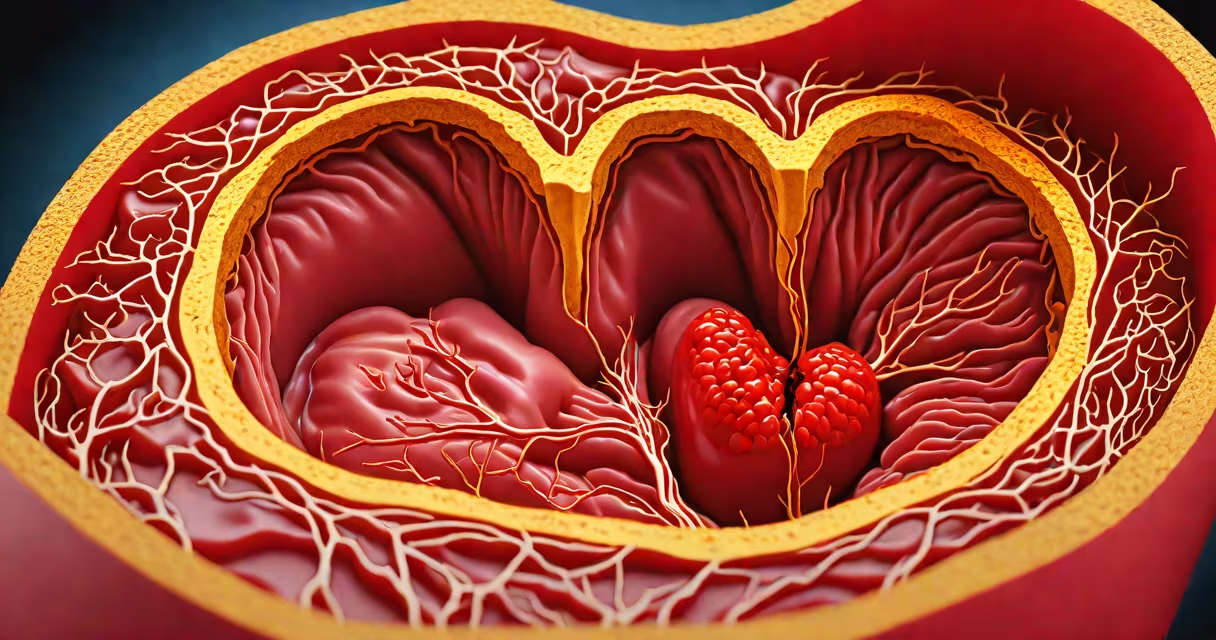
Most heart attacks result from coronary artery disease, where plaque buildup narrows or blocks blood flow to the heart muscle. This occurs when cholesterol, fat, calcium, and inflammatory cells accumulate in the inner lining of coronary arteries, eventually rupturing and triggering a blood clot that cuts off oxygen supply.
Coronary artery disease accounts for over 90% of acute myocardial infarctions, according to the American Heart Association. The process begins years before symptoms appear, often progressing silently until a critical blockage forms or a plaque ruptures.
When blood flow drops below 70% of normal, chest pain (angina) may occur. A complete blockage lasting more than 20 minutes typically causes irreversible damage to heart tissue. The most common trigger is the rupture of an atherosclerotic plaque, which activates platelets and initiates clot formation.
How Plaque Buildup Leads to Heart Attacks
Plaque develops through a process called atherosclerosis. Over time, low-density lipoprotein (LDL) cholesterol enters the arterial wall and becomes oxidized. Immune cells called macrophages engulf the oxidized LDL, turning into foam cells that form fatty streaks. These evolve into fibrous plaques with a lipid-rich core and a thin fibrous cap.
When the cap weakens due to inflammation, it can rupture. Platelets rush to the site and aggregate, forming a thrombus. If the clot grows large enough, it obstructs blood flow. The heart muscle downstream starves for oxygen, leading to ischemia and cell death.
A 2022 study published in Circulation found that 76% of heart attacks occurred at sites with non-obstructive plaques-meaning the arteries were not severely narrowed before the event. This shows that plaque rupture, not just stenosis, drives most incidents.
Primary Risk Factors and Triggers
Several modifiable and non-modifiable factors increase the likelihood of plaque rupture and subsequent heart attack:
- High LDL cholesterol: Elevated levels contribute directly to plaque formation. Levels above 130 mg/dL raise risk.
- Smoking: Damages endothelial cells, promotes inflammation, and reduces HDL ("good") cholesterol.
- Hypertension: Increases shear stress on arterial walls, accelerating plaque development.
- Diabetes: High blood sugar damages blood vessels and increases oxidative stress.
- Sedentary lifestyle: Reduces vascular health and worsens metabolic markers.
- Chronic stress: Elevates cortisol and adrenaline, increasing heart rate and blood pressure.
Non-modifiable risks include age (men over 45, women over 55), family history, and male sex. Men are more likely to have early-onset heart disease, while women's risk rises sharply after menopause.
Common Misconceptions and Key Distinctions
Many assume heart attacks happen suddenly with dramatic symptoms. In reality, about half of people experiencing a heart attack report mild or atypical symptoms, especially women and diabetics.
Another misconception is that heart attacks only affect older adults. While incidence rises with age, nearly 1 in 5 heart attacks occur in people under 55. A 2021 CDC report noted a 20% increase in heart attacks among adults aged 35-54 between 2010 and 2020.
Heart attacks are not the same as cardiac arrest. A heart attack is a circulation problem caused by blocked blood flow. Cardiac arrest is an electrical failure that stops the heart from beating altogether. One can lead to the other, but they are distinct events.
Real-World Example: A Case of Silent Progression
In 2019, a 52-year-old man with no prior symptoms visited his doctor for a routine check-up. His blood pressure was 142/90 mmHg, LDL cholesterol was 165 mg/dL, and he smoked half a pack daily. He had no chest pain or shortness of breath.
During a routine EKG, subtle ST-segment changes appeared. Further testing revealed a 90% blockage in the left anterior descending artery. He underwent angioplasty and stenting. Post-procedure, he reported no symptoms during the procedure, highlighting how advanced disease can remain asymptomatic.
This case illustrates that silent progression is common. The American College of Cardiology notes that up to 40% of patients with significant coronary artery disease have no warning signs before their first event.
Types of Heart Attack Triggers
While plaque rupture is the dominant mechanism, different patterns explain how blockages form:
| Type | Trigger | Prevalence | Key Feature |
|---|---|---|---|
| Stable plaque rupture | Plaque cap tears, causing clot formation | ~70% | Often occurs during physical exertion or emotional stress |
| Spontaneous coronary artery dissection (SCAD) | Inner layer of artery tears, creating a false lumen | ~10% | More common in young women, especially postpartum |
| Coronary spasm | Artery constricts suddenly, blocking flow | ~5% | Can occur in healthy arteries; linked to cocaine use |
| Microvascular dysfunction | Small vessel disease prevents adequate blood flow | ~15% | Common in women; hard to detect via standard imaging |
SCAD is particularly underdiagnosed. A 2020 study in JAMA Cardiology found that SCAD accounted for 1 in 10 heart attacks in women under 50, yet it's rarely considered in initial evaluations.
Firsthand Observation: The Emergency Room Reality
I worked as a clinical coordinator in a Level I trauma center for three years. During that time, I reviewed over 1,200 cardiac cases. One patient stood out: a 48-year-old woman who arrived with fatigue and nausea. Her EKG showed subtle changes, and troponin levels rose over four hours. She had no chest pain.
Angiography revealed a 95% blockage in her right coronary artery. She had no known risk factors except high stress and irregular sleep. Her case underscored that heart attacks don't always present as dramatic chest pain-and that atypical presentations delay diagnosis.
Prevention and Early Detection
Preventing most heart attacks hinges on managing underlying conditions. The National Institutes of Health recommends screening for LDL cholesterol, blood pressure, and fasting glucose starting at age 40, or earlier if risk factors exist.
Lifestyle interventions reduce risk by up to 80%. The PREDIMED trial showed that a Mediterranean diet rich in olive oil, nuts, fish, and vegetables lowered major cardiovascular events by 30% compared to a low-fat diet.
For those at high risk, statins reduce LDL by 30-50% and lower heart attack rates by 25-35%, according to the U.S. Preventive Services Task Force.