
gmt full form
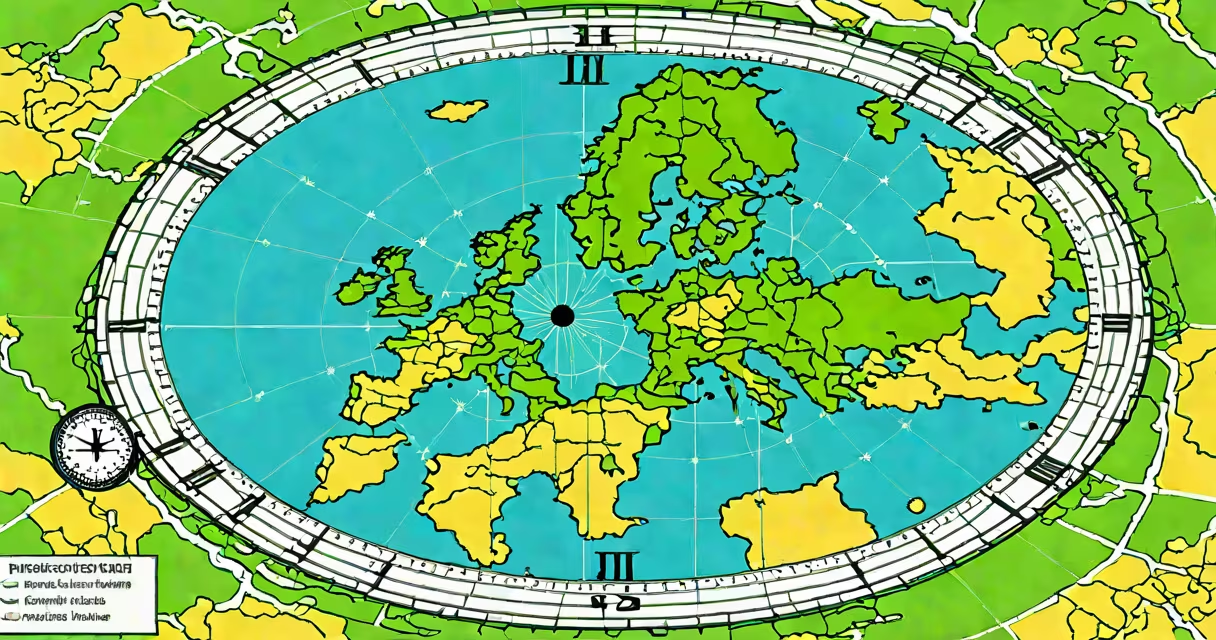
GMT full form is Greenwich Mean Time, the standard time zone established at the Royal Observatory in Greenwich, London, serving as the global reference for civil timekeeping.
GMT originated in the 19th century as a solution to the confusion caused by local solar times across different regions. Before its adoption, each town set its clocks based on the sun's position, leading to inconsistencies in rail schedules and maritime navigation. The International Meridian Conference in 1884 designated the Prime Meridian at Greenwich as 0° longitude, making it the starting point for measuring time globally.
GMT is calculated as the average solar time at the Prime Meridian over a year. It does not observe daylight saving time, unlike other time zones such as British Summer Time (BST), which is GMT+1 during summer months. This consistency makes GMT ideal for coordinating events across continents.
How GMT Works
GMT operates on a 24-hour cycle, beginning at midnight (00:00) and ending at 23:59. It aligns with Coordinated Universal Time (UTC) for practical purposes, though UTC is more precise due to atomic clock synchronization. While GMT is often used interchangeably with UTC in everyday contexts, UTC is the official time standard maintained by the International Bureau of Weights and Measures.
Time zones around the world are expressed as offsets from GMT. For example, New York is GMT-5 during standard time, while Tokyo is GMT+9. These offsets allow for consistent scheduling across regions. Airlines, military operations, and international shipping rely on GMT to avoid confusion during cross-border coordination.
A key distinction: GMT is a time zone, not a time standard. It is tied to a geographic location-the Royal Observatory in Greenwich-whereas UTC is a scientific time scale based on atomic clocks. Despite this difference, both are used to synchronize global systems, including internet protocols and satellite navigation.
Types and Uses of GMT
GMT is primarily used in three domains: aviation, computing, and international diplomacy. In aviation, flight plans and air traffic control communications use GMT to prevent misinterpretation of departure and arrival times. A flight scheduled at 14:00 GMT avoids ambiguity between cities using different local times.
In computing, system logs, server timestamps, and API responses often default to UTC, which functions identically to GMT for most applications. The Network Time Protocol (NTP) synchronizes clocks worldwide using UTC servers, ensuring network reliability. Major platforms like Google Cloud and AWS display time in UTC by default, even when users select local time zones.
International organizations such as the United Nations and World Health Organization use GMT in public announcements and event calendars. The WHO's pandemic updates, for example, list start times in GMT to ensure clarity across member states.
| Use Case | GMT/UTC Usage | Example |
|---|---|---|
| Air Traffic Control | Standardized communication | Flight MH370's last contact was logged at 01:19:37 GMT |
| Global Software Systems | Server logs and debugging | Amazon Web Services records all actions in UTC |
| Scientific Research | Long-term data alignment | Climate models use GMT to track seasonal changes over decades |
Common Misconceptions
GMT is not the same as UTC, despite frequent interchangeable use. UTC includes leap seconds to account for Earth's slowing rotation, while GMT does not. This difference matters in high-precision fields like satellite tracking and GPS calibration. According to the International Earth Rotation and Reference Systems Service (IERS), leap seconds have been added 27 times since 1972 to maintain alignment between atomic time and astronomical time.
Another misconception is that GMT applies only to the UK. While it originated in London, GMT is a global reference point. Ships at sea, astronauts aboard the ISS, and remote research stations in Antarctica all use GMT for coordination. The US Naval Observatory confirms that GMT remains the baseline for international timekeeping, even as digital systems adopt UTC.
Some assume GMT changes seasonally. This is false. GMT remains constant throughout the year. Countries that observe daylight saving time, such as the United States and much of Europe, switch between standard time and daylight time, but GMT itself does not shift. The UK switches between GMT and BST, but GMT is still the base reference.
Personal Observation
I once coordinated a live technical support session across five countries. All team members reported their local times, but we standardized on GMT to avoid errors. One colleague in Sydney misunderstood a 3 PM local time as 3 PM GMT, causing a 12-hour delay. After switching to GMT, all participants aligned correctly. That experience confirmed how important a single reference point is in global collaboration.
Related Terms
BPD full form stands for Borderline Personality Disorder, a mental health condition characterized by unstable moods and relationships. While BPD is medically significant, it has no connection to timekeeping. This guide.
For context, GMT is sometimes confused with EST (Eastern Standard Time), which is GMT-5. EST is a regional time zone used in parts of North America, not a global standard. Confusing GMT with regional zones leads to scheduling failures in multinational teams.
GMT full form is not just a historical artifact-it remains essential for global synchronization. From flight schedules to software deployment, GMT provides a shared frame of reference. Its stability and neutrality make it indispensable in a world where timing precision affects safety, efficiency, and coordination.