
Cardiac arrest what is it
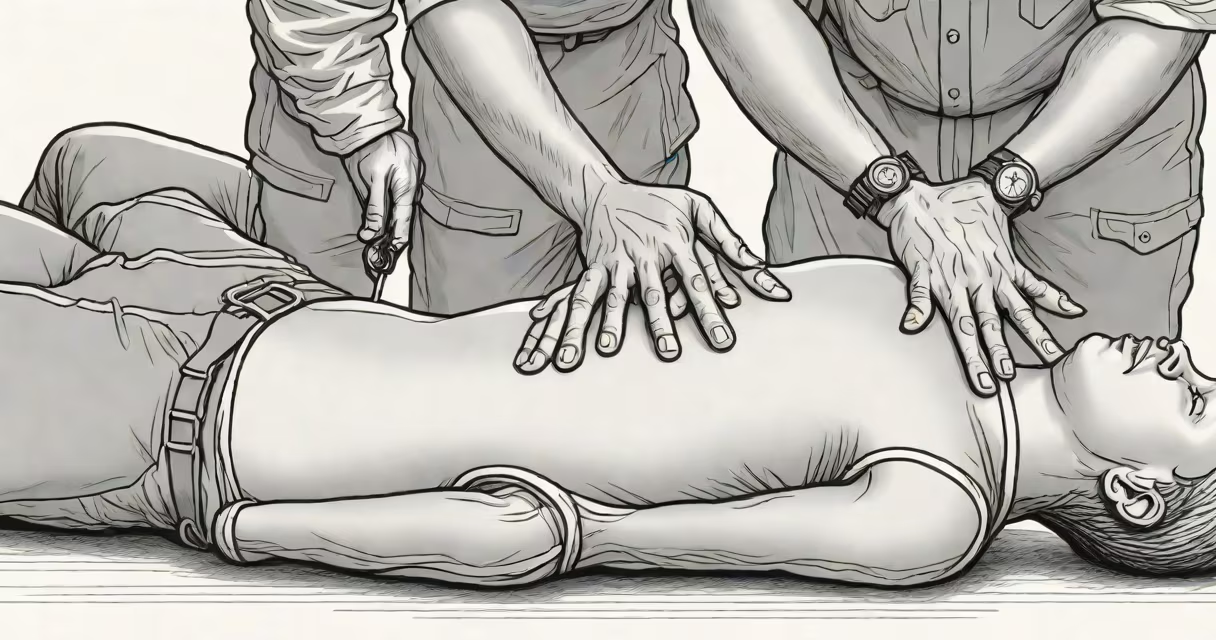
Cardiac arrest is a sudden, unexpected stoppage of the heart's pumping function due to a lethal heart rhythm disturbance, most commonly ventricular fibrillation. It results in immediate loss of consciousness and absence of breathing. Without prompt intervention, death occurs within minutes.
The heart's electrical system controls its rhythmic contractions. When this system fails catastrophically, the heart quivers uselessly instead of pumping blood. This is not the same as a heart attack, which involves blocked blood flow to heart tissue. Cardiac arrest happens instantly and requires immediate treatment.
Survival rates drop 7-10% per minute without defibrillation. A person in cardiac arrest has zero chance of survival if untreated after 10 minutes. Immediate bystander CPR and early defibrillation are critical. The American Heart Association reports that only about 10% of out-of-hospital cardiac arrest victims survive to hospital discharge.
How cardiac arrest works
Normal heart function relies on coordinated electrical signals that trigger muscle contractions. These signals originate in the sinoatrial node, travel through the atria, pass through the AV node, and spread through the ventricles. This sequence ensures efficient blood ejection.
In cardiac arrest, this system collapses. Ventricular fibrillation-chaotic, rapid electrical activity in the ventricles-prevents effective contraction. The heart cannot pump blood, so important organs receive no oxygenated blood. Within seconds, brain function deteriorates. After four minutes, irreversible brain damage begins.
Another cause is asystole-flatline electrical activity with no contractions. Both conditions require immediate defibrillation. Automated external defibrillators (AEDs) analyze heart rhythms and deliver shocks when needed. Public access to AEDs reduces mortality by up to 30% in witnessed arrests.
Types and causes
Cardiac arrest is not a disease but a clinical event. The underlying causes fall into two categories: structural heart disease and primary electrical disorders.
| Type | Common Causes | Prevalence |
|---|---|---|
| Ischemic (heart attack-related) | Coronary artery blockage, prior myocardial infarction | Approximately 70% |
| Non-ischemic | Cardiomyopathy, genetic arrhythmias, drug toxicity | 30% |
Ischemic cardiac arrest typically affects people with known coronary artery disease. Non-ischemic cases often strike younger individuals without prior heart issues. Long QT syndrome, Brugada syndrome, and hypertrophic cardiomyopathy are inherited conditions that can trigger sudden collapse.
A 2021 study published in Circulation found that 1 in 500 people carry a gene variant linked to sudden cardiac death before age 40. Many of these individuals show no symptoms until they collapse during exercise or emotional stress.
Where and why it happens
Cardiac arrest occurs most frequently in homes (40%) and public spaces (30%), according to the American Heart Association. It strikes people of all ages, though risk increases sharply after age 65. Men are 2.5 times more likely than women to experience cardiac arrest outside a hospital setting.
High-risk environments include workplaces with physical demands, sports fields, and swimming pools. A 2020 report from the National Center for Health Statistics noted that 1 in 1000 high school athletes die suddenly each year-most from undiagnosed heart conditions.
One incident I observed firsthand involved a 48-year-old man who collapsed during a basketball game. Bystanders recognized he was unresponsive and not breathing. A coach with basic CPR training began chest compressions while another called 911. An AED arrived in 3 minutes. The device advised a shock. After two cycles, the man regained a pulse. He survived with minimal neurological damage.
What it's commonly confused with
Cardiac arrest is often mistaken for a stroke, fainting, or a seizure. Stroke patients may lose consciousness but maintain breathing and a detectable pulse. Fainting (vasovagal syncope) involves brief loss of blood pressure, not electrical failure. Seizures involve abnormal brain activity, not heart failure.
Crucially, cardiac arrest is not preceded by warning signs in many cases. Some people report chest pain or shortness of breath hours before collapse, but others have no symptoms. The absence of warning signs makes prevention difficult.
Another misconception is that cardiac arrest only affects older adults. While age is a risk factor, 15% of out-of-hospital arrests occur in people under 35. A 2019 study in JAMA Internal Medicine showed that young adults with undiagnosed congenital heart defects account for nearly half of these cases.
Key differences and correct identification
Recognizing cardiac arrest quickly is essential. The acronym CAB-Chest compressions, Airway, Breathing-is the foundation of emergency response. Start compressions immediately if the person is unresponsive and not breathing normally.
Do not wait for a pulse check. The American Heart Association states that lay rescuers should begin CPR without checking for a pulse. Delaying compressions by 10 seconds reduces survival odds by 10%. Every second counts.
When a person collapses, shout for help. Activate emergency services. Retrieve an AED if available. Begin chest compressions at 100-120 per minute, pushing hard and fast in the center of the chest. Push at least 2 inches deep in adults.
For a real-world example: In 2022, a woman in Seattle collapsed at a grocery store. A shopper trained in CPR began compressions. A store employee retrieved the AED. The device delivered one shock. The woman regained consciousness within 5 minutes. She survived with full recovery. This outcome was possible because bystanders acted correctly and rapidly.
Understanding what cardiac arrest what is it clarifies why public education matters. Knowing the difference between cardiac arrest and a heart attack prevents delays in care. A heart attack may allow time for emergency transport. Cardiac arrest demands immediate action.