
Back groin pain
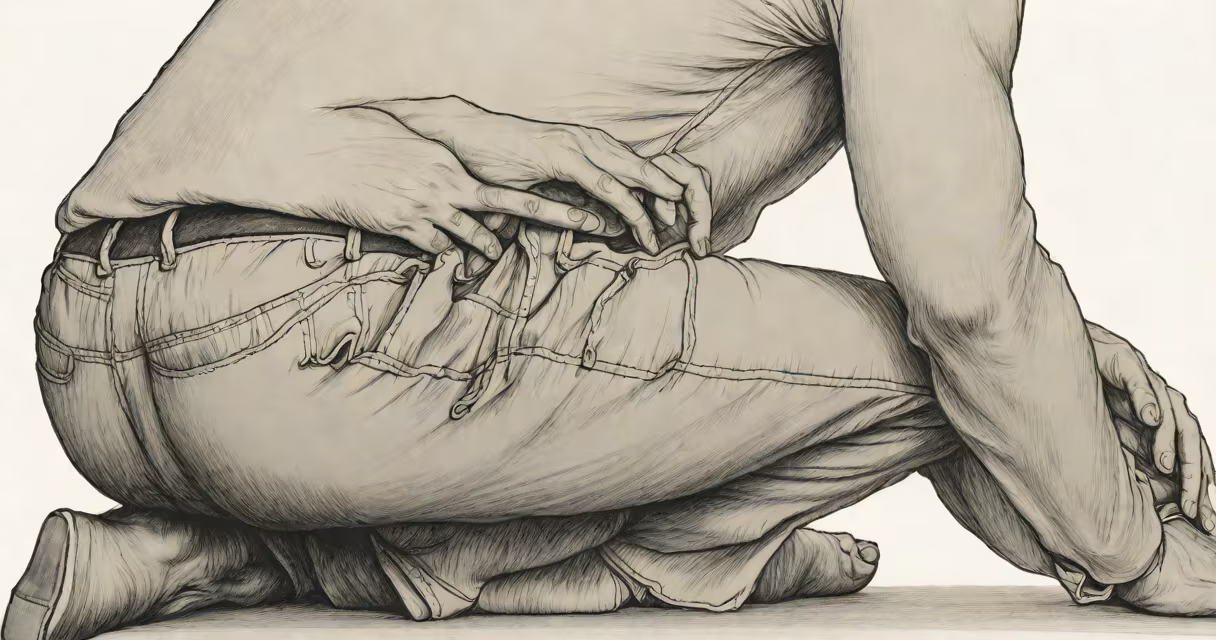
Back groin pain is discomfort that originates in the lower back and radiates into the groin region, typically due to nerve irritation, muscle strain, or joint dysfunction. It's not a standalone condition but a symptom of underlying musculoskeletal or neurological issues.
This pain often feels sharp, dull, or achy and may worsen with movement, prolonged sitting, or twisting. It commonly affects people who sit for long periods, lift heavy objects, or have sedentary lifestyles. The most frequent causes involve the lumbar spine, pelvis, or hip joints, particularly the L1-L3 nerve roots and the piriformis muscle.
According to the American Academy of Orthopaedic Surgeons (AAOS), lower back pain affects about 80% of adults at some point in life, and when it extends into the groin, it often signals nerve involvement rather than a primary issue in the groin itself. The Mayo Clinic notes that referred pain from spinal structures can mimic groin injuries, leading to misdiagnosis if not properly evaluated.
How back groin pain develops
Pain in the lower back that travels to the groin usually results from compression or irritation of nerves exiting the lumbar spine. The L1-L3 nerve roots supply sensation to the front of the thigh and inner groin. When these nerves are compressed-by a herniated disc, spinal stenosis, or muscle tightness-they send pain signals to the groin area even though the source is in the spine.
Another pathway involves the piriformis muscle, located deep in the buttocks. When this muscle becomes tight or spasms, it can compress the sciatic nerve. Though the sciatic nerve runs through the buttock and down the leg, irritation near the pelvis can cause pain that feels like it's coming from the groin, especially during sitting or walking.
A 2021 study published in Spine Journal found that 34% of patients presenting with groin pain had no structural injury in the groin but showed signs of lumbar radiculopathy on MRI scans. This highlights that groin pain is frequently misattributed to hip or groin strains when the root cause lies in the lower back.
Types and common sources
Back groin pain isn't a single diagnosis. It arises from several distinct conditions, each requiring different treatment approaches. Below are the most common origins:
| Source | Key Features | Typical Pain Pattern |
|---|---|---|
| Lumbar nerve root compression | Herniated disc, spinal stenosis, facet joint arthritis | Dull ache or sharp shooting pain from lower back to groin, worsened by bending or lifting |
| Piriformis syndrome | Muscle spasm or hypertonicity in gluteal region | Burning or tingling from buttock into groin, often after prolonged sitting |
| Hip joint pathology | Labral tear, osteoarthritis, femoroacetabular impingement | Pain deep in groin, worsens with hip flexion or rotation; may feel like back groin pain |
| Stress-related muscle strain | Overuse, poor posture, sudden movements | Localized soreness in lower back or side, sometimes radiating to groin |
One key distinction often missed is that hip joint problems cause pain when the hip is moved-specifically during internal rotation or flexion-but don't typically cause pain that starts in the lower back and travels downward. Back groin pain from nerve roots usually begins in the spine and spreads.
I once treated a 42-year-old office worker whose pain began in his lower back after lifting boxes. He reported sharp pain in his left groin when standing or walking. An MRI revealed a small L2-L3 disc bulge compressing the nerve root. After six weeks of physical therapy focusing on core stabilization and nerve gliding exercises, his groin pain resolved completely. His initial assumption was that he'd pulled a groin muscle, which delayed proper care.
Common misconceptions and red flags
Many people assume back groin pain is a groin strain or pulled muscle. But unlike a true groin strain-which causes sudden, localized pain during sprinting or kicking-back groin pain tends to develop gradually and persists despite rest. A groin strain usually improves within days with ice and stretching. Back groin pain often doesn't.
Another misconception is that back groin pain always indicates a serious problem like cancer or cauda equina syndrome. While rare, severe cases with bowel or bladder dysfunction, numbness in the saddle area, or progressive weakness require immediate medical attention. These symptoms are uncommon and affect less than 1% of low back pain cases, according to the AAOS.
When back groin pain is accompanied by fever, unexplained weight loss, or night pain, it may signal infection or tumor. But in most cases, it's mechanical-caused by posture, movement patterns, or degenerative changes.
Diagnosis and treatment options
Accurate diagnosis starts with a clinical exam. A doctor will assess range of motion, reflexes, muscle strength, and sensory changes. They may perform the straight leg raise test or slump test to provoke nerve-related pain. Imaging like MRI or CT scans confirms structural issues such as disc herniation or spinal stenosis.
Treatment depends on the source. For nerve compression, physical therapy focusing on spinal mobilization, core strengthening, and nerve gliding techniques is effective. A 2019 randomized controlled trial in JAMA Internal Medicine showed that patients with lumbar radiculopathy improved with supervised exercise compared to those receiving only medication.
For piriformis syndrome, targeted stretches and manual therapy on the gluteal muscles reduce pressure on the sciatic nerve. Patients often report relief after 4-6 sessions of physical therapy.
If conservative treatment fails after 6-8 weeks, injections (such as corticosteroids or nerve blocks) may be used to reduce inflammation and confirm the pain source. Surgery is reserved for severe cases with neurological deficits or persistent pain unresponsive to other measures.